
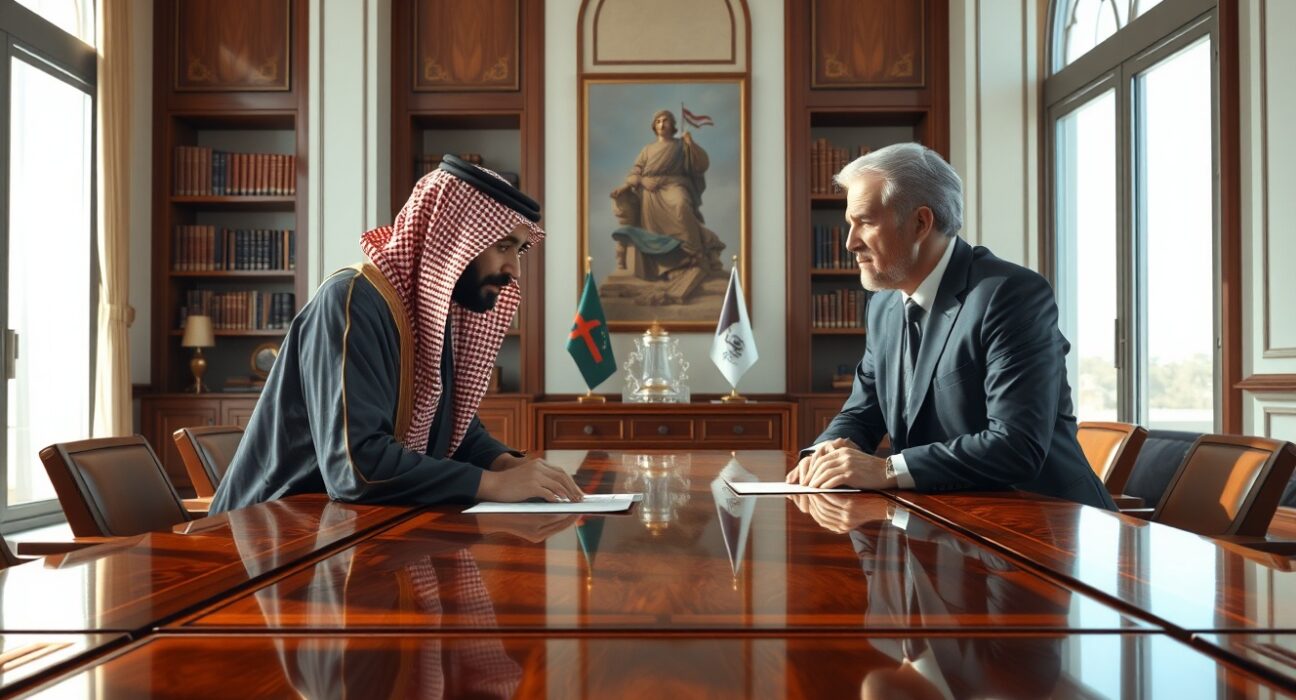
RIYADH, Saudi Arabia — Saudi Crown Prince Mohammed bin Salman privately urged then-U.S. President Donald Trump to continue military operations against Iran, according to explosive New York Times reporting that reveals significant divergence between Saudi Arabia’s public diplomacy and private strategic calculations. The confidential discussions, which occurred during a critical period of Middle East tensions, highlight the complex geopolitical maneuvering shaping regional power dynamics. This Saudi Crown Prince urged Trump to continue military action against Iran revelation provides unprecedented insight into backchannel diplomacy that could have dramatically altered the security landscape of the Persian Gulf region.
Saudi Crown Prince’s Private Push for Military Action
The New York Times obtained detailed accounts of communications between Crown Prince Mohammed bin Salman and President Trump during 2020. According to multiple sources familiar with the discussions, the Saudi leader characterized coordinated U.S.-Israeli military operations as a historic opportunity to fundamentally reshape the Middle Eastern order. The crown prince reportedly argued that overthrowing Iran’s hardline regime represented a necessary strategic objective to eliminate long-term security threats throughout the Gulf region. These private urgings starkly contrasted with Saudi Arabia’s official diplomatic position, which consistently emphasized peaceful conflict resolution and prioritized defensive postures over offensive military campaigns.
Middle East analysts immediately recognized the significance of this revelation. “The divergence between private advocacy and public diplomacy reveals the complex reality of Gulf security calculations,” noted Dr. Sarah Al-Khalifa, a Gulf studies researcher at King’s College London. “Regional powers frequently maintain dual-track approaches to sensitive security matters, particularly regarding Iran.” The reporting suggests the crown prince viewed the Trump administration’s maximum pressure campaign against Tehran as an opening for more decisive action. This perspective aligned with certain factions within the U.S. national security establishment but faced resistance from others concerned about regional escalation.
Contrasting Public and Private Saudi Positions
Saudi Arabia’s official foreign policy statements throughout the Trump presidency consistently emphasized diplomatic engagement and conflict de-escalation with Iran. The kingdom participated in regional dialogue initiatives and publicly supported confidence-building measures. However, the New York Times reporting indicates parallel private communications advocating for sustained military pressure. This dual-track approach reflects the complex security dilemma facing Gulf monarchies as they navigate relations with both Iran and Western allies.
The timing of these communications proved particularly significant. They occurred during periods of heightened U.S.-Iran tensions, including following the January 2020 assassination of Iranian General Qasem Soleimani and subsequent Iranian missile strikes on Iraqi bases housing U.S. troops. Regional security experts note that Gulf states frequently balance public calls for restraint with private security coordination. “The gap between public rhetoric and private counsel isn’t necessarily duplicitous,” explained former U.S. diplomat James Cunningham. “It reflects the complex reality of maintaining diplomatic channels while addressing genuine security concerns through allied coordination.”
Historical Context of Saudi-Iranian Rivalry
The Saudi-Iranian rivalry represents one of the Middle East’s most enduring geopolitical competitions, spanning four decades and multiple regional conflicts. This competition intensified following the 1979 Iranian Revolution, which established a theocratic republic challenging traditional monarchical systems. The rivalry encompasses religious dimensions (Sunni versus Shia Islam), political ideologies (monarchy versus revolutionary republic), and competition for regional influence. Key conflict zones include Yemen, where Saudi Arabia leads a coalition against Iranian-backed Houthi rebels, and Syria, where both nations support opposing factions in the civil war.
Regional power dynamics shifted significantly with the 2015 Iran nuclear deal (Joint Comprehensive Plan of Action), which Saudi Arabia viewed with skepticism. The Trump administration’s 2018 withdrawal from the agreement and implementation of maximum pressure sanctions created new strategic opportunities. Gulf analysts suggest the crown prince’s reported urgings reflected a calculation that the U.S. administration’s confrontational approach might achieve what diplomacy had not: meaningful constraints on Iranian regional activities and potentially regime change.
U.S. Policy Considerations and Regional Impacts
The Trump administration’s Iran policy evolved through several phases, beginning with maximum economic pressure and expanding to include military posturing. Key officials held divergent views on appropriate responses to Iranian provocations. Some advocated for decisive military action to deter Iranian aggression, while others emphasized escalation management and diplomatic channels. The Saudi crown prince’s reported urgings aligned with more hawkish elements within the administration but faced institutional resistance from career diplomats and military leaders concerned about regional stability.
Potential regional impacts of sustained U.S.-Iran military conflict would have been profound. Energy markets would likely experience significant volatility, given that approximately 20% of global oil shipments transit the Strait of Hormuz. Regional allies including Israel and Gulf Cooperation Council members would face retaliatory threats from Iranian proxies. Humanitarian consequences could have been severe in conflict zones where Iranian-backed militias operate. The economic toll on Gulf economies, already strained by low oil prices and COVID-19 impacts, would have compounded existing challenges.
Key regional security considerations included:
- Strait of Hormuz shipping security and global energy supplies
- Potential for multi-front conflict involving Iranian proxies
- Impact on ongoing conflicts in Yemen, Syria, and Iraq
- Great power competition with Russia and China
- Nuclear non-proliferation regime integrity
Diplomatic Repercussions and Alliance Management
The revelation of private Saudi urgings for military action creates diplomatic complexities for current U.S. and Saudi administrations. The Biden administration has pursued renewed nuclear diplomacy with Iran while reaffirming security commitments to Gulf partners. This balancing act requires managing allied expectations while pursuing diplomatic engagement with adversaries. The reported communications may influence how U.S. policymakers interpret Gulf states’ private counsel versus public positions on Iran policy.
Regional diplomacy faces additional challenges following these revelations. Other Gulf states, particularly Qatar and Oman, have maintained more consistent engagement with Iran. The reported Saudi position could strain Gulf Cooperation Council unity on Iran policy. European allies pursuing nuclear diplomacy may view Gulf states’ private positions as complicating diplomatic efforts. Meanwhile, Iran may use the reporting to question Saudi Arabia’s commitment to regional dialogue initiatives.
Expert Analysis on Strategic Calculations
Security analysts offer varying interpretations of the strategic calculations behind the reported Saudi position. Some view it as opportunistic alignment with a sympathetic U.S. administration, while others see it as reflecting genuine security concerns about Iranian capabilities. “The reported urgings represent a strategic assessment that the costs of inaction on Iran outweigh the risks of escalation,” explained Dr. Amin Saikal of the Australian National University. “This reflects Gulf states’ fundamental security dilemma: they fear both Iranian aggression and the consequences of direct confrontation.”
Other experts emphasize the domestic political context. Crown Prince Mohammed bin Salman has pursued an ambitious modernization agenda (Vision 2030) while consolidating political authority. A more confrontational regional posture aligns with nationalist elements of this agenda. However, economic diversification efforts require regional stability, creating potential tension between security and economic objectives. The reported communications may reflect this balancing act, advocating for decisive action while maintaining public commitment to diplomatic solutions.
Conclusion
The New York Times reporting revealing that the Saudi Crown Prince urged Trump to continue military action against Iran provides crucial insight into the complex reality of Middle East diplomacy. The divergence between private strategic advocacy and public diplomatic positioning highlights the challenging security environment facing Gulf states. These revelations will influence ongoing diplomatic efforts, alliance management, and regional security calculations. As the United States continues to balance engagement with Iran and commitments to regional partners, understanding these nuanced positions becomes increasingly important for effective policymaking. The Saudi Crown Prince’s reported urgings reflect broader regional dynamics that will continue shaping Middle Eastern geopolitics for the foreseeable future.
FAQs
Q1: What exactly did the New York Times report about Saudi Arabia and Iran?
The New York Times reported that Saudi Crown Prince Mohammed bin Salman privately urged President Donald Trump to continue military operations against Iran, describing U.S.-Israeli actions as a historic opportunity to reshape the Middle East, despite Saudi Arabia’s public support for peaceful conflict resolution.
Q2: Why would Saudi Arabia publicly support peace while privately urging military action?
This dual-track approach reflects complex geopolitical calculations. Public peace advocacy maintains diplomatic channels and international legitimacy, while private security coordination addresses genuine concerns about Iranian regional activities and capabilities through allied cooperation.
Q3: How did the Trump administration respond to these reported urgings?
The Trump administration maintained its maximum pressure campaign against Iran but avoided large-scale military conflict. The administration balanced hawkish elements advocating stronger action with institutional concerns about regional escalation and broader strategic consequences.
Q4: What are the implications for current U.S.-Saudi relations?
These revelations complicate alliance management, particularly as the Biden administration pursues renewed nuclear diplomacy with Iran while maintaining security commitments to Gulf partners. They may influence how U.S. policymakers interpret Gulf states’ positions on Iran policy.
Q5: How does this affect regional stability in the Middle East?
The reporting highlights underlying tensions that continue to shape regional security dynamics. It may influence diplomatic efforts, alliance relationships, and conflict management approaches across multiple regional flashpoints including Yemen, Syria, and Gulf security.
Disclaimer: The information provided is not trading advice, Bitcoinworld.co.in holds no liability for any investments made based on the information provided on this page. We strongly recommend independent research and/or consultation with a qualified professional before making any investment decisions.