

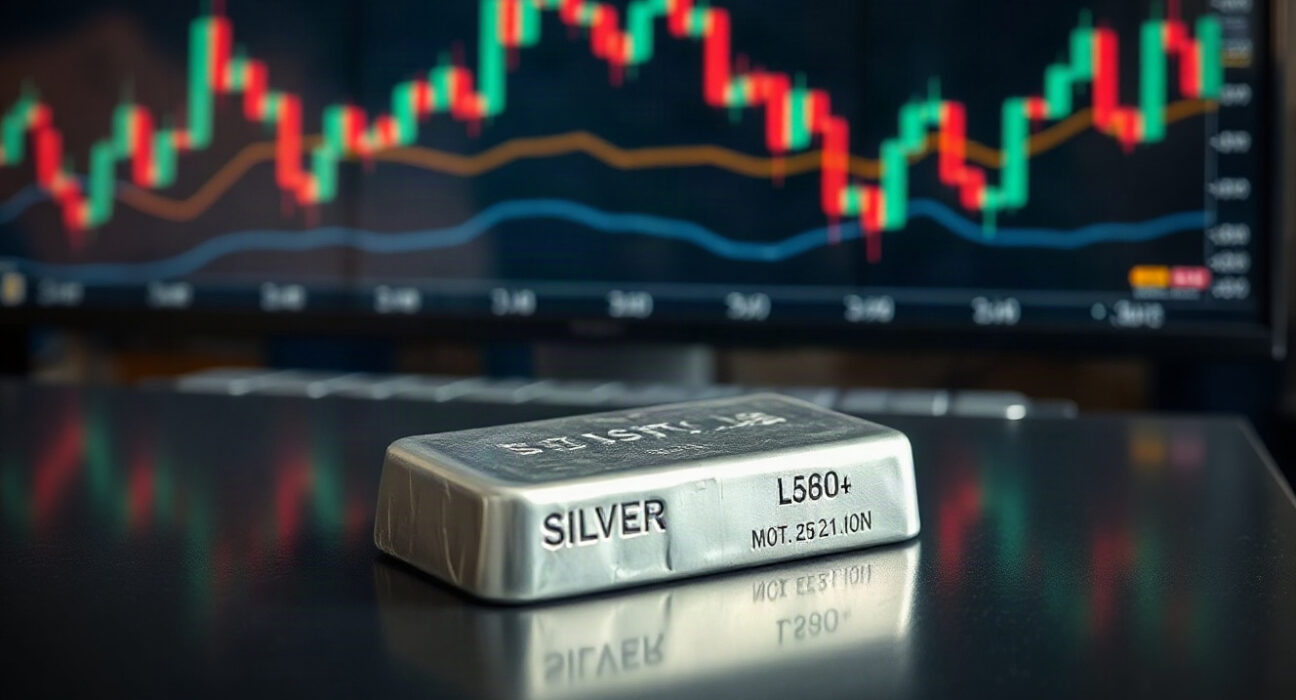
Silver prices (XAG/USD) fell on [Day, Date], reversing a recent breakout attempt as a hawkish stance from the Federal Reserve dampened demand for the precious metal. The metal, which had briefly climbed above its key resistance level, retreated sharply after the Fed signaled a slower pace of rate cuts than markets had hoped, strengthening the US dollar and pressuring silver.
Why Did Silver Prices Drop?
The immediate trigger for the decline was the Federal Reserve’s latest policy signals. In its [Month Year] meeting, the central bank maintained its benchmark interest rate and projected fewer cuts for the coming year, citing sticky inflation and a resilient labor market. This pushed US Treasury yields higher and the dollar index up, making silver more expensive for overseas buyers and reducing its appeal as a non-yielding asset.
Technically, silver’s failure to sustain a breakout above the $[level] resistance zone—a level it had tested several times—was a classic false breakout. Chart analysts often view such moves as bearish signals, prompting traders to exit long positions and triggering stop-loss orders, which accelerated the selloff.
Market Context and Investor Sentiment
The precious metals complex has been sensitive to interest rate expectations throughout [Year]. While gold has held up relatively better, silver’s higher volatility and industrial demand component make it more susceptible to shifts in the macroeconomic outlook. As of [Date], silver was trading around $[price], down [X]% on the day.
Investors are now closely watching upcoming US economic data, particularly inflation reports and employment figures, for clues on the Fed’s next move. A hotter-than-expected CPI reading could reinforce the hawkish narrative, pushing silver lower. Conversely, signs of economic cooling might revive rate-cut bets and provide support.
What This Means for Silver Investors
For traders, the false breakout is a reminder of the importance of confirmation before entering positions. For longer-term investors, the pullback may offer a potential entry point if they believe the Fed will eventually pivot, but the near-term outlook remains clouded by policy uncertainty.
Silver’s dual role as both a precious and industrial metal adds complexity. Weak global manufacturing data could further weigh on prices, while supply disruptions or strong demand from solar panel production could cushion downside.
Conclusion
Silver’s near-term path hinges on the Fed’s policy trajectory and the dollar’s strength. The false breakout and hawkish Fed signals have reset the technical outlook, with support now seen at $[next support]. A break below that could open the door to further losses, while a recovery above $[resistance] would negate the bearish setup. As always, traders should employ prudent risk management and stay informed on central bank communications.
FAQs
Q1: What is a false breakout in silver trading?
A false breakout occurs when the price moves above a key resistance level but quickly reverses back below it, often trapping buyers who entered on the breakout. It signals that the upward momentum was not strong enough to sustain the move.
Q2: How does a hawkish Fed affect silver prices?
A hawkish Fed indicates a preference for higher interest rates to combat inflation. Higher rates increase the opportunity cost of holding non-yielding assets like silver, and they typically strengthen the US dollar, which pressures dollar-denominated commodities.
Q3: What are the key support and resistance levels for silver?
Support levels are price zones where buying interest is expected to emerge, while resistance levels are zones where selling pressure is likely. For silver, near-term support is at $[level] and resistance at $[level], but these levels can change based on market conditions and should be monitored regularly.
Disclaimer: The information provided is not trading advice, Bitcoinworld.co.in holds no liability for any investments made based on the information provided on this page. We strongly recommend independent research and/or consultation with a qualified professional before making any investment decisions.
