
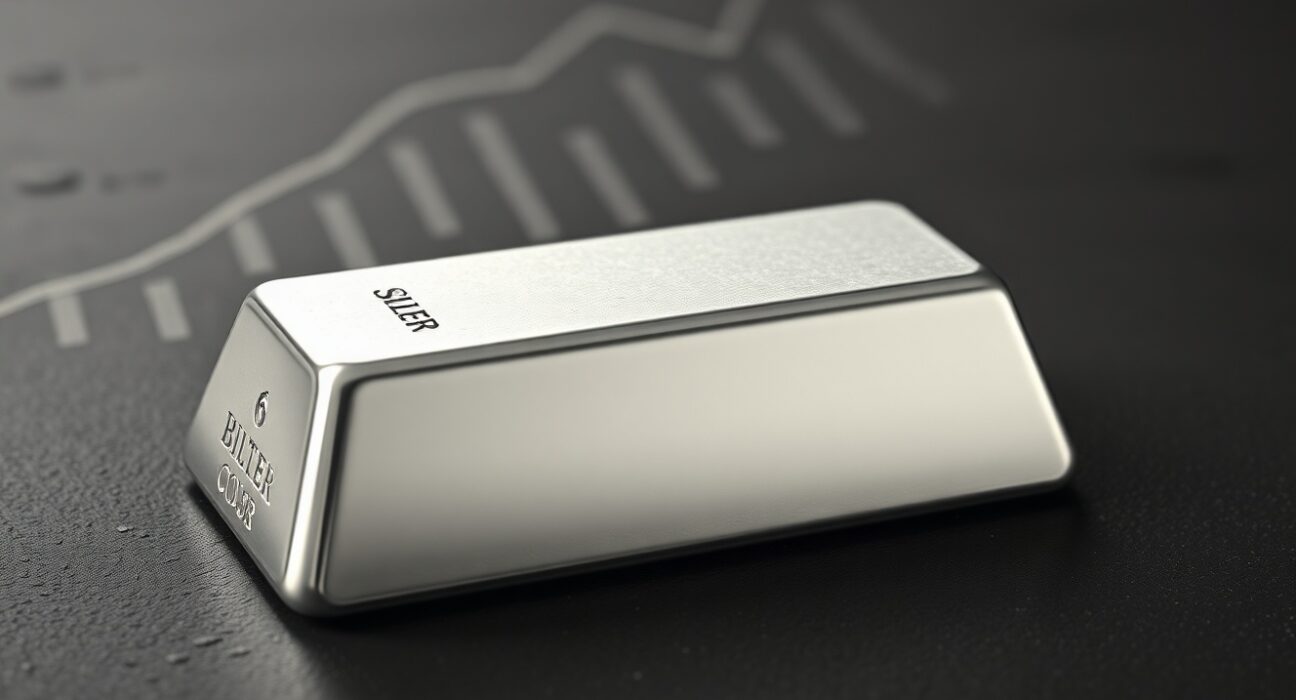
Global precious metals markets witnessed significant pressure this week as silver prices extended their decline, with the XAG/USD pair hovering perilously close to multi-week lows and breaching the critical $67.50 support level that traders had monitored closely. The technical breakdown represents the most substantial weekly decline in silver prices since early November, raising concerns among commodity investors about potential further downside momentum in the white metal.
Silver Price Technical Analysis Reveals Bearish Momentum
Technical charts for XAG/USD demonstrate clear bearish signals across multiple timeframes. The daily chart shows silver breaking below the 50-day moving average, which previously served as dynamic support. Furthermore, the Relative Strength Index (RSI) has entered oversold territory below 30, typically indicating potential for either a bounce or continuation of the downtrend. Volume analysis reveals increasing selling pressure during the decline, suggesting institutional participation in the move.
Several key technical levels have been breached in recent sessions. The $68.20 support, which held firm throughout December, gave way on Tuesday amid heavy selling. Subsequently, the psychologically important $67.50 level failed to provide meaningful support, opening the door for further declines toward the $66.80 region. Market technicians note that silver has now retraced approximately 61.8% of its November rally, a critical Fibonacci level that often determines medium-term direction.
Fundamental Drivers Behind Silver’s Decline
Multiple fundamental factors converged to pressure silver prices this week. The U.S. dollar index strengthened to three-month highs following hawkish comments from Federal Reserve officials, diminishing the appeal of dollar-denominated commodities like silver. Additionally, Treasury yields climbed as investors adjusted expectations for interest rate cuts in 2025, reducing the attractiveness of non-yielding assets.
Industrial demand concerns also weighed on silver markets. Recent manufacturing data from China, the world’s largest silver consumer, showed unexpected contraction in December. This development raised questions about industrial consumption, which accounts for approximately 50% of global silver demand according to the Silver Institute’s 2024 report. The solar panel sector, a significant growth area for silver demand, showed signs of slowing expansion as government subsidies in key markets faced potential reductions.
Expert Analysis of Market Conditions
Commodity analysts at major financial institutions have provided context for silver’s recent weakness. “The breakdown below $67.50 represents more than just a technical event,” noted Maria Chen, Senior Metals Analyst at Global Markets Research. “It reflects shifting macroeconomic expectations, particularly regarding monetary policy and industrial growth prospects. Silver often exhibits higher volatility than gold during risk-off periods due to its dual nature as both monetary metal and industrial commodity.”
Historical data reveals interesting patterns in silver price behavior. During similar technical breakdowns in the past five years, silver prices typically experienced an average decline of 8.2% over the following three weeks before finding sustainable support. However, the current macroeconomic environment differs significantly from previous episodes, particularly regarding central bank policies and green energy investment flows.
Comparative Performance Against Other Assets
Silver’s recent underperformance becomes particularly evident when compared to other asset classes. While the S&P 500 gained 2.3% over the same period that silver declined 4.8%, gold showed relative resilience with only a 1.2% decrease. This divergence highlights silver’s heightened sensitivity to industrial demand concerns compared to its precious metal counterpart.
The gold-silver ratio, a closely watched metric among precious metals investors, expanded to 82:1 this week, approaching the highest level since October. Historically, ratios above 80 have often preceded mean reversion, though timing such reversals remains challenging. Some analysts view the elevated ratio as potentially signaling value in silver relative to gold, while others caution that fundamental factors could sustain the disparity.
Industrial and Investment Demand Dynamics
Physical market indicators provide mixed signals about silver’s fundamental outlook. Exchange-traded fund holdings experienced outflows of approximately 3.2 million ounces over the past week, continuing a trend that began in late November. However, physical silver coin sales at major mints showed modest increases, suggesting retail investor interest at lower price levels.
The industrial demand picture contains both challenges and opportunities. While traditional electronics manufacturing shows seasonal softness, emerging applications in automotive electrification and 5G infrastructure continue to expand. According to recent industry reports, silver consumption in electric vehicle manufacturing is projected to increase by 17% annually through 2027, potentially providing structural support for prices over the medium term.
Geopolitical and Macroeconomic Considerations
Global geopolitical developments have created additional uncertainty for commodity markets. Tensions in key mining regions, particularly in Latin America where approximately 40% of global silver production originates, have raised concerns about potential supply disruptions. However, these concerns have been largely overshadowed by macroeconomic factors in recent trading sessions.
Central bank policies worldwide continue to influence precious metals markets. The European Central Bank maintained a cautious stance in its latest meeting, while the Bank of Japan surprised markets with subtle policy adjustments. These divergent monetary policy paths have created complex cross-currents for dollar-denominated commodities like silver, with currency fluctuations amplifying price movements.
Technical Outlook and Key Levels to Watch
Traders and analysts have identified several critical technical levels that will likely determine silver’s near-term direction. Immediate resistance now stands at the previous support level of $67.50, which has transformed into a resistance zone following its breach. Above that, the $68.20 level represents the next significant hurdle for any recovery attempt.
On the downside, support clusters emerge at several historical levels:
- $66.80: November consolidation low
- $66.20: 200-day moving average
- $65.50: October reaction low
Market participants will closely monitor whether silver can establish a base above the $66.80 level or if further declines toward the $65.50 region become necessary to attract sufficient buying interest. Volume patterns during tests of these levels will provide important clues about market conviction.
Conclusion
The silver price forecast remains cautious as XAG/USD trades near multi-week lows below the critical $67.50 support level. Technical indicators suggest continued vulnerability, though oversold conditions may eventually prompt a corrective bounce. Fundamental factors, particularly regarding industrial demand and monetary policy expectations, will likely determine whether current levels represent a buying opportunity or a pause before further declines. Market participants should monitor upcoming economic data releases, particularly manufacturing indices and inflation reports, for clues about silver’s next directional move. The breach of key technical support has undoubtedly shifted near-term sentiment, but silver’s long-term fundamentals in green energy applications continue to provide underlying structural support.
FAQs
Q1: What caused silver prices to decline below $67.50?
The decline resulted from multiple factors including U.S. dollar strength, rising Treasury yields, concerns about industrial demand from China, and technical breakdowns below key support levels that triggered algorithmic selling.
Q2: How does silver’s performance compare to gold currently?
Silver has significantly underperformed gold recently, with the gold-silver ratio expanding to 82:1. Silver’s dual nature as both monetary metal and industrial commodity makes it more sensitive to economic growth concerns than gold.
Q3: What are the most important technical levels to watch for XAG/USD?
Traders should monitor $67.50 as immediate resistance, with support at $66.80 (November low), $66.20 (200-day moving average), and $65.50 (October low). Breach of any these levels could trigger further directional moves.
Q4: Does industrial demand still support silver prices long-term?
Yes, emerging applications in electric vehicles, 5G infrastructure, and solar panels continue to provide structural demand growth. The Silver Institute projects industrial demand to increase by approximately 4% annually through 2027.
Q5: How are institutional investors positioned in silver markets currently?
ETF holdings have shown recent outflows, suggesting some institutional caution. However, physical coin sales have increased at lower price levels, indicating retail investor interest. Commercial hedgers have reduced their net short positions slightly in recent weeks.
Disclaimer: The information provided is not trading advice, Bitcoinworld.co.in holds no liability for any investments made based on the information provided on this page. We strongly recommend independent research and/or consultation with a qualified professional before making any investment decisions.