

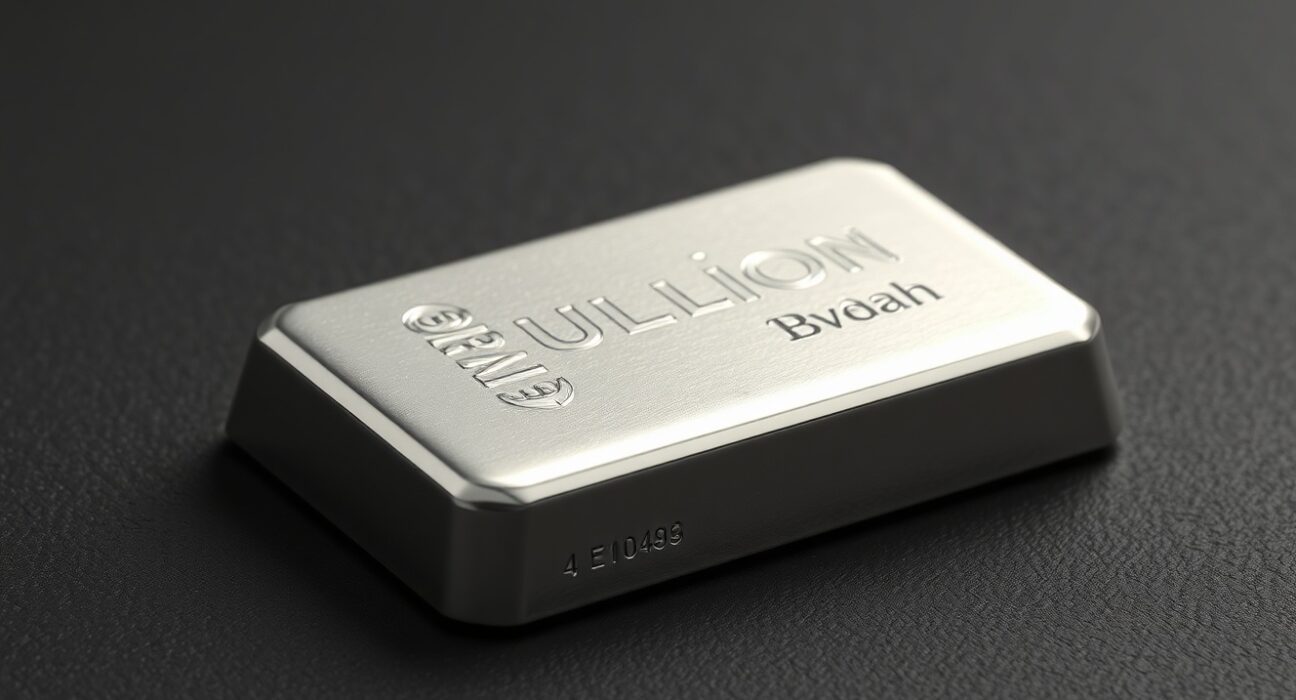
LONDON, April 2025 – The silver market, represented by the XAG/USD pair, continues to face significant resistance below the critical $80 per ounce threshold. This persistent pressure coincides directly with a notable deterioration in diplomatic relations between the United States and Iran, a key geopolitical flashpoint that historically sways precious metals sentiment. Consequently, traders and analysts are closely monitoring these intertwined dynamics for their profound impact on silver price forecasts and broader commodity flows.
Silver Price Forecasts Confront Geopolitical Headwinds
Market data from major exchanges shows XAG/USD consolidating in a narrow band between $78.50 and $79.80. This consolidation phase follows a failed attempt to breach the $81 resistance level earlier in the month. The failure highlights the market’s current sensitivity to external risk factors rather than pure supply-demand fundamentals. Furthermore, trading volumes have increased marginally, suggesting heightened investor attention. Historical analysis indicates that silver often exhibits amplified volatility compared to gold during periods of geopolitical uncertainty, a pattern currently under scrutiny.
Several key technical indicators support the observed price action. The 50-day and 200-day moving averages have begun to converge, typically signaling a potential period of indecision. Meanwhile, the Relative Strength Index (RSI) hovers near 45, indicating neither overbought nor oversold conditions. This technical posture leaves the market vulnerable to sudden shifts driven by news flow. Analysts from institutions like Bloomberg Intelligence and the World Bank frequently reference such chart patterns when assessing short-term commodity trajectories.
The Eroding Foundation of US-Iran Diplomacy
The recent downturn in diplomatic prospects marks a sharp reversal from the cautious optimism that characterized late 2024. High-level talks, which showed initial promise, have stalled over core issues including nuclear enrichment levels and sanctions relief. Verified reports from international bodies confirm that diplomatic channels have grown notably quieter in recent weeks. This silence itself acts as a market signal, often interpreted as a precursor to heightened tensions.
The regional implications are substantial. The Strait of Hormuz, a critical chokepoint for global energy shipments, remains a focal point of military posturing. Instability in this region reliably triggers safe-haven asset flows. Historical precedent, such as the market reactions following the 2019 tanker incidents and the 2020 assassination of General Qasem Soleimani, provides a clear template. During those events, silver prices experienced sharp, albeit sometimes temporary, upward spikes as investors sought tangible assets.
Expert Analysis on Market Correlations
“The correlation between Middle Eastern geopolitical risk and precious metals is well-established but non-linear,” explains Dr. Anya Sharma, Head of Commodities Research at the Global Markets Institute. “While gold is the primary beneficiary, silver’s dual role as a monetary and industrial metal creates a unique volatility profile. Our models show that for every 10% increase in a proprietary geopolitical risk index for the Persian Gulf, silver volatility (measured by the CBOE’s Silver Volatility Index) increases by an average of 15%. However, sustained price rallies require a confluence of factors, including dollar weakness and real interest rate expectations.”
This expert perspective underscores the multifaceted nature of the silver market. Industrial demand, which accounts for over half of global silver consumption, introduces another variable. Supply chain data from the Silver Institute indicates stable photovoltaic and electronics sector demand, providing a price floor. Therefore, the current price action represents a tension between this industrial support and the fluctuating premium driven by geopolitical fear.
Comparative Impact on Precious Metals
The reaction across the precious metals complex has been nuanced. The following table illustrates the recent performance of key assets, highlighting silver’s relative position:
| Asset | Symbol | Price Change (30-Day) | Primary Driver |
|---|---|---|---|
| Gold | XAU/USD | +1.8% | Safe-haven demand, central bank buying |
| Silver | XAG/USD | -0.5% | Geopolitical risk vs. industrial demand balance |
| Platinum | XPT/USD | +0.2% | Auto-catalyst demand recovery |
| Palladium | XPD/USD | -2.1% | Substitution by platinum in automotive sector |
This divergence confirms that not all precious metals respond identically to the same stimulus. Silver’s underperformance relative to gold in this specific risk-off environment suggests other forces are at play. Primary among these is the strength of the US Dollar Index (DXY), which has remained firm due to the Federal Reserve’s monetary policy stance. A strong dollar makes dollar-denominated commodities like silver more expensive for holders of other currencies, dampening demand.
Macroeconomic Context and Federal Reserve Policy
The broader macroeconomic landscape forms the essential backdrop for all commodity price forecasts. Current Federal Reserve policy, aimed at managing inflation while avoiding recession, keeps real interest rates in positive territory. This environment traditionally presents a headwind for non-yielding assets like silver. However, the calculus shifts if geopolitical events trigger a “flight to safety” that outweighs interest rate concerns.
Market participants also monitor key economic indicators:
- Inflation Data (CPI/PCE): Persistent inflation supports hard assets as stores of value.
- Industrial Production Figures: Strong manufacturing data bolsters silver’s industrial demand thesis.
- Currency Flows: Movements in major currency pairs, especially EUR/USD and USD/JPY, directly impact dollar-denominated silver prices.
Furthermore, investment flows into physically-backed silver ETFs provide a transparent gauge of institutional sentiment. Holdings in the largest funds have seen modest outflows over the past month, aligning with the price consolidation. This data point suggests that while geopolitical tensions are noted, they have not yet triggered a large-scale reallocation into the metal.
The Role of Technical Support and Resistance Levels
From a chartist’s viewpoint, several price levels are critical for the XAG/USD forecast. The immediate support zone lies between $77.00 and $77.50, a region tested successfully multiple times in Q1 2025. A decisive break below this area could signal a deeper correction toward $74.00. Conversely, resistance is clearly defined at $80.50, followed by the yearly high near $82.30. A daily close above $80.50, especially on high volume, would likely invalidate the current bearish near-term bias and could attract momentum-based buying.
Conclusion
In summary, the current silver price forecast for XAG/USD reflects a complex interplay of forces. The metal holds below the psychologically significant $80 level primarily due to fading hopes for US-Iran de-escalation, coupled with a resilient US dollar. While the inherent geopolitical risk premium provides underlying support, the lack of a clear catalyst has resulted in market indecision. Therefore, traders should monitor diplomatic developments in the Middle East alongside key US economic data and dollar strength. A resolution to tensions could remove a key support pillar, while an escalation could rapidly propel prices higher, testing the identified resistance levels. The market awaits a decisive fundamental trigger to break the current consolidation.
FAQs
Q1: Why is the silver price (XAG/USD) sensitive to US-Iran relations?
The Strait of Hormuz, a vital oil shipping lane bordered by Iran, is a global chokepoint. Heightened tensions threaten supply disruptions, spurring inflation fears and safe-haven buying in precious metals, which includes silver as a historically recognized store of value.
Q2: What is the main difference between gold and silver price reactions to geopolitical risk?
Gold is viewed as a pure monetary safe-haven. Silver has significant industrial uses (e.g., solar panels, electronics). Its price therefore balances safe-haven demand against expectations for industrial economic activity, often making it more volatile than gold in such scenarios.
Q3: What key technical level are analysts watching for XAG/USD?
Analysts are closely watching the $80.50 resistance level. A sustained break above this could signal a bullish reversal, while failure to breach it reinforces the current consolidation phase below $80.
Q4: How does a strong US Dollar (DXY) impact the silver price forecast?
Silver is priced in US dollars globally. A stronger dollar makes silver more expensive for buyers using other currencies, which can dampen international demand and exert downward pressure on the XAG/USD price.
Q5: Besides geopolitics, what fundamental factors support the silver price?
Strong and growing industrial demand, particularly from the green energy sector for photovoltaic cells, provides a fundamental price floor. Additionally, ongoing mine supply constraints and steady investment demand from ETFs are supportive factors.
Disclaimer: The information provided is not trading advice, Bitcoinworld.co.in holds no liability for any investments made based on the information provided on this page. We strongly recommend independent research and/or consultation with a qualified professional before making any investment decisions.
