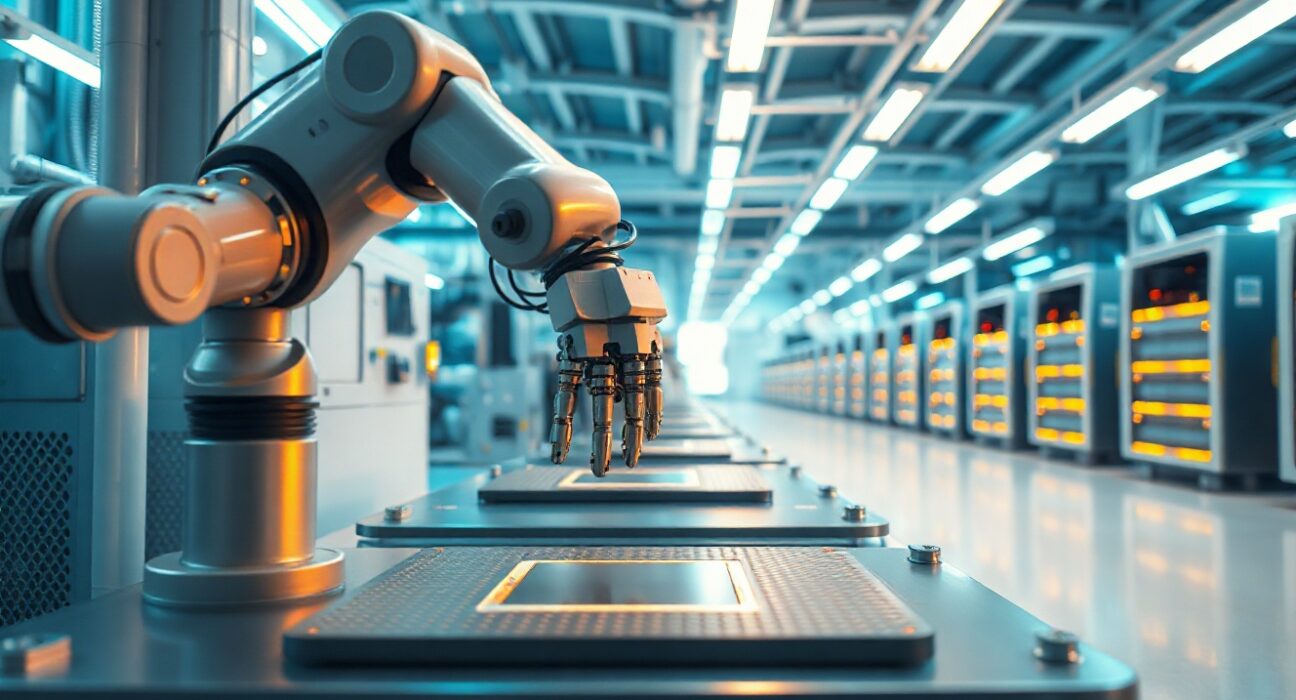
South Korean memory chip giant SK Hynix, a direct competitor to Samsung and US-based Micron, announced plans to sell nearly 17.8 million shares through a US initial public offering. The company will offer American depositary receipts (ADRs), each representing one-tenth of a common share, making it easier for US investors to buy into the AI-driven memory boom without trading directly on the Seoul exchange.
A $28 Billion Bet on AI Memory Demand
Based on SK Hynix’s closing share price last Friday in Seoul, the offering could raise approximately $28 billion, according to Bloomberg. The securities are expected to price on Thursday and begin trading on Friday. The move comes as hyperscalers like Amazon, Microsoft, Google, and Oracle race to build out AI data centers, creating a surge in demand for High Bandwidth Memory (HBM), DRAM, and NAND chips.
Riding the ‘RAMageddon’ Wave
SK Hynix’s first-quarter revenues jumped nearly 200% year over year, and its stock has risen about 260% so far this year. The company is benefiting from what industry analysts have called ‘RAMageddon’ — a severe memory chip shortage driven by the insatiable appetite of AI systems. Apple executives recently said the shortage is forcing price increases on Mac computers and iPads. South Korean tech companies, led by SK Hynix and Samsung, have pledged over $550 billion in new manufacturing capacity to keep pace.
Why This Matters for Investors
Wall Street is searching for the next Nvidia, and memory chip makers are among the closest options. Micron, the closest US comparison, has seen its valuation surge past $1 trillion over the past year, fueled by record AI-driven memory demand. SK Hynix’s US listing offers American investors a direct stake in this critical supply chain. However, the massive investment in new fabrication plants carries risk: by the time facilities are built, memory requirements for AI could shift, potentially leading to oversupply and price crashes.
Conclusion
SK Hynix’s US IPO marks a significant moment for the semiconductor industry, giving American investors direct access to the AI memory boom. While the near-term outlook is strong, the long-term sustainability of demand remains uncertain. The company’s ability to navigate the cyclical nature of the memory chip market will be key to its success.
FAQs
Q1: What are American depositary receipts (ADRs)?
ADRs are certificates issued by US banks that represent shares in a foreign company. They allow US investors to buy and trade foreign stocks on US exchanges without dealing with overseas markets or currency conversions.
Q2: Why is SK Hynix going public in the US now?
The company is capitalizing on surging demand for AI memory chips, which has driven its revenue and stock price sharply higher. A US listing provides access to a deeper pool of capital and broader investor base.
Q3: What are the risks of investing in SK Hynix?
Key risks include the cyclical nature of the memory chip market, potential oversupply as new factories come online, and the possibility that AI memory requirements may change, reducing demand for current technologies.
Frequently Asked Questions
What exactly is SK Hynix offering in its US IPO?
SK Hynix is selling American depositary receipts (ADRs), with each ADR representing one-tenth of a common share, making it easier for US investors to buy without trading on the Seoul exchange.
How much money could the IPO raise?
Based on SK Hynix’s closing share price in Seoul, the offering of nearly 17.8 million shares could raise approximately $28 billion.
Why is SK Hynix going public in the US now?
The company is capitalizing on surging demand for AI memory chips like High Bandwidth Memory (HBM), driven by hyperscalers building AI data centers, and wants to give American investors direct access to this boom.
What is ‘RAMageddon’ and how does it affect SK Hynix?
RAMageddon refers to a severe memory chip shortage caused by AI demand, which has boosted SK Hynix’s first-quarter revenues by nearly 200% year over year and its stock by about 260%.
What are the risks of investing in SK Hynix’s US IPO?
The main risk is that the massive investment in new fabrication plants could lead to oversupply and price crashes if AI memory requirements shift by the time the facilities are built.
Disclaimer: The information provided is not trading advice, Bitcoinworld.co.in holds no liability for any investments made based on the information provided on this page. We strongly recommend independent research and/or consultation with a qualified professional before making any investment decisions.