

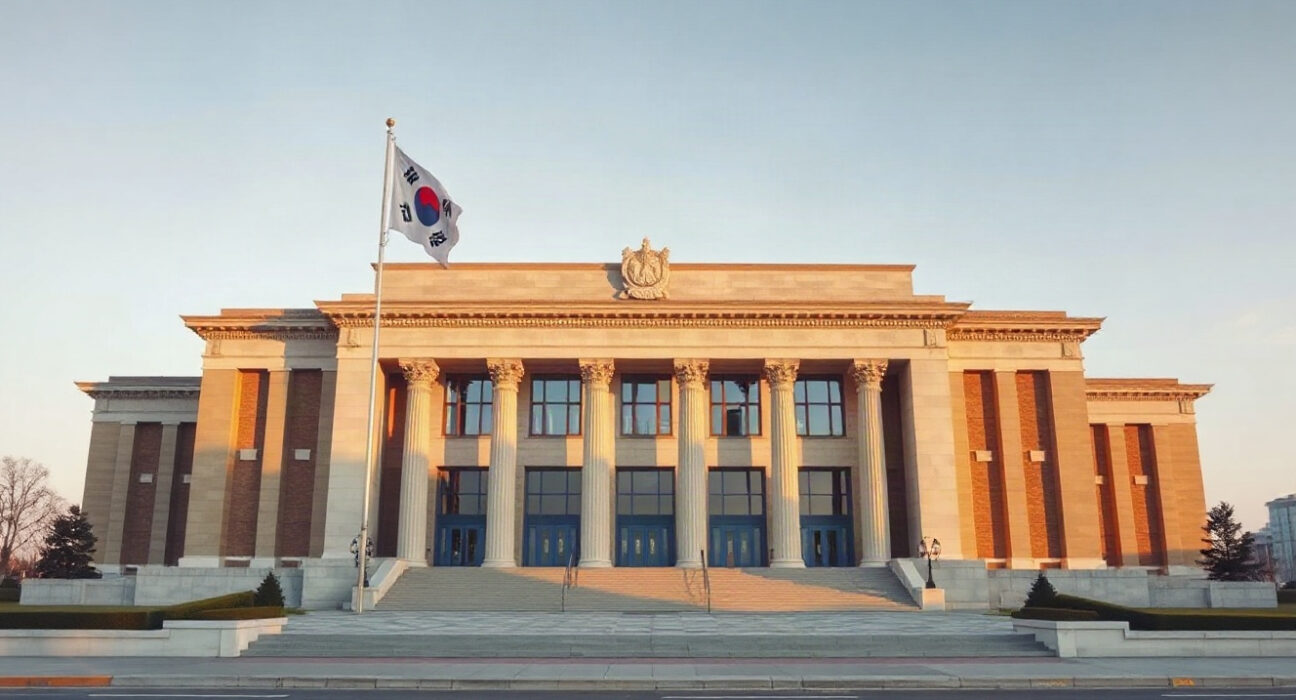
South Korea’s National Policy Committee is set to debate a bill today that would eliminate the so-called one exchange-one bank rule, a regulation requiring digital asset exchanges to partner with a single bank for real-name account services. The amendment, part of the Act on Reporting and Use of Certain Financial Transaction Information, is among 136 bills on the agenda for the full committee meeting at the National Assembly.
What the Amendment Proposes
The proposed change would allow virtual asset service providers (VASPs) to obtain real-name verified deposit and withdrawal accounts from one or more financial institutions. Currently, exchanges must maintain a single banking partnership, a rule introduced in 2018 to curb money laundering and enhance transparency in crypto trading. The amendment also stipulates that the standards, conditions, and procedures for opening such accounts would be set by presidential decree, granting the government flexibility to adjust requirements as the market evolves.
If passed, the change could significantly alter the operational landscape for crypto exchanges in South Korea. Exchanges have long complained that the one-bank rule limits their ability to scale services and negotiate favorable terms. By allowing multiple banking partners, the amendment could foster greater competition among banks and improve access to banking services for smaller exchanges, which have often struggled to secure partnerships due to risk-averse lenders.
Implications for the Crypto Market
The move comes amid a broader regulatory push in South Korea to balance innovation with investor protection. The country has been a global leader in cryptocurrency adoption, yet its regulatory framework has been criticized for being overly restrictive. In 2023, the government introduced the Virtual Asset User Protection Act, which mandated stricter custody standards and insurance requirements. The current amendment signals a potential shift toward a more accommodating stance, though it remains subject to parliamentary approval and presidential decree.
Industry observers note that allowing multiple bank partnerships could also enhance consumer choice, as users may have more options for deposit and withdrawal methods. However, some experts caution that the change could increase compliance complexity for both exchanges and banks, particularly regarding anti-money laundering (AML) obligations. The Financial Services Commission (FSC) would likely need to issue detailed guidelines to ensure that the multi-bank model does not weaken oversight.
Why This Matters
For crypto exchanges operating in South Korea, the outcome of today’s debate is critical. A successful amendment could lower entry barriers and enable smaller platforms to compete more effectively with dominant players like Upbit and Bithumb. For users, it may lead to improved services and lower fees as competition intensifies. For the broader industry, the move could serve as a bellwether for how South Korea intends to regulate digital assets in the coming years, especially as global jurisdictions like the European Union and Japan refine their own frameworks.
Conclusion
The bill to scrap the one exchange-one bank rule represents a notable potential shift in South Korea’s cryptocurrency regulation. While the amendment is still under discussion, its approval could pave the way for a more flexible banking environment for VASPs, aligning with the industry’s calls for modernization. As the National Policy Committee convenes, stakeholders will be watching closely to see whether the measure gains traction and what specific conditions the presidential decree might impose.
FAQs
Q1: What is the one exchange-one bank rule in South Korea?
The rule requires each cryptocurrency exchange to partner with only one bank to provide real-name verified deposit and withdrawal accounts. It was introduced in 2018 to enhance transparency and prevent money laundering in crypto trading.
Q2: How would the amendment change the current system?
The amendment would allow virtual asset service providers to receive real-name accounts from one or more financial institutions, rather than being limited to a single bank. The specific standards and procedures would be determined by presidential decree.
Q3: What could be the impact of this change on crypto exchanges?
Exchanges could benefit from increased banking options, potentially leading to better service terms and lower operational risks. Smaller exchanges might find it easier to secure banking partnerships, fostering greater competition in the market.
Disclaimer: The information provided is not trading advice, Bitcoinworld.co.in holds no liability for any investments made based on the information provided on this page. We strongly recommend independent research and/or consultation with a qualified professional before making any investment decisions.
