

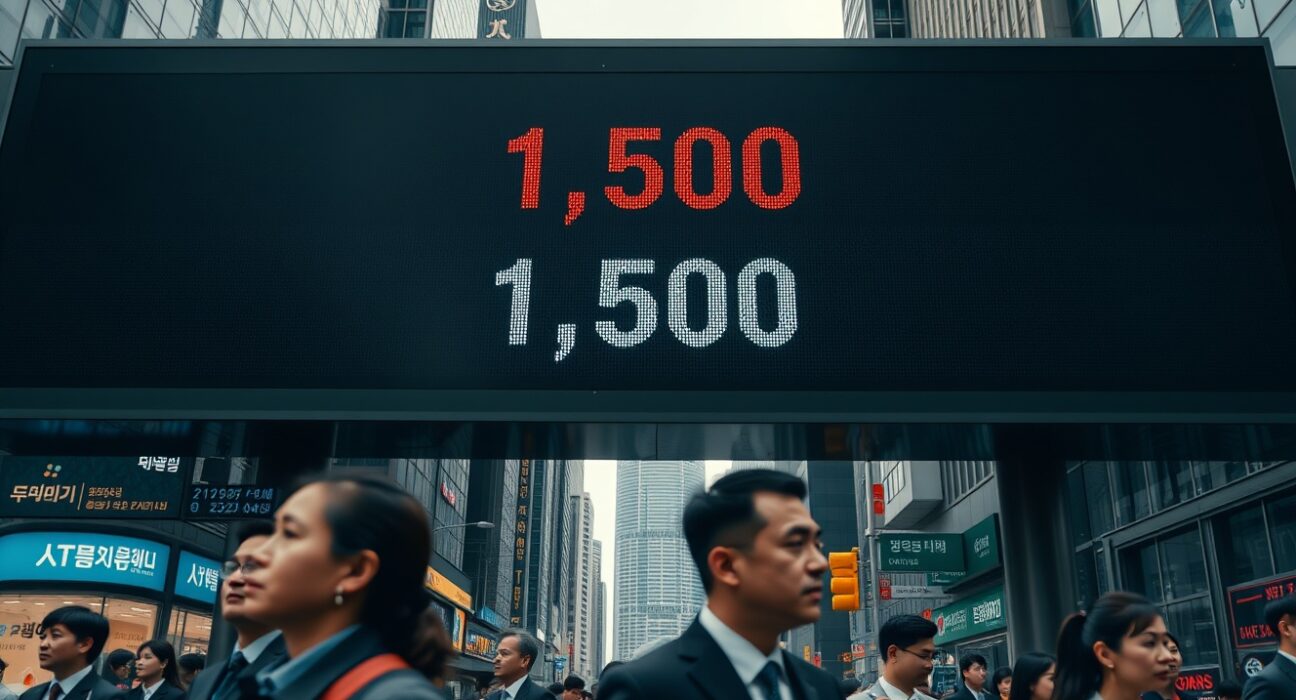
The South Korean won has weakened past the 1,500 mark against the US dollar, a level not seen since the global financial crisis in 2009. The exchange rate breached the psychological barrier amid growing concerns over global economic uncertainty and shifting monetary policies.
What Drove the Won Past 1,500?
The won’s depreciation reflects a combination of external and domestic pressures. A key factor has been the sustained strength of the US dollar, driven by the Federal Reserve’s hawkish stance on interest rates. Additionally, geopolitical tensions and a slowdown in China’s economy, a major trading partner for South Korea, have weighed on investor sentiment toward Asian currencies.
Domestically, South Korea’s export-dependent economy has faced headwinds from weakening global demand for semiconductors and other key products. This has put additional downward pressure on the won, as foreign investors have reduced their exposure to Korean assets.
Implications for the South Korean Economy
A weaker won has mixed implications. On the positive side, it makes South Korean exports cheaper on global markets, potentially boosting sales for major companies like Samsung and Hyundai. However, it also raises the cost of imports, particularly for energy and raw materials, which can fuel inflation and squeeze household budgets.
The Bank of Korea faces a delicate balancing act. While a weaker won can help exporters, it also risks capital outflows and higher import prices. The central bank has previously intervened in the foreign exchange market to smooth excessive volatility, and further action is possible if the won continues to slide.
What This Means for Consumers and Businesses
For ordinary South Koreans, the immediate impact is likely to be felt in higher prices for imported goods, from food to fuel. Businesses that rely on imported components may see their profit margins shrink, while exporters could gain a competitive edge. Travelers heading abroad will find their won buys less, potentially dampening overseas spending.
Conclusion
The won’s breach of the 1,500 level marks a significant moment for South Korea’s economy, reflecting deep-seated global and domestic challenges. While the weaker currency offers some relief for exporters, the broader risks of inflation and capital flight remain. Markets will be watching closely for any policy response from the Bank of Korea or the government.
FAQs
Q1: Why is the South Korean won weakening against the US dollar?
The won is weakening primarily due to the strong US dollar, driven by Federal Reserve interest rate hikes, and concerns over global economic growth, particularly in China. South Korea’s export slowdown has also reduced demand for the won.
Q2: What does a weaker won mean for the average person in South Korea?
A weaker won makes imported goods more expensive, potentially raising prices for food, fuel, and electronics. It also makes overseas travel and education abroad more costly. However, it can benefit exporters, potentially supporting jobs in that sector.
Q3: Has the Bank of Korea intervened to stabilize the won?
The Bank of Korea has historically intervened in the foreign exchange market to curb excessive volatility. While specific intervention details are not always disclosed, the central bank is likely monitoring the situation closely and may act if the won’s decline becomes disorderly.
Disclaimer: The information provided is not trading advice, Bitcoinworld.co.in holds no liability for any investments made based on the information provided on this page. We strongly recommend independent research and/or consultation with a qualified professional before making any investment decisions.
