

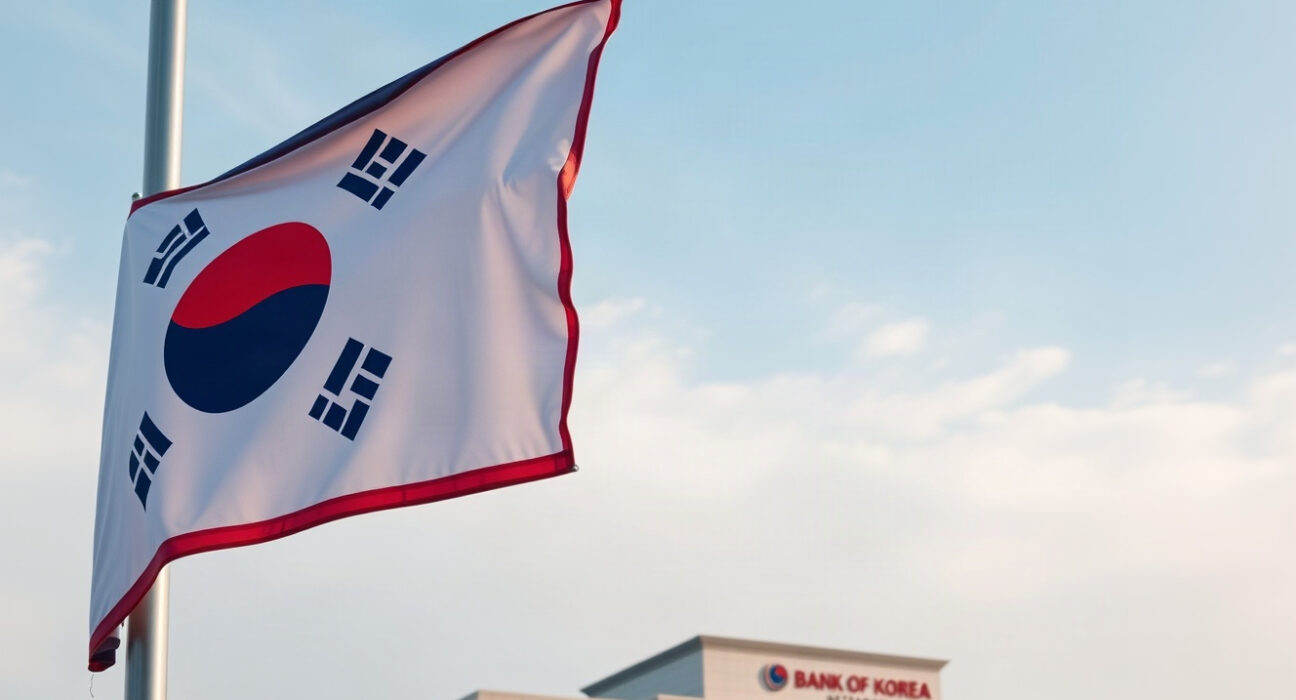
The South Korean won appreciated against the US dollar on Thursday after the Bank of Korea (BoK) raised its benchmark interest rate for the second consecutive meeting, signaling a firm commitment to curbing inflation. The won traded at 1,290.1 per dollar as of 3:02 p.m. KST, up 0.5% from the previous close, following the central bank’s decision to lift the seven-day repurchase rate by 25 basis points to 1.75%.
What prompted the BoK’s second straight hike?
The BoK’s move, announced at its policy meeting on Thursday, marks the first time since 2007 that the central bank has raised rates in consecutive meetings. The decision reflects growing concerns over inflation, which has been running well above the bank’s 2% target. Consumer prices in South Korea rose 4.8% in June from a year earlier, the fastest pace in nearly 14 years, driven by surging energy and food costs.
Governor Rhee Chang-yong emphasized the need to normalize monetary policy gradually, citing robust export growth and a recovering labor market. The bank also revised its inflation forecast for this year to 4.5%, up from its previous estimate of 3.1%, while trimming its economic growth outlook to 2.6% from 3.0%.
Market reaction and currency dynamics
The won’s gains were also supported by a softer US dollar, which eased after the US Federal Reserve’s recent rate increase was largely priced in. Analysts noted that the BoK’s hawkish stance, coupled with South Korea’s solid trade surplus, has made the won an attractive carry trade candidate.
However, some market participants remain cautious about the sustainability of the currency’s strength. The BoK’s tightening cycle may weigh on domestic consumption and the housing market, which has shown signs of cooling. Moreover, global recession risks and geopolitical tensions could trigger safe-haven flows back into the dollar.
Implications for borrowers and consumers
The rate hike will increase borrowing costs for households and businesses, particularly those with variable-rate loans. South Korea’s household debt stands at around 105% of GDP, one of the highest levels among advanced economies. The central bank’s move is likely to add pressure on highly leveraged borrowers, potentially slowing private spending.
For consumers, higher rates could help contain inflation in the medium term, but they also mean higher mortgage and credit card payments. The BoK has signaled that further hikes may be necessary if inflation remains elevated, but the pace will depend on economic data and financial stability conditions.
Conclusion
The Bank of Korea’s second consecutive rate hike has bolstered the won and underscored its resolve to tame inflation. While the immediate market reaction was positive, the longer-term impact on economic growth and financial stability remains uncertain. Investors and consumers alike should watch for signals from the central bank on the future path of rates, as well as external factors such as the Fed’s policy trajectory and global commodity prices.
FAQs
Q1: How does the Bank of Korea’s rate hike affect the South Korean won?
A rate hike typically strengthens a currency by attracting foreign capital seeking higher yields. The won’s recent appreciation reflects this dynamic, along with a softer US dollar and robust export performance.
Q2: What are the potential downsides of consecutive rate hikes?
Higher rates can slow economic growth by increasing borrowing costs for consumers and businesses. They can also strain household finances, particularly in a high-debt environment like South Korea, potentially leading to reduced spending and investment.
Q3: Will the BoK continue raising rates?
The BoK has not committed to a specific path, but Governor Rhee has indicated that further hikes are possible if inflation stays high. Future decisions will likely depend on inflation data, economic growth, and global financial conditions.
Disclaimer: The information provided is not trading advice, Bitcoinworld.co.in holds no liability for any investments made based on the information provided on this page. We strongly recommend independent research and/or consultation with a qualified professional before making any investment decisions.
