

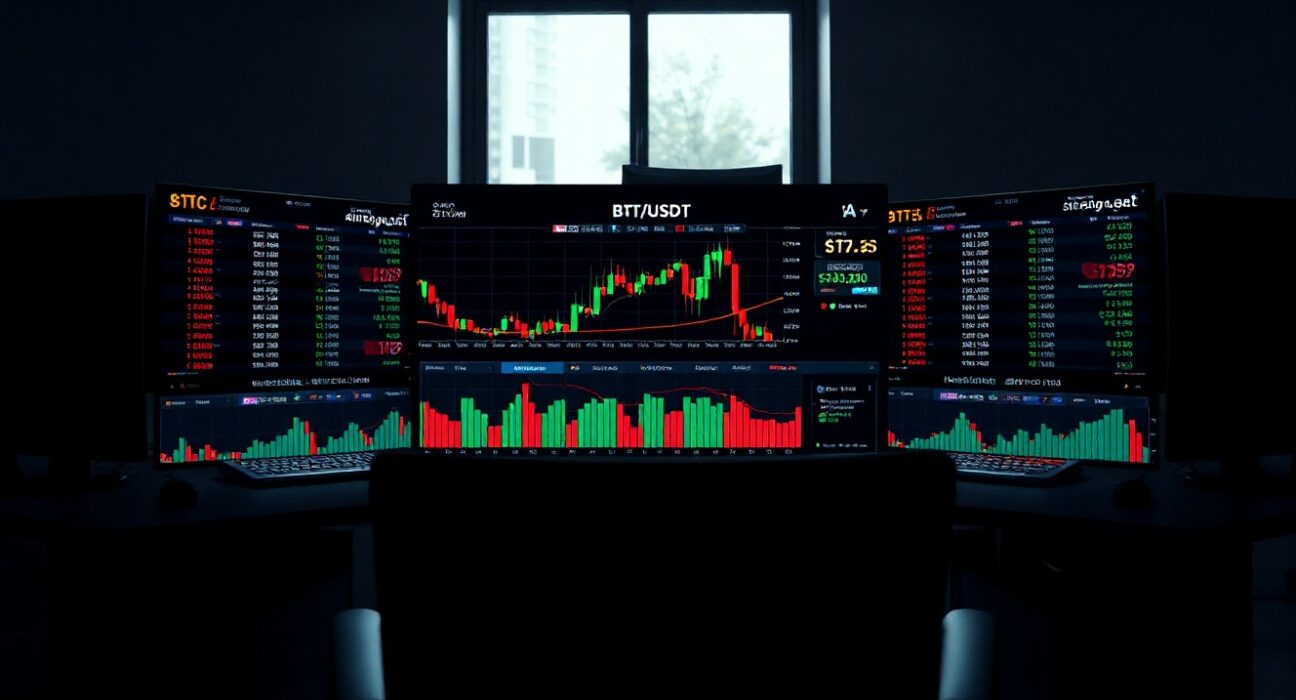
At 11:00 a.m. UTC on June 4, the Spot Cumulative Volume Delta (CVD) chart for the BTC/USDT trading pair provides traders with a detailed view of order book dynamics, combining a Volume Heatmap with real-time buy and sell pressure data. This analysis helps identify potential support and resistance levels based on trading activity at specific price points.
Understanding the Volume Heatmap
The top section of the chart displays a Volume Heatmap, which tracks trading volume across various price levels. The background color intensity increases when the price either remains within a specific range for an extended period or undergoes a significant move. These brighter areas often indicate zones where the market has shown strong interest, potentially acting as support or resistance in future price action. Traders use this visual cue to anticipate where the price might stall or reverse.
Cumulative Volume Delta (CVD) Indicator
The bottom section of the chart features the Cumulative Volume Delta (CVD), which categorizes buy and sell orders by size. As buy orders for a specific size increase, the corresponding colored line rises. For example, the yellow line tracks orders between $100 and $1,000, while the brown line represents large orders between $1 million and $10 million. This breakdown allows traders to monitor the activity of different market participants, from retail traders to institutional players, and gauge the strength of buying or selling pressure at a glance.
Implications for Traders
By combining the Volume Heatmap with the CVD, traders can assess whether price movements are supported by genuine volume and order flow. A price increase accompanied by rising CVD lines for larger order sizes suggests strong institutional buying, while a price drop with falling CVD may indicate weakness. Conversely, divergence between price and CVD can signal potential reversals. This chart is particularly useful for intraday traders looking to time entries and exits based on real-time market microstructure.
Conclusion
The Spot CVD chart for BTC/USDT at 11:00 UTC on June 4 offers a granular look at market dynamics, highlighting key price levels through volume activity and order flow analysis. Traders should monitor these indicators alongside broader market trends to make informed decisions. As always, no single indicator guarantees future performance, and risk management remains essential.
FAQs
Q1: What is the Spot CVD chart used for?
The Spot CVD chart helps traders analyze order book dynamics by showing trading volume at specific price levels (Volume Heatmap) and the cumulative volume of buy and sell orders categorized by size (CVD). It is used to identify potential support/resistance zones and gauge buying or selling pressure.
Q2: How does the Volume Heatmap indicate support or resistance?
Brighter areas on the Volume Heatmap indicate where the price has spent more time or experienced significant moves, suggesting strong market interest. These zones often act as support (price floor) or resistance (price ceiling) in future trading.
Q3: What do the different colored lines in the CVD represent?
Each colored line in the CVD represents buy and sell orders of a specific size range. For example, the yellow line tracks orders between $100 and $1,000, while the brown line tracks large orders between $1 million and $10 million. Rising lines indicate increased buying activity for that order size.
Disclaimer: The information provided is not trading advice, Bitcoinworld.co.in holds no liability for any investments made based on the information provided on this page. We strongly recommend independent research and/or consultation with a qualified professional before making any investment decisions.
