
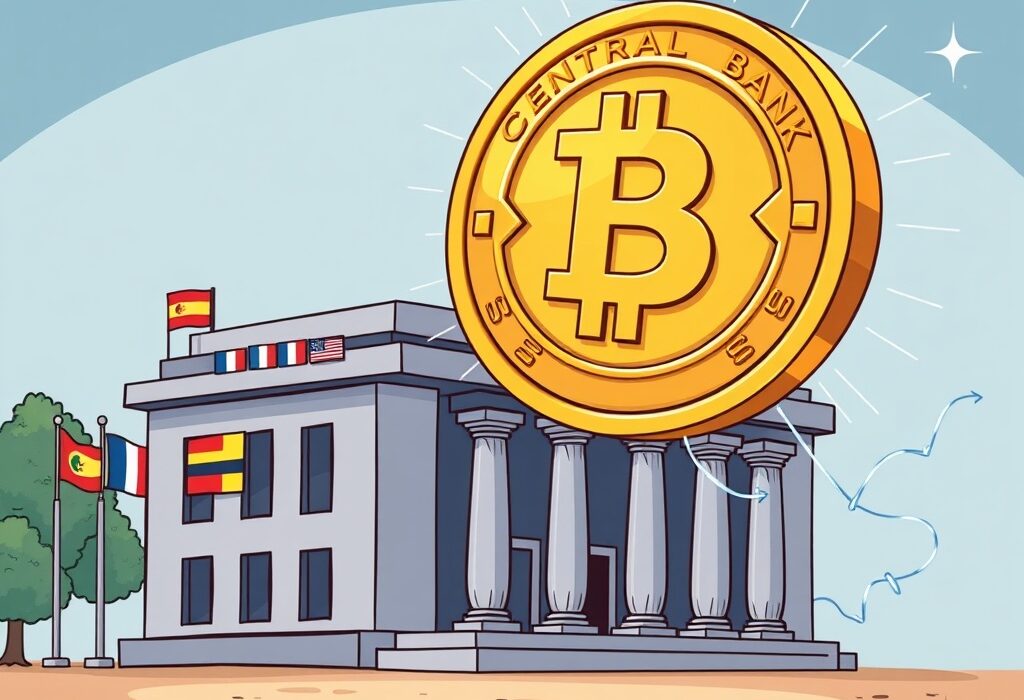
A significant warning has emerged from the Bank for International Settlements (BIS), highlighting a growing stablecoin threat to global financial stability. Shin Hyun-song, Economic Adviser and Head of the Monetary and Economic Department at the BIS, recently voiced concerns that the widespread adoption of stablecoins could undermine countries’ control over their money supply. This crucial perspective comes at a time when digital currencies are rapidly reshaping the financial landscape, prompting a serious look at their potential implications for national economies.
Why is the Stablecoin Threat So Concerning?
Speaking at the 2025 World Congress of the Econometric Society (ESWC 2025) in Seoul, Shin Hyun-song painted a clear picture of the risks. He explained that stablecoins, despite their name, pose several challenges to traditional financial systems and national sovereignty. His primary concerns revolve around:
- Financial Crime: The pseudonymous nature of some blockchain transactions could facilitate illicit activities.
- Capital Flight: Easy movement of funds across borders via stablecoins might make it harder for nations to manage capital flows during economic instability.
- Monetary Sovereignty: The ability of a central bank to control its nation’s currency and monetary policy could diminish if stablecoins become widely used alternatives to fiat currency.
These issues underscore a fundamental conflict between the decentralized nature of blockchain and the centralized control typically exercised by national governments over their financial systems. The stablecoin threat is not just theoretical; it represents a tangible challenge to established economic frameworks.
Addressing the Stablecoin Threat: Regulation and Off-Ramps
Shin Hyun-song also offered a strategic approach for regulators to mitigate the stablecoin threat. He acknowledged that traditional financial rules are often poorly suited for blockchain-based transactions. Instead of attempting to police the intricate and evolving blockchain technology itself, he proposed a more pragmatic focus:
- Focus on Off-Ramps: Regulators should concentrate their efforts on the points where digital assets convert back into traditional fiat currency or connect with the banking system. These “off-ramps” are critical gateways where oversight can be effectively applied.
- Leveraging Existing Structures: By monitoring the links between the crypto world and the conventional financial system, authorities can better track illicit flows and ensure compliance without stifling innovation entirely.
This approach suggests that a targeted regulatory strategy, rather than a broad ban, might be more effective in managing the risks associated with stablecoins while allowing the underlying technology to evolve. Understanding where stablecoins interact with traditional finance is key to addressing the growing stablecoin threat.
Preserving Monetary Singleness Amidst the Stablecoin Threat
A core tenet of Shin Hyun-song’s argument is the importance of preserving the “singleness” of money. This principle means that there should be one universally accepted form of money within an economy, typically issued by the central bank. This ensures stability, facilitates transactions, and allows for effective monetary policy implementation.
However, Shin argued that stablecoins inherently undermine this principle. By introducing alternative forms of money that have their own exchange rates against the national currency, stablecoins create fragmentation. This fragmentation can:
- Complicate monetary policy transmission.
- Introduce additional layers of financial risk.
- Potentially erode public trust in the national currency.
The proliferation of different stablecoins, each potentially pegged to different assets or currencies, could lead to a fragmented monetary landscape, making it harder for central banks to maintain economic stability. This challenge forms a significant part of the overall stablecoin threat.
What Does This Mean for the Future of Money?
The BIS economist’s warning underscores a critical debate facing policymakers worldwide. While stablecoins offer potential benefits like faster transactions and lower costs, their rapid growth necessitates careful consideration of their broader economic impact. The challenge lies in fostering innovation in digital finance while safeguarding national monetary sovereignty and financial integrity.
Governments and central banks are actively exploring various responses, from developing central bank digital currencies (CBDCs) to implementing new regulatory frameworks. The goal is to harness the potential of digital assets responsibly, ensuring that the benefits outweigh the inherent risks. The dialogue surrounding the stablecoin threat will undoubtedly continue to shape the future of global finance.
In summary, the BIS’s recent warning highlights a multifaceted stablecoin threat to national monetary control. From concerns over financial crime and capital flight to the fundamental challenge of undermining the “singleness” of money, the implications are profound. Regulators are urged to focus on the points where stablecoins connect with traditional finance to effectively manage these risks. This ongoing conversation will be pivotal in shaping how nations navigate the evolving digital currency landscape.
Frequently Asked Questions (FAQs)
Q1: What is the main concern of the BIS regarding stablecoins?
A1: The Bank for International Settlements (BIS) is primarily concerned that stablecoins could undermine national monetary sovereignty, facilitate financial crime, and lead to capital flight, thereby destabilizing traditional financial systems.
Q2: Who is Shin Hyun-song and what is his role?
A2: Shin Hyun-song is the Economic Adviser and Head of the Monetary and Economic Department at the Bank for International Settlements (BIS). He is a key voice in global financial policy discussions.
Q3: How do stablecoins threaten monetary sovereignty?
A3: Stablecoins threaten monetary sovereignty by introducing alternative forms of money that operate outside direct central bank control, potentially leading to fragmented monetary systems and complicating a nation’s ability to manage its currency and economy.
Q4: What regulatory approach does the BIS economist suggest for stablecoins?
A4: Shin Hyun-song suggests that regulators focus on the “off-ramps” – the points where stablecoins convert back into traditional fiat currency or connect with the banking system – rather than trying to police the entire blockchain itself.
Q5: What is the “singleness of money” principle?
A5: The “singleness of money” principle refers to the idea that an economy should have one universally accepted form of money, typically issued by the central bank. This ensures monetary stability and effective policy implementation, a principle stablecoins are seen to challenge.
If you found this article insightful, please consider sharing it with your network on social media. Your support helps us continue to deliver critical insights into the evolving world of digital finance and the ongoing discussions around the stablecoin threat.
To learn more about the latest crypto market trends, explore our article on key developments shaping digital currency institutional adoption.
Disclaimer: The information provided is not trading advice, Bitcoinworld.co.in holds no liability for any investments made based on the information provided on this page. We strongly recommend independent research and/or consultation with a qualified professional before making any investment decisions.