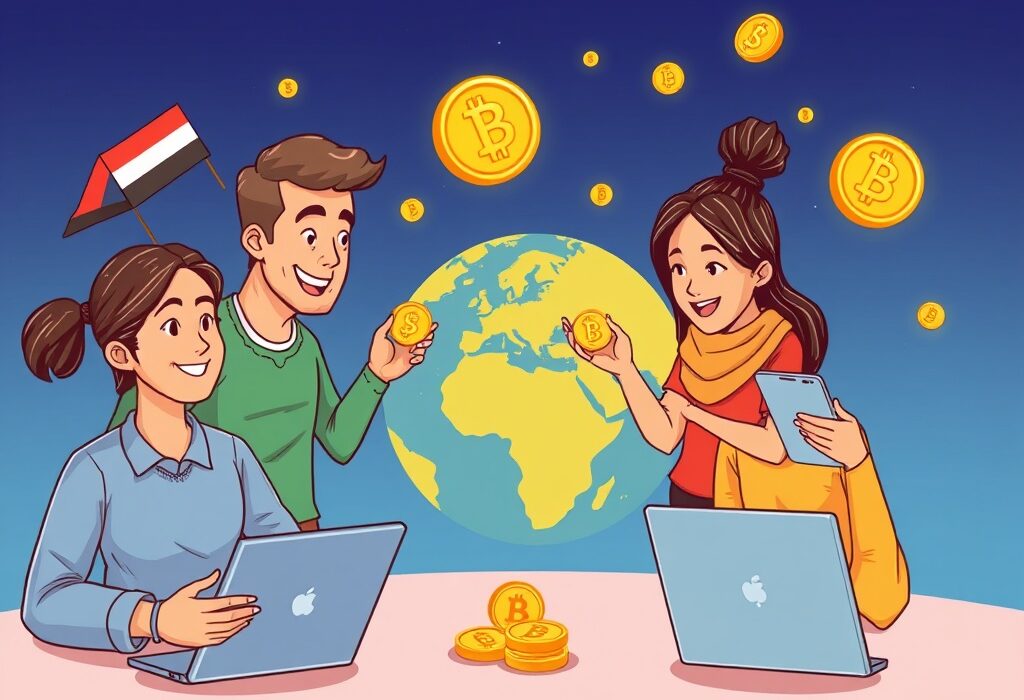
Are you tired of the slow, expensive, and often frustrating process of sending money across borders? For far too long, international remittances have been plagued by delays, high fees, and a lack of accessibility. But what if there was a better way? Enter stablecoins for international remittances – a groundbreaking solution poised to revolutionize how we transfer value globally.
Why Are Stablecoins for International Remittances a True Game-Changer?
Traditional international money transfers often involve multiple intermediaries, leading to significant wait times and hidden costs. Banks can refuse transfers, and transactions frequently get stuck over weekends, leaving recipients waiting for crucial funds. This is where stablecoins, digital currencies pegged to stable assets like the US dollar, step in.
Speaking at the Upbit Developer Conference (UDC) 2025 in Seoul, Tether’s Head of Global Strategy, Marco Dal Lago, highlighted the immense potential of stablecoins. He articulated a clear vision: these digital assets can directly address many of the persistent problems associated with international remittances, making global finance more efficient and inclusive.
How Is Tether Expanding Stablecoins for International Remittances Globally?
Tether, a pioneer in the stablecoin space, isn’t just talking about solutions; they’re actively building them. Dal Lago emphasized Tether’s commitment to expanding liquidity tailored to the unique economic environment of each country. This strategic approach has been instrumental in establishing USDT, Tether’s flagship stablecoin, as a pivotal means of remittance and transaction across numerous nations worldwide.
Consider the benefits of this expansion:
- Increased Accessibility: Stablecoins can reach populations underserved by traditional banking systems.
- Lower Costs: Reduced fees compared to conventional wire transfers.
- Faster Transactions: Near-instantaneous transfers, regardless of geographical distance.
The goal is to ensure that stablecoins for international remittances are not just an option, but a practical, reliable alternative for everyone.
Can Stablecoins for International Remittances Truly Overcome Traditional Hurdles?
One of the most compelling aspects of stablecoins is their nature as ‘programmable money.’ This means they can be easily converted to suit local conditions, functioning seamlessly as a practical payment method. Imagine a scenario where a bank refuses a critical transfer, or funds are held up for days due to weekend closures. Stablecoins offer a robust alternative, ensuring that money moves when and where it’s needed.
This adaptability makes stablecoins incredibly powerful for:
- Emergency Transfers: Sending urgent funds without delay.
- Business Payments: Streamlining cross-border transactions for enterprises.
- Supporting Remote Workers: Ensuring timely and cost-effective payments to global teams.
The ability to bypass traditional banking hours and bureaucratic hurdles is a significant advantage, empowering individuals and businesses alike with greater financial freedom and efficiency in stablecoins for international remittances.
What Does the Future Hold for Stablecoins in International Remittances?
The adoption of stablecoins for international remittances is not just a trend; it’s a fundamental shift in the global financial landscape. As more countries and businesses recognize their value, we can expect to see an even greater integration of these digital assets into everyday transactions. Tether’s ongoing efforts to build robust liquidity and infrastructure are paving the way for a future where sending money globally is as simple as sending an email.
This evolution promises a more connected, equitable, and efficient global economy. By embracing stablecoins, we are moving towards a system where financial borders are less restrictive, and economic opportunities are more accessible to everyone, everywhere. It’s an exciting time for finance, with stablecoins at the forefront of this transformation.
To learn more about the latest global payments trends, explore our article on key developments shaping the future of global payments.
Frequently Asked Questions About Stablecoins and Remittances
Q1: What exactly are stablecoins?
A1: Stablecoins are a type of cryptocurrency designed to minimize price volatility. They are typically pegged to a stable asset like the US dollar, ensuring their value remains consistent, unlike more volatile cryptocurrencies such as Bitcoin or Ethereum.
Q2: How do stablecoins make international remittances better?
A2: Stablecoins improve international remittances by offering faster transaction speeds, lower fees compared to traditional banking methods, and greater accessibility, especially for those without bank accounts. They also allow for 24/7 transfers, bypassing banking hours and weekend delays.
Q3: Is Tether’s USDT the only stablecoin used for remittances?
A3: While Tether’s USDT is a widely adopted and significant player in the remittance space, other stablecoins like USDC (USD Coin) are also used. Tether, however, has made substantial efforts in expanding its global liquidity for this purpose.
Q4: Are stablecoin remittances secure?
A4: Stablecoin remittances leverage blockchain technology, which provides a high level of security through cryptography and decentralization. Transactions are recorded on an immutable ledger, enhancing transparency and reducing the risk of fraud. However, users should always use reputable platforms and secure their digital wallets.
Q5: What challenges do stablecoins face in wider adoption for remittances?
A5: Challenges include regulatory uncertainties in different jurisdictions, the need for greater user education, and ensuring seamless integration with local financial systems. Building trust and awareness among a broader global audience is also key for widespread adoption.
Did this article shed light on the incredible potential of stablecoins for international remittances? If you found this information valuable, we encourage you to share it with your network! Help us spread the word about how these innovative digital assets are transforming global finance. Share this article on your favorite social media platforms and join the conversation!
Disclaimer: The information provided is not trading advice, Bitcoinworld.co.in holds no liability for any investments made based on the information provided on this page. We strongly recommend independent research and/or consultation with a qualified professional before making any investment decisions.