
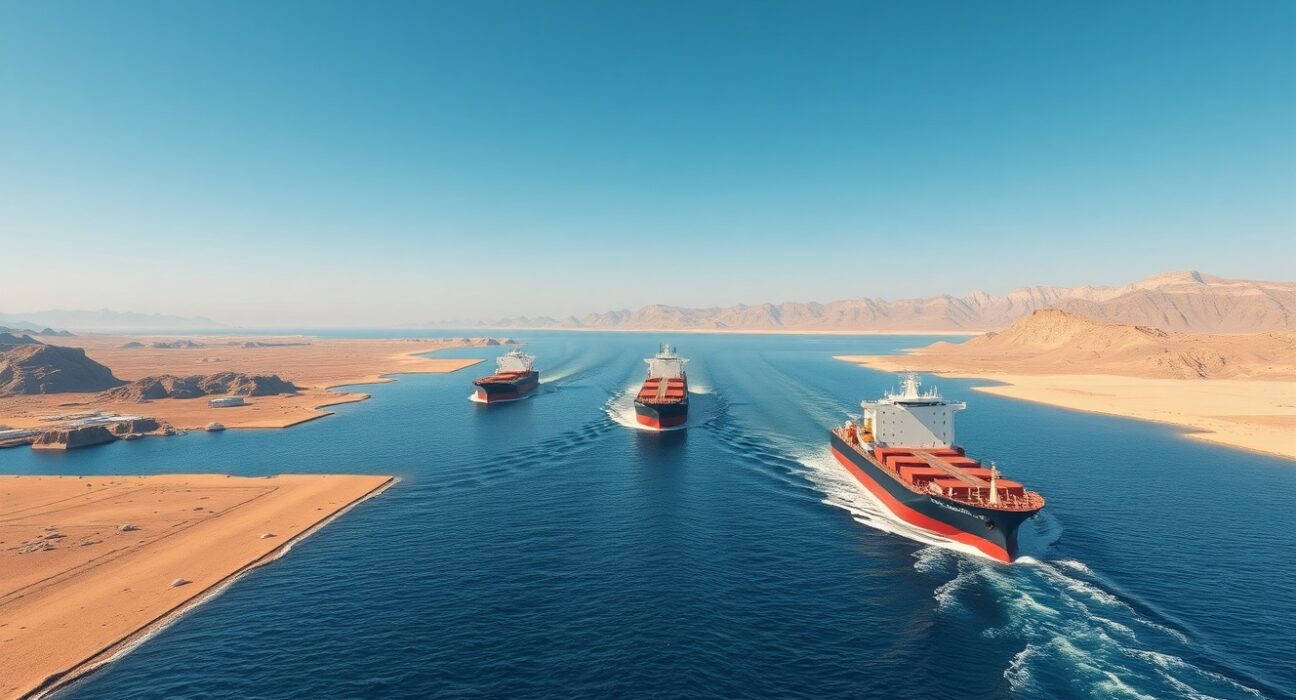
WASHINGTON, D.C. — In a significant development for global energy markets, President Donald Trump announced today that the strategic Strait of Hormuz will transition to joint management, potentially reopening this vital oil shipping corridor that handles approximately 21 million barrels of crude daily. This announcement follows months of escalating regional tensions that threatened to disrupt one-fifth of the world’s petroleum supply, representing a potential breakthrough in international maritime security negotiations.
Strait of Hormuz Joint Management Framework
The proposed joint management framework represents a departure from traditional unilateral security approaches in the region. According to the announcement, multiple stakeholders would participate in securing and administering the 21-mile wide choke point. This narrow passage connects the Persian Gulf with the Gulf of Oman and ultimately the Arabian Sea. Historically, the United States Fifth Fleet based in Bahrain has provided primary security, but recent years have seen increased incidents involving Iranian Revolutionary Guard Corps vessels.
Energy analysts immediately noted the announcement’s timing coincides with rising oil prices and supply concerns. The strait serves as transit for approximately:
- 21 million barrels of crude oil daily
- One-fifth of global petroleum consumption
- 90% of Persian Gulf exports to Asia, Europe, and North America
- Liquefied natural gas (LNG) from Qatar, the world’s largest LNG exporter
Maritime security experts emphasize that successful implementation requires unprecedented cooperation between regional powers with competing interests. The proposal suggests a model similar to the Strait of Malacca patrols, where littoral states coordinate security while respecting freedom of navigation principles. However, the Hormuz situation involves more complex geopolitical dynamics, including ongoing nuclear negotiations and regional proxy conflicts.
Historical Context of Hormuz Tensions
The Strait of Hormuz has been a flashpoint in Middle Eastern geopolitics for decades. Its strategic importance became particularly evident during the 1980s Tanker War, when both Iran and Iraq targeted commercial shipping during their prolonged conflict. More recently, tensions escalated following the U.S. withdrawal from the Joint Comprehensive Plan of Action (JCPOA) in 2018 and subsequent sanctions on Iranian oil exports.
In 2019, multiple tankers experienced attacks and seizures near the strait, prompting the formation of the International Maritime Security Construct (IMSC). This coalition, led by the United States and including the United Kingdom, Australia, and several Gulf states, aimed to enhance security but faced limitations in preventing all incidents. The table below illustrates key recent events:
| Date | Event | Impact |
|---|---|---|
| May 2019 | Four tankers damaged near Fujairah | Insurance premiums increased 300% |
| June 2019 | U.S. drone shot down by Iran | Oil prices spiked 6% immediately |
| July 2019 | British-flagged tanker seized | UK joined IMSC security patrols |
| January 2020 | Qassem Soleimani killed in drone strike | Regional tensions reached peak levels |
These incidents demonstrate the volatility of the region and the economic consequences of disruptions. Consequently, the joint management proposal attempts to address root causes rather than merely responding to individual security breaches. The approach acknowledges that no single nation can guarantee safe passage indefinitely without broader regional buy-in.
Expert Analysis on Implementation Challenges
Dr. Sarah Chen, Senior Fellow at the Center for Maritime Security Studies, explains the operational complexities. “Joint management requires resolving fundamental sovereignty questions,” she notes. “Iran claims territorial waters extending further into the strait than recognized under the United Nations Convention on the Law of the Sea (UNCLOS). Meanwhile, Oman and the United Arab Emirates maintain their own security concerns and economic interests.”
Furthermore, Chen emphasizes technical coordination challenges. “You need compatible communication systems, standardized boarding procedures, and agreed rules of engagement. Most importantly, you need trust between vessels that might have been adversaries months earlier.” The proposed framework reportedly includes confidence-building measures such as joint training exercises and shared surveillance data, but details remain unspecified.
Energy market analysts immediately assessed potential impacts. Michael Rodriguez of Global Energy Analytics commented, “If implemented successfully, this could reduce the ‘Hormuz risk premium’ that adds $3-5 to every barrel of oil. However, markets will watch implementation closely. Previous multilateral initiatives in the region have struggled with sustained commitment from all parties.”
Global Economic Implications
The Strait of Hormuz functions as the world’s most important oil chokepoint, with far-reaching consequences for global energy security. Approximately 80% of Japan and South Korea’s oil imports transit the strait, along with significant portions of China and India’s rapidly growing energy needs. European nations also depend on Hormuz passages for diversification away from Russian supplies.
Successful reopening under joint management would potentially:
- Stabilize global oil prices by reducing supply uncertainty
- Lower shipping insurance costs for tanker operators
- Enable more predictable energy planning for importing nations
- Reduce strain on alternative routes and pipeline capacities
However, energy economists caution that structural market changes continue regardless of Hormuz security. The energy transition toward renewables and regional diversification efforts, including Saudi Arabia’s east-west pipeline and UAE’s Fujairah export terminal bypassing the strait, have already reduced absolute dependence on this single passage. Nevertheless, its symbolic and practical importance remains immense for global energy markets.
Regional Diplomatic Considerations
The joint management announcement arrives amid broader diplomatic shifts in the Middle East. The Abraham Accords normalized relations between Israel and several Arab states, while Saudi Arabia and Iran have engaged in intermittent dialogue through Iraqi and Omani mediators. A successful Hormuz arrangement could build upon these trends, creating practical cooperation that might extend to other regional security issues.
Oman, which controls the southern side of the strait, has historically played a mediating role and might facilitate implementation. Similarly, the United Arab Emirates has invested significantly in port infrastructure on both sides of the strait and maintains economic ties with all regional actors. These neutral parties could provide essential diplomatic and logistical support for the joint management framework.
Nevertheless, significant obstacles remain. Domestic politics in Iran, upcoming elections in the United States, and competing visions for regional order among Gulf Cooperation Council members all complicate implementation. The proposal’s success likely depends on creating tangible benefits for all participants while minimizing perceived losses of sovereignty or strategic advantage.
Conclusion
President Trump’s announcement regarding joint management of the Strait of Hormuz represents a potentially transformative approach to one of the world’s most critical maritime passages. If successfully implemented, this framework could enhance global energy security, reduce regional tensions, and establish a model for cooperative management of strategic waterways. However, significant diplomatic, operational, and technical challenges must be addressed before the strait fully reopens under this new arrangement. The coming months will reveal whether stakeholders can translate this proposal into practical cooperation that ensures safe passage for the millions of barrels of oil that transit the Strait of Hormuz daily, thereby stabilizing global energy markets and reducing geopolitical friction in this volatile region.
FAQs
Q1: What percentage of global oil shipments pass through the Strait of Hormuz?
Approximately 21 million barrels of oil pass through the Strait of Hormuz daily, representing about 21% of global petroleum consumption and one-third of all seaborne traded oil.
Q2: Which countries would participate in the joint management framework?
While specific participants haven’t been formally announced, likely stakeholders include the United States, Iran, Oman, United Arab Emirates, Saudi Arabia, and possibly other Gulf Cooperation Council members and international partners.
Q3: How would joint management differ from current security arrangements?
Current arrangements primarily involve unilateral or coalition patrols, while joint management would involve shared decision-making, coordinated operations, and potentially joint command structures among participating nations.
Q4: What immediate effects might this announcement have on oil prices?
The announcement could reduce the “geopolitical risk premium” in oil prices, potentially lowering costs by $3-5 per barrel if markets perceive reduced disruption risks, though actual price movements depend on implementation progress.
Q5: Have other strategic waterways successfully implemented joint management?
Yes, the Strait of Malacca has a coordinated patrol system involving Indonesia, Malaysia, Singapore, and Thailand that has significantly reduced piracy, though the geopolitical context differs substantially from the Strait of Hormuz.
Disclaimer: The information provided is not trading advice, Bitcoinworld.co.in holds no liability for any investments made based on the information provided on this page. We strongly recommend independent research and/or consultation with a qualified professional before making any investment decisions.