
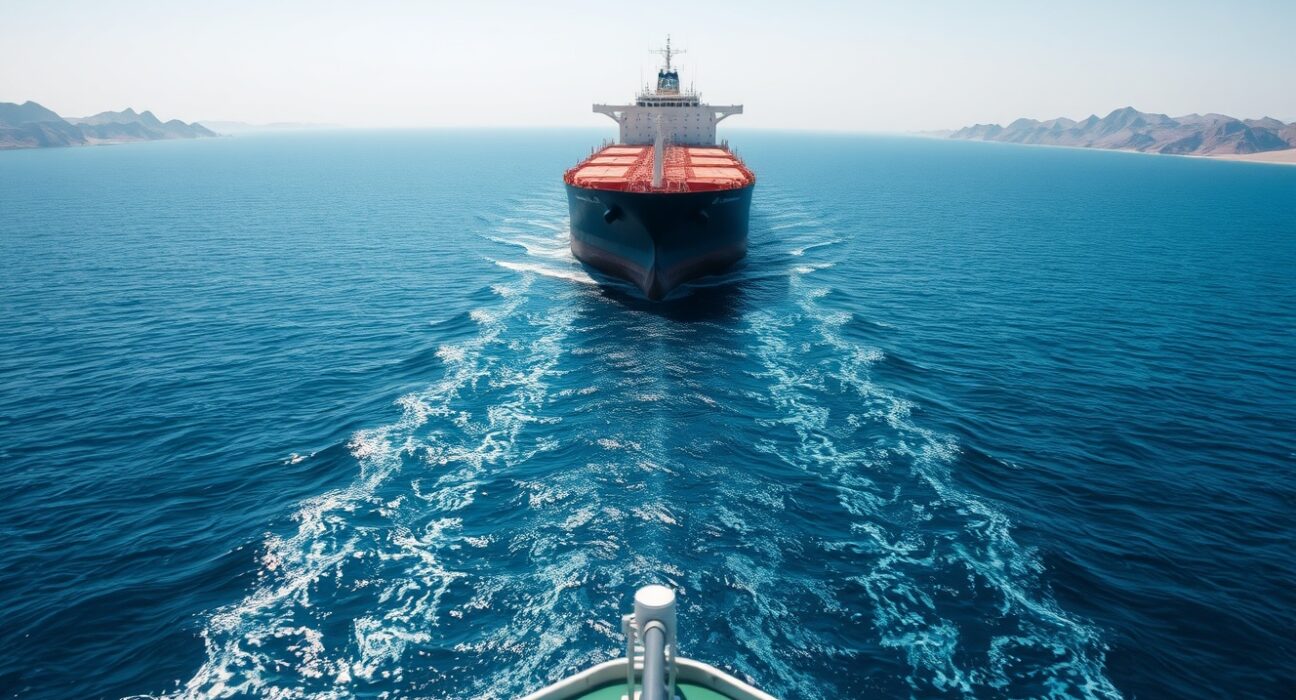
In a significant development for global energy markets and maritime security, a select number of oil tankers and cargo ships have cautiously resumed passage through the Strait of Hormuz, the world’s most critical oil transit chokepoint. This tentative reopening follows a period of heightened regional tension and offers a fragile signal of stability for supply chains linking the Middle East to Asia and Europe. The movement, confirmed by multiple shipping reports and analytics in early April, involves vessels from Iraq, Malaysia, France, and Japan, marking a potential de-escalation in a volatile corridor.
Strait of Hormuz Shipping Resumes with Key Vessel Movements
Multiple independent reports confirm the renewed maritime activity. According to Reuters, a tanker carrying Iraqi crude oil successfully navigated the strait. This vessel is scheduled to unload its cargo at a Malaysian port in mid-April. The report, citing an anonymous source, further indicated that Iranian authorities permitted the passage of several ships linked to Malaysia. This aligns with an earlier report from Al Jazeera stating Iran would allow Iraq unrestricted use of the strategic waterway.
Separately, the BBC reported the transit of a large container ship operated by French shipping giant CMA CGM. Shipping analytics firm Kpler identified this as the first major Western European shipping company vessel to traverse the strait since the onset of recent regional hostilities involving the U.S., Israel, and Iran. In another notable development, Japan’s Mitsui O.S.K. Lines (MOL) announced one of its liquefied natural gas (LNG) carriers had previously completed a passage. These movements, while limited, represent a critical test of the maritime corridor’s operational status.
Geopolitical Context and the Strait’s Global Importance
The Strait of Hormuz is not merely another shipping lane; it is an artery of the global economy. Approximately one-fifth of the world’s oil consumption passes through this narrow channel. Furthermore, about a third of all seaborne traded LNG transits the same waters. Any disruption here immediately sends shockwaves through energy markets, impacting prices for gasoline, heating oil, and industrial costs worldwide. The recent tensions had raised legitimate fears of a blockade or military incident that could sever this flow.
The decision by Iran to allow specific passages appears calculated. Analysts note it may be a signal to the international community, demonstrating a degree of control and a willingness to avoid a full-scale economic confrontation. Allowing Iraqi and Malaysian-linked ships could be seen as extending an olive branch to regional and Asian trading partners, while the passage of French and Japanese vessels suggests a cautious re-engagement with Western-aligned economic interests. This calibrated approach seeks to alleviate pressure without conceding broader strategic ground.
Expert Analysis on Maritime Risk and Insurance
Maritime security and insurance experts closely monitor such resumptions. “The passage of a major operator like CMA CGM is a key indicator,” explains a veteran maritime risk analyst. “Their decision is based on complex risk assessments involving war risk insurance premiums, crew safety protocols, and client demands. A single transit doesn’t normalize the route, but it provides crucial data points for other companies.” Insurance premiums for vessels operating in the region had skyrocketed during the peak of tensions, adding millions to voyage costs. These initial passages could help stabilize those exorbitant rates.
The role of shipping analytics firms like Kpler has become indispensable. By tracking vessel transponders, satellite data, and port logs, they provide real-time visibility into global trade flows. Their confirmation of these movements adds a layer of verifiable fact to media reports, allowing traders, governments, and analysts to base decisions on evidence rather than speculation. This data-driven transparency is now a cornerstone of modern geopolitical and economic analysis.
Comparative Impact on Global Shipping Lanes
To understand the significance of the Strait of Hormuz, it helps to compare it with other global chokepoints. The following table outlines key metrics:
| Chokepoint | Primary Commodity | Estimated Daily Oil Flow (Barrels) | Alternative Routes |
|---|---|---|---|
| Strait of Hormuz | Crude Oil & LNG | 20-21 Million | Extremely Limited (Overland pipelines insufficient) |
| Strait of Malacca | All Cargo, Oil | 16 Million | Longer routes via Lombok or Sunda Straits |
| Suez Canal | Containerized Goods, Oil | ~5 Million | Cape of Good Hope (adds ~2 weeks) |
| Panama Canal | Grains, LNG, Containers | ~0.8 Million | Cape Horn or US intermodal |
As the table shows, the Hormuz chokepoint has the highest volume and the most constrained alternatives. Closure would force tankers from Saudi Arabia, the UAE, Iraq, and Qatar to seek impossibly long reroutes around the southern tip of Africa, adding weeks to delivery times and millions in costs. Therefore, even a trickle of resumed traffic carries disproportionate importance for market sentiment.
Economic and Market Implications of Resumed Traffic
The immediate market reaction to news of resumed passage was a slight softening of crude oil futures prices. However, traders remain cautious. The resumption is characterized by several key factors:
- Selective Permissions: Passage appears granted on a case-by-case basis, not as a blanket reopening.
- Nationality Factors: Vessels from neutral or friendly nations (Malaysia, Iraq) were first, followed by major Western operators.
- Insurance and Cost: War risk premiums remain elevated, keeping shipping costs high.
- Inventory and Strategy: Major oil-consuming nations have drawn on strategic reserves recently, providing a buffer.
For import-dependent economies in Asia, particularly Japan, South Korea, and India, stable transit through Hormuz is non-negotiable for energy security. The passage of the Japanese LNG carrier directly addresses a core concern for a nation that relies heavily on Middle Eastern energy. Similarly, European nations, which have sought to diversify away from Russian energy, still require reliable access to Gulf supplies. The French container ship’s transit is a positive, albeit small, step for broader EU trade interests.
The Role of Regional Diplomacy and De-escalation
Behind the scenes, intense diplomatic communications likely facilitated these movements. Omani and Qatari officials often act as intermediaries in the region. The reported Iranian allowance for Iraqi oil aligns with longstanding economic ties between Tehran and Baghdad. It also serves Iran’s interest in ensuring its neighbor can export oil, as Iraq is sometimes a conduit for Iranian oil amid sanctions. This complex web of relationships means that maritime traffic is both an economic and a diplomatic tool, used to send signals, build leverage, and test responses without direct confrontation.
Conclusion
The cautious resumption of Strait of Hormuz shipping by a handful of tankers and cargo ships represents a fragile but vital positive signal for global trade and energy stability. While the situation remains fluid and dependent on continued regional de-escalation, the passages documented in early April demonstrate a critical pathway remains open for business. The involvement of major international shippers like CMA CGM and MOL provides a measure of confidence to the broader maritime industry. However, the selective nature of the permissions underscores that the risk has diminished, not disappeared. The world’s most important oil chokepoint is functioning again, but its future reliability hinges on sustained diplomacy and the absence of further military escalation in the region.
FAQs
Q1: Why is the Strait of Hormuz so important for global trade?
The Strait of Hormuz is a narrow sea passage between Oman and Iran. It is the world’s most critical oil transit chokepoint, with about 20-21 million barrels of oil per day—roughly 20% of global consumption—passing through it. It is also a major route for liquefied natural gas (LNG) exports.
Q2: Which companies and countries have had ships pass through recently?
According to April reports, vessels linked to Iraq and Malaysia transited first, followed by a large container ship from France’s CMA CGM and an LNG carrier from Japan’s Mitsui O.S.K. Lines (MOL). This indicates a gradual reopening to different national interests.
Q3: Does this mean the Strait of Hormuz is now completely safe for shipping?
No. The resumption is selective and tentative. While a positive sign, the geopolitical situation remains tense. War risk insurance premiums are still high, and shipping companies must conduct rigorous safety assessments for each voyage. It signals a reduction in immediate risk, not a return to normalcy.
Q4: What happens if the Strait of Hormuz were to close?
A closure would trigger a global energy crisis. Tankers from the Persian Gulf would be forced to take much longer alternative routes around Africa, adding weeks to delivery times and skyrocketing costs. Oil and gas prices would spike dramatically, impacting economies worldwide.
Q5: How do shipping analytics firms like Kpler track this activity?
Firms like Kpler use a combination of Automatic Identification System (AIS) data from ship transponders, satellite imagery, port logs, and other sources to track vessel movements in real-time. This data provides transparency, allowing governments, traders, and analysts to verify shipping activity independently.
Disclaimer: The information provided is not trading advice, Bitcoinworld.co.in holds no liability for any investments made based on the information provided on this page. We strongly recommend independent research and/or consultation with a qualified professional before making any investment decisions.