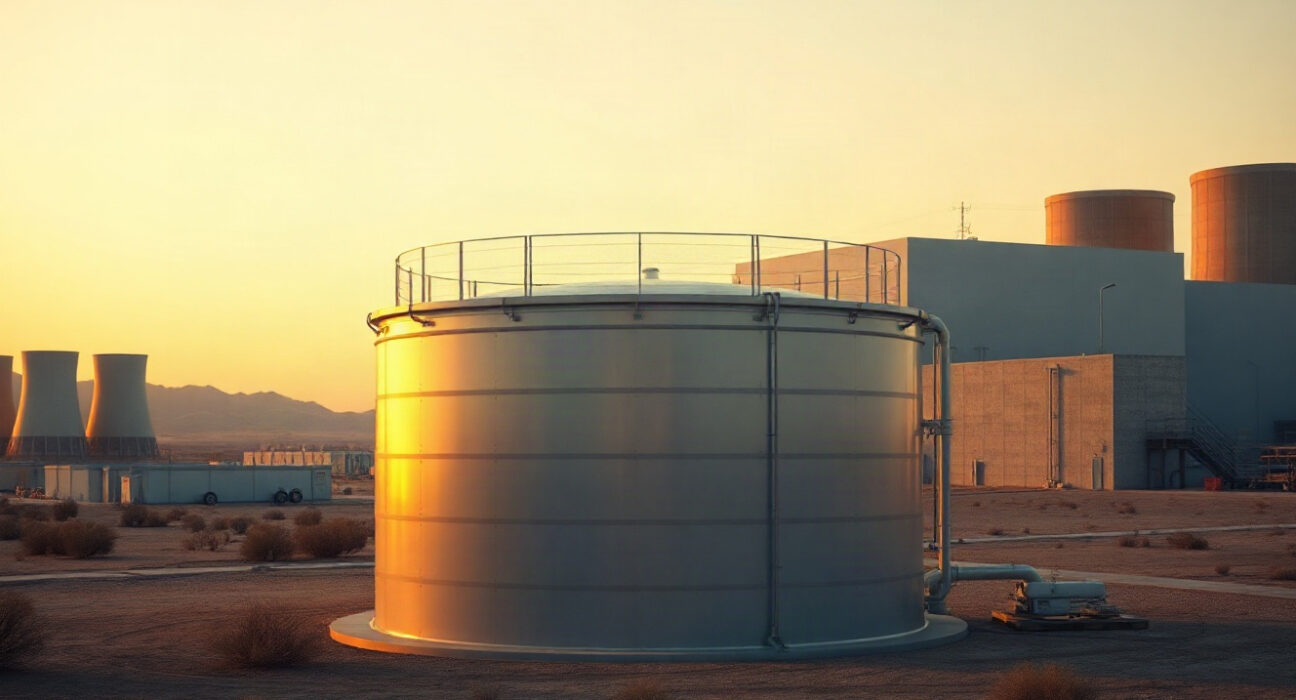
TerraPower, the nuclear startup founded by Bill Gates, is preparing to announce its first data center project this year, according to a Bloomberg report, positioning its molten salt-cooled reactor as a key solution for the power-hungry AI industry. The company, which has already broken ground on its first Natrium plant in Wyoming, expects the data center project to break ground in 2027. While TerraPower has not disclosed the customer, the announcement follows Meta’s January agreement to purchase eight of its Natrium power plants.
Why nuclear power is a natural fit for AI data centers
AI data centers require an enormous and constant supply of electricity, making them a prime market for nuclear power, which offers a capacity factor of 92.5% in the U.S. — the highest of any generating technology. Unlike natural gas turbines, which have struggled with the rapid load swings caused by AI training and inference, nuclear reactors can provide steady baseload power. However, traditional reactors are slow to ramp up and down, adjusting only about 5% of rated output per minute, according to the National Renewable Energy Laboratory (NREL). Newer small modular reactors (SMRs) can react faster, at about 10% per minute, but running at reduced capacity is economically challenging given nuclear’s high capital costs.
TerraPower’s molten salt storage advantage
TerraPower’s Natrium reactor is designed to overcome these challenges by integrating a molten salt energy storage system. Instead of ramping the reactor up and down, TerraPower keeps the reactor running at full power and diverts excess heat to a large vat of molten sodium. When electricity demand spikes, the stored heat is used to generate additional steam, spinning turbines to meet the surge. This allows the plant to maintain a high capacity factor while providing the flexibility needed to complement intermittent renewable sources like wind and solar — or to respond to the variable loads of AI data centers.
How this benefits data center operators
For data centers, especially those relying on behind-the-meter power, the ability to smooth load swings is critical. Large battery banks can help, but they add significant costs. TerraPower’s approach essentially embeds storage into the plant, allowing the expensive reactor to operate at peak output continuously, improving economics and reliability. This design could give TerraPower a competitive edge in the race to power AI infrastructure, as it addresses both the need for constant power and the operational challenges of integrating with a renewable-heavy grid.
Conclusion
TerraPower’s plan to supply power to AI data centers, combined with its molten salt storage technology, represents a notable development in the intersection of nuclear energy and the growing electricity demands of artificial intelligence. While the company has not yet named its data center customer, the move signals a broader trend of nuclear startups targeting the tech sector. As AI continues to expand, the ability to provide reliable, flexible, and carbon-free power will be crucial, and TerraPower’s design may offer a template for future projects.
FAQs
Q1: What is TerraPower’s Natrium reactor?
TerraPower’s Natrium reactor is a 345-megawatt molten salt-cooled nuclear reactor that integrates a molten salt energy storage system, allowing it to ramp up and down quickly while maintaining a high capacity factor.
Q2: Why is energy storage important for nuclear power plants serving data centers?
Energy storage allows the reactor to run at full output continuously, storing excess heat when demand is low and using it to generate extra power during spikes, which helps manage the variable loads of AI data centers without relying on costly batteries.
Q3: When is TerraPower’s data center project expected to break ground?
According to a Bloomberg report, the data center project is expected to break ground in 2027, though TerraPower has not disclosed the customer.
Disclaimer: The information provided is not trading advice, Bitcoinworld.co.in holds no liability for any investments made based on the information provided on this page. We strongly recommend independent research and/or consultation with a qualified professional before making any investment decisions.