
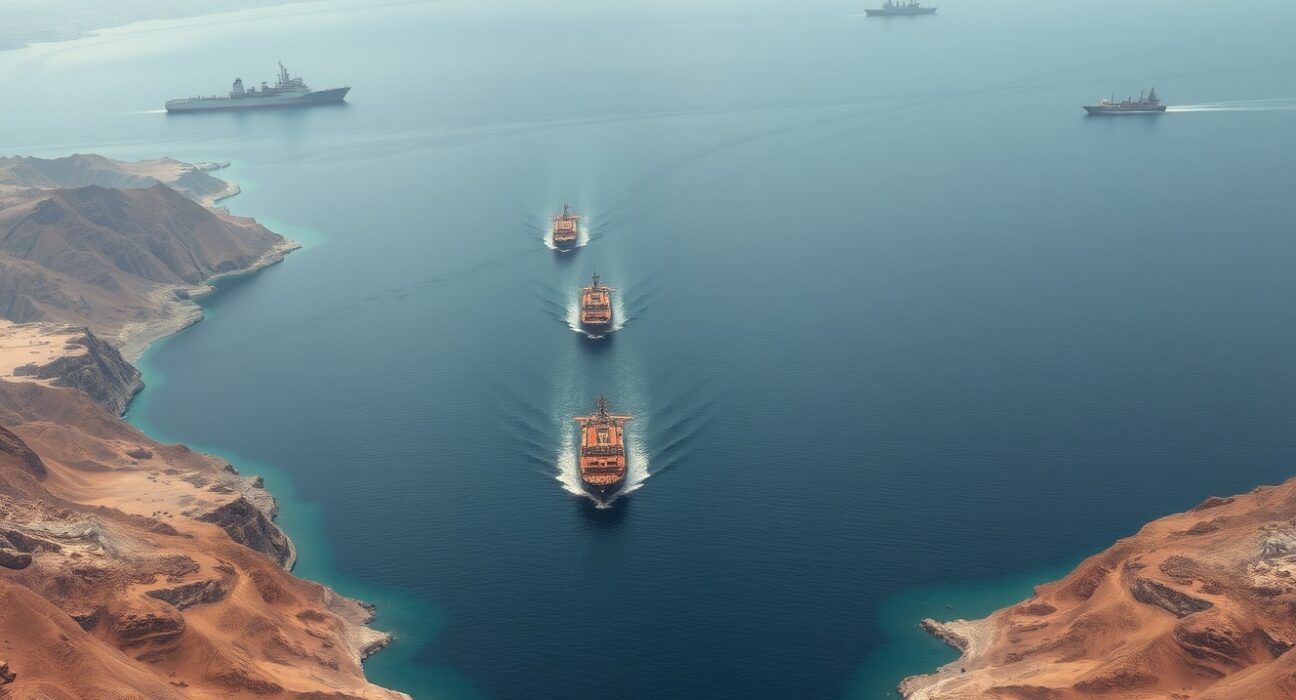
WASHINGTON, D.C. – March 15, 2025 – Senior administration officials confirm President Donald Trump and his national security team are actively weighing a significant escalation in pressure against Iran. According to exclusive reporting from The Wall Street Journal, the strategy under consideration involves resuming limited military strikes against Iranian targets. Furthermore, this plan potentially includes a coordinated naval blockade of the strategically vital Strait of Hormuz. This dramatic move aims explicitly to shatter the prolonged stalemate in ongoing peace negotiations between Washington and Tehran.
Trump Iran Military Strikes: A Calculated Escalation
The reported consideration of limited military strikes represents a stark departure from recent diplomatic efforts. These strikes, as described by officials familiar with the discussions, would be precisely targeted. They would avoid large-scale civilian casualties or all-out war. The objective is coercive diplomacy, not regime change. Consequently, targets would likely include Iranian Revolutionary Guard Corps (IRGC) facilities, proxy militia positions in neighboring countries, or key military infrastructure. This approach mirrors previous U.S. actions, such as the 2020 drone strike that killed IRGC Quds Force commander Qasem Soleimani. However, the potential coupling with a maritime blockade introduces a profoundly more complex and risky dimension to the strategy.
The Strait of Hormuz Blockade: A Global Economic Lever
The Strait of Hormuz is arguably the world’s most important maritime chokepoint for oil transit. Approximately 21 million barrels of oil—nearly 20% of global consumption—flow through this narrow passage daily. A U.S.-led blockade, even a limited one, would immediately trigger global economic shockwaves. The strategy likely envisions intercepting vessels suspected of violating sanctions or carrying Iranian oil. Such an action would constitute a direct challenge to Iranian sovereignty and its primary economic lifeline. Historically, Iran has threatened to close the strait in response to extreme pressure. Therefore, executing a blockade risks triggering a military confrontation with significant regional escalation.
Expert Analysis on Strategic Calculus
Military strategists and regional analysts point to several factors driving this consideration. First, the current negotiation stalemate has persisted for over 18 months with minimal progress. Second, Iran continues to advance its nuclear program, shortening its potential “breakout” time to a weapon. Third, Iranian-backed militias maintain activities across the Middle East that U.S. officials view as destabilizing. “This is a high-risk, high-reward play,” notes Dr. Anya Petrova, a senior fellow at the Center for Strategic and International Studies. “The administration is signaling that the cost of Iranian intransigence will rise exponentially. However, the historical record shows that military pressure on Iran often hardens its position and empowers hardliners.”
Historical Context and Precedent for U.S. Action
U.S.-Iran relations have oscillated between confrontation and uneasy diplomacy for decades. The Trump administration previously employed a “maximum pressure” campaign involving severe economic sanctions after withdrawing from the 2015 nuclear deal (JCPOA). The Biden administration pursued renewed talks, but these stalled repeatedly. The table below outlines key recent escalations:
| Date | Event | Outcome |
|---|---|---|
| Jan 2020 | U.S. drone strike kills Qasem Soleimani | Iran retaliated with missile strikes on Iraqi bases housing U.S. troops |
| Apr 2021 | Indirect nuclear talks begin in Vienna | Progress halts after Iranian presidential election |
| Late 2023 | Iran accelerates uranium enrichment to 60% purity | U.S. and E3 powers issue condemnations, but no military response |
| Present | Consideration of strikes & blockade | Aims to break negotiation deadlock |
This historical pattern suggests any military action will likely provoke a calibrated Iranian response. Tehran possesses asymmetric capabilities, including cyber warfare, proxy forces, and precision missiles. A blockade specifically could lead to incidents at sea, similar to the “Tanker Wars” of the 1980s.
Potential Global and Regional Impacts
The ramifications of executing this strategy extend far beyond the Persian Gulf. Key impacts would include:
- Oil Price Volatility: Global oil prices would spike immediately, potentially exceeding $150 per barrel, triggering inflation worldwide.
- Alliance Strain: European and Asian allies, heavily dependent on Gulf oil, might oppose a unilateral U.S. blockade, fracturing diplomatic unity.
- Regional Conflict Risk: Iran could activate proxies in Lebanon, Syria, Yemen, and Iraq, opening multiple fronts against U.S. and Israeli interests.
- Market Instability: Global stock markets would react negatively to the heightened risk of a major regional war.
Furthermore, China and Russia would almost certainly condemn any U.S. military action. They could use it to bolster their diplomatic and economic ties with Tehran, further dividing the international community.
The Negotiation Stalemate: A Core Driver
The reported plan stems directly from frustration over frozen peace talks. The core disagreements remain unresolved:
- Iran demands guarantees against future U.S. withdrawal from any agreement.
- The U.S. insists on longer-term restrictions on Iran’s nuclear program and addressing ballistic missiles and regional behavior.
- Sanctions relief timing and scope continue to be major sticking points.
Administration officials reportedly view the threat of military force as the only lever left to compel Iranian flexibility. However, critics argue this approach could permanently collapse the diplomatic track and set the stage for a larger, unintended conflict.
Conclusion
The consideration of resuming Trump Iran military strikes, coupled with a potential Strait of Hormuz blockade, marks a critical juncture in U.S. foreign policy. This strategy represents a deliberate attempt to apply maximum coercive pressure to break a persistent diplomatic logjam. While the goal is to force Iran back to negotiations with greater urgency, the risks of miscalculation and regional escalation are exceptionally high. The global economy, international alliances, and Middle Eastern stability hang in the balance as Washington deliberates this perilous path forward. The coming weeks will reveal whether this is a genuine strategic shift or a high-stakes bargaining tactic.
FAQs
Q1: What are “limited military strikes” in this context?
Limited military strikes refer to targeted, precision actions against specific Iranian military or proxy assets. They are designed to demonstrate resolve and inflict cost without seeking full-scale war or regime change. Examples could include airstrikes on IRGC naval bases, drone facilities, or weapons depots in Syria used by Iranian-backed militias.
Q2: How would a Strait of Hormuz blockade work legally?
The United States would likely justify a blockade under international law frameworks related to self-defense or enforcing sanctions. It would involve U.S. Navy vessels monitoring and potentially intercepting ships to inspect cargo for sanctioned Iranian oil. Such an action would be highly controversial and require navigating complex UN Convention on the Law of the Sea (UNCLOS) provisions.
Q3: Has the U.S. blockaded the Strait of Hormuz before?
No, the United States has never formally blockaded the Strait of Hormuz. However, the U.S. Navy has conducted major freedom of navigation operations and escorted tankers during periods of high tension, such as in the 1980s and more recently in 2019 following attacks on commercial shipping.
Q4: What is Iran’s most likely response to such actions?
Experts predict a multi-tiered Iranian response. This would likely include asymmetric retaliation via proxy attacks on U.S. interests in Iraq or Syria, harassment of commercial shipping by IRGC speedboats, accelerated uranium enrichment, and potentially missile or drone strikes against U.S. regional bases or allied targets.
Q5: How would this affect the global oil supply and prices?
The immediate effect would be a sharp spike in global oil prices, likely adding $30-$50 per barrel due to risk premiums. If traffic through the strait is significantly disrupted, physical supply shortages could occur, leading to even higher prices and potential rationing in oil-importing nations, impacting the global economic recovery.
Disclaimer: The information provided is not trading advice, Bitcoinworld.co.in holds no liability for any investments made based on the information provided on this page. We strongly recommend independent research and/or consultation with a qualified professional before making any investment decisions.