
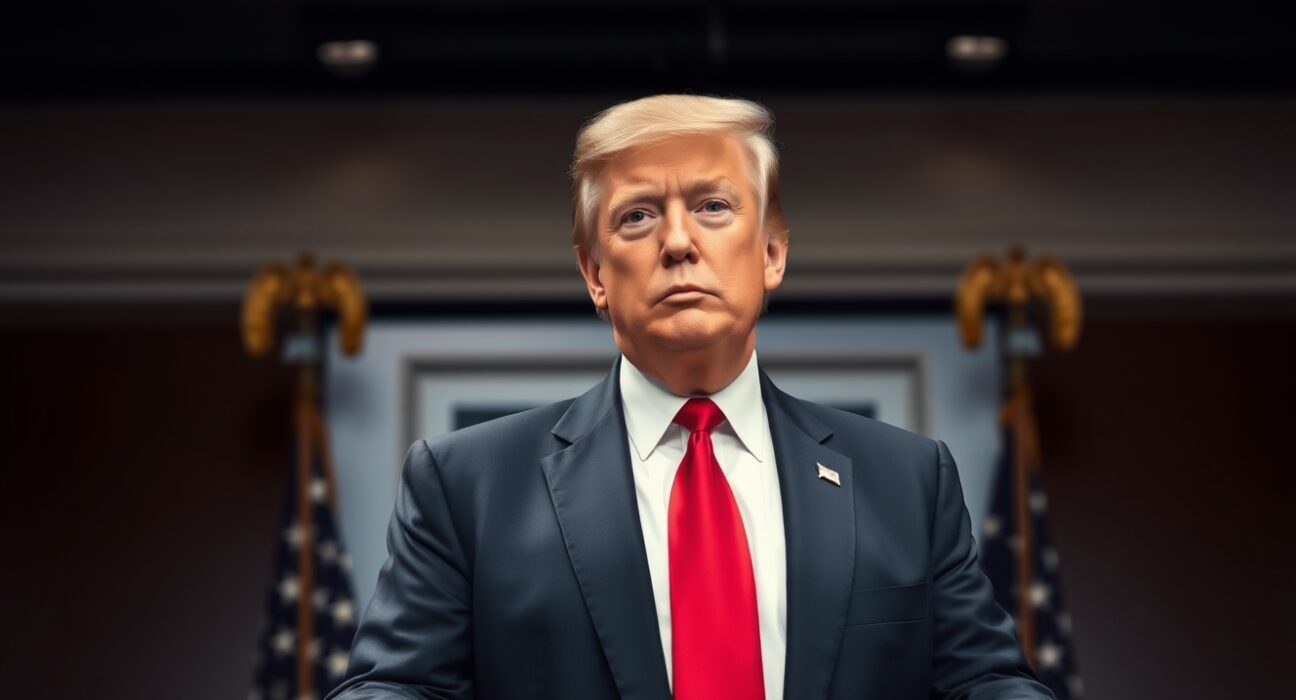
WASHINGTON, D.C. – In a dramatic move that immediately reshapes global trade dynamics, U.S. President Donald Trump announced an immediate 50% tariff on all exports to the United States from any country supplying military weapons to Iran. Consequently, this unprecedented economic measure targets nations providing arms to Tehran. Moreover, President Trump emphasized there would be no exceptions or exemptions to this policy. Therefore, this announcement signals a significant escalation in the administration’s maximum pressure campaign against Iran.
Trump’s Iran Weapons Tariff Announcement Details
President Trump made the announcement from the White House briefing room on Tuesday morning. Specifically, the executive action imposes a 50% tariff on all goods entering the United States from countries identified as supplying military equipment to Iran. Furthermore, the policy takes effect immediately upon identification of violators. The Treasury Department will maintain the list of affected nations. Additionally, Customs and Border Protection will enforce the tariff at all ports of entry.
The announcement follows months of escalating tensions with Iran. Previously, the administration reinstated all nuclear-related sanctions against Tehran. However, this new measure represents a different approach. Instead of targeting Iran directly, it pressures third-party nations. Consequently, countries must choose between trading with Iran’s military or maintaining normal trade relations with the United States.
Historical Context of US-Iran Sanctions
Understanding this tariff requires examining the long history of U.S.-Iran relations. The United States first imposed sanctions on Iran following the 1979 hostage crisis. Subsequently, multiple administrations expanded these measures. For example, the Clinton administration implemented the Iran and Libya Sanctions Act in 1996. Later, the Obama administration negotiated the Joint Comprehensive Plan of Action in 2015. However, President Trump withdrew from this agreement in 2018.
Recent administrations have employed various sanction tools:
- Financial sanctions targeting Iranian banks and currency transactions
- Energy sanctions restricting oil exports and petroleum products
- Military embargoes prohibiting arms sales to Iran
- Individual sanctions targeting Iranian officials and entities
This new tariff represents a novel approach. Rather than prohibiting trade, it makes trade prohibitively expensive. Therefore, it creates a powerful economic disincentive for weapons suppliers.
Expert Analysis of the Tariff Mechanism
Trade experts note several unique aspects of this tariff structure. First, it applies to all exports from violating countries, not just military goods. Second, the 50% rate is exceptionally high by historical standards. Third, the automatic trigger mechanism requires no additional congressional approval. Finally, the policy contains no sunset provision or review clause.
International trade attorney Margaret Chen explains the implications. “This represents a significant expansion of secondary sanctions,” Chen states. “Previously, secondary sanctions targeted specific entities doing business with Iran. Now, entire national economies face penalties for military transfers.”
Global Reactions and Diplomatic Implications
International reactions emerged quickly following the announcement. Several traditional U.S. allies expressed concern about the policy’s breadth. European Union officials noted potential conflicts with World Trade Organization rules. Meanwhile, Russian and Chinese representatives condemned the measure as economic coercion.
The policy creates complex diplomatic challenges. Many nations maintain defense relationships with multiple partners. For instance, a country might purchase American military equipment while selling its own systems to Iran. Now, these nations must reassess their arms export policies. Consequently, global defense trade patterns may shift significantly.
Regional experts highlight particular concerns in the Middle East. Dr. Ahmed Hassan of the Middle East Institute explains the regional dynamics. “Several Gulf states maintain channels with Tehran despite tensions,” Hassan notes. “This tariff forces clearer alignment decisions. Countries can no longer balance relationships quietly.”
Economic Impacts and Market Responses
Financial markets reacted immediately to the announcement. Oil prices surged on concerns about regional instability. Defense stocks showed mixed performance. Companies with significant international arms sales faced investor uncertainty. Meanwhile, shipping and logistics firms anticipated trade disruptions.
The tariff’s economic impact depends on which countries face designation. Currently, several nations maintain defense relationships with Iran:
| Country | Major Exports to US | Potential Impact |
|---|---|---|
| China | Electronics, machinery | Massive trade disruption |
| Russia | Metals, chemicals | Limited direct impact |
| North Korea | Minimal | Negligible effect |
| Various European nations | Automobiles, aircraft parts | Significant sectoral impacts |
Trade analysts project several potential outcomes. First, affected countries might reduce or cease weapons transfers to Iran. Second, they could challenge the tariff through WTO dispute mechanisms. Third, they might implement retaliatory measures against U.S. exports. Finally, some nations might attempt to circumvent the policy through third-country transfers.
Legal and Constitutional Considerations
Legal scholars debate the tariff’s constitutional foundation. The Constitution grants Congress power to regulate foreign commerce. However, presidents have historically used various authorities to impose trade restrictions. The International Emergency Economic Powers Act provides one potential basis. National security concerns offer another justification.
Professor James Wilson of Georgetown Law Center analyzes the legal landscape. “The administration will likely cite multiple authorities,” Wilson explains. “These include IEEPA, the Trading with the Enemy Act, and inherent executive powers. However, the breadth of this action may prompt legal challenges.”
Implementation Challenges and Enforcement
Practical implementation presents significant challenges. First, authorities must identify weapons transfers in near real-time. Second, they must distinguish between legitimate commercial goods and military equipment. Third, Customs officials need clear guidelines for enforcement. Finally, the government must establish appeal processes for affected businesses.
The Treasury Department’s Office of Foreign Assets Control typically handles sanctions enforcement. However, tariff collection falls under Customs and Border Protection jurisdiction. Therefore, effective implementation requires unprecedented interagency coordination. Moreover, international cooperation becomes essential for monitoring arms transfers.
Technology plays a crucial role in enforcement. Satellite imagery tracks ship movements. Financial monitoring identifies suspicious transactions. Export control databases flag potential violations. Consequently, the policy’s success depends on robust intelligence capabilities.
Regional Security Implications
The tariff announcement occurs amid ongoing regional tensions. Recently, Iran resumed higher levels of uranium enrichment. Additionally, Tehran continues supporting proxy forces across the Middle East. Meanwhile, the United States maintains significant military assets in the region.
Security analysts identify several potential outcomes. First, reduced weapons flows might limit Iran’s military capabilities. Second, the policy could incentivize indigenous weapons development in Iran. Third, it might push Tehran toward closer relationships with Russia and China. Finally, it could reduce regional escalation risks by limiting Iran’s conventional capabilities.
Former defense official Michael O’Brien assesses the security dimensions. “This approach complements military deterrence,” O’Brien states. “It addresses the supply side of Iran’s weapons acquisitions. However, it doesn’t eliminate existing capabilities or indigenous production.”
Conclusion
President Trump’s 50% tariff on nations supplying weapons to Iran represents a bold economic instrument in foreign policy. This unprecedented measure leverages U.S. market access to influence global arms transfers. Consequently, it forces difficult choices on countries balancing multiple relationships. The policy’s effectiveness will depend on consistent enforcement and international compliance. Moreover, its long-term impact on regional security remains uncertain. Ultimately, this Trump Iran tariff announcement signals continued aggressive economic pressure on Tehran through innovative means.
FAQs
Q1: What exactly does the 50% tariff policy entail?
The policy imposes a 50% additional duty on all goods imported into the United States from any country determined to be supplying military weapons to Iran. This applies to all products from that country, not just military items.
Q2: Which countries are currently affected by this tariff?
As of the announcement, no specific countries have been formally designated. The Treasury Department will identify violators based on intelligence about arms transfers to Iran.
Q3: How does this differ from previous sanctions against Iran?
Previous sanctions typically targeted Iranian entities directly or specific foreign companies doing business with Iran. This policy affects entire national economies based on government-to-government weapons transfers.
Q4: Can countries appeal if they’re designated under this policy?
The announcement did not specify an appeal process. Typically, countries can present evidence to dispute designations through diplomatic channels or potentially through WTO dispute mechanisms.
Q5: How will this affect ordinary consumers and businesses?
If major trading partners are designated, consumers might see price increases on imported goods. Businesses importing from affected countries would face significantly higher costs, potentially leading to supply chain adjustments.
Disclaimer: The information provided is not trading advice, Bitcoinworld.co.in holds no liability for any investments made based on the information provided on this page. We strongly recommend independent research and/or consultation with a qualified professional before making any investment decisions.