

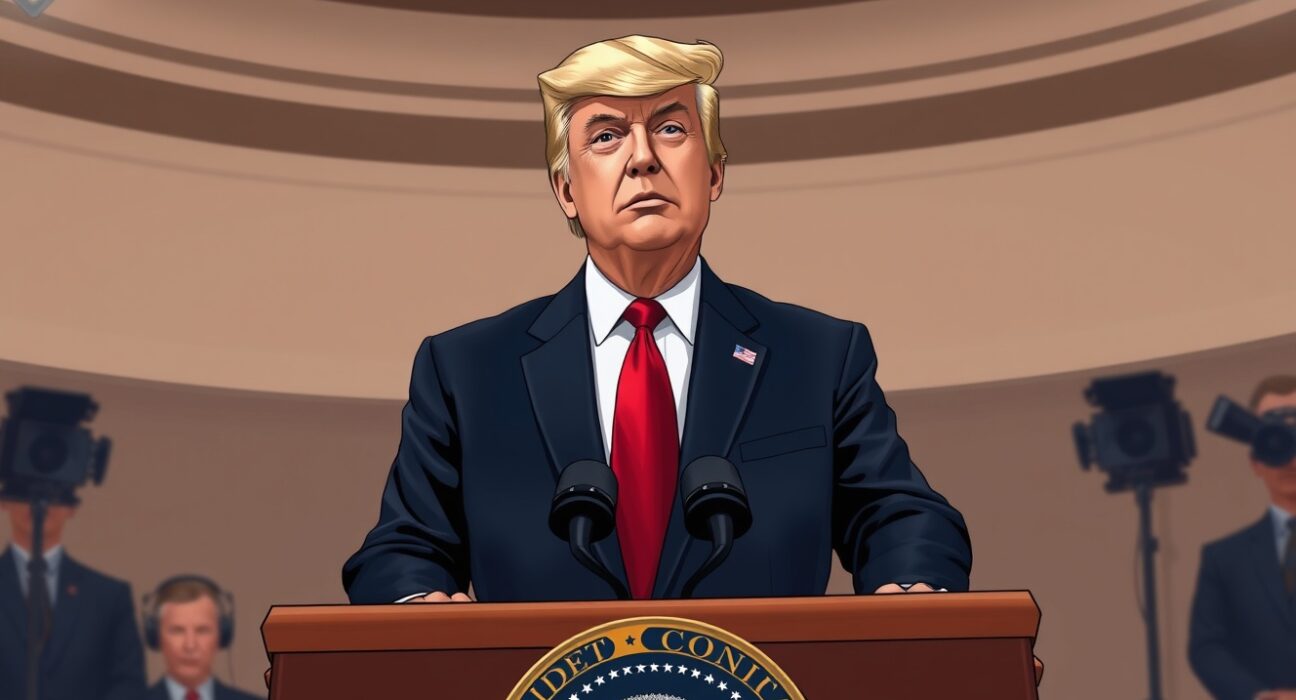
WASHINGTON, D.C., April 15, 2025 — President Donald Trump delivered a definitive statement today regarding the ongoing Middle East tensions, explicitly ruling out any extension of the current ceasefire agreement with Iran. Speaking to reporters, the president framed the coming forty-eight hours as potentially transformative while maintaining that multiple outcomes remain on the table for the conflict’s resolution.
Trump’s Firm Position on Iran Ceasefire
President Trump made his position unequivocally clear during an exchange with an ABC News correspondent. Consequently, he stated that extending the temporary cessation of hostilities was unnecessary at this juncture. Moreover, he characterized the immediate future as holding significant developments, suggesting the situation remains fluid and dynamic. This announcement comes amid heightened regional instability and follows weeks of diplomatic maneuvering.
The current ceasefire, a fragile arrangement negotiated through third-party intermediaries, temporarily halted overt military engagements between U.S.-allied forces and Iranian-backed units. Historically, such pauses have served as precursors to either lasting diplomatic agreements or renewed escalations. Analysts note that the president’s rejection of an extension signals a potential pivot point in U.S. strategic calculations.
Possible Outcomes: Agreement Versus Destruction
When pressed about potential endgames for the conflict, President Trump presented two distinct possibilities. First, he acknowledged that a formal agreement remains a viable path. Such an accord would theoretically allow Iran to participate in reconstruction efforts. Second, he explicitly mentioned the alternative: the destruction of Iran’s operational military capabilities. Significantly, he did not express a preference for one outcome over the other in absolute terms.
However, the president did note that an agreement might be preferable from a humanitarian perspective. Specifically, he suggested it would enable rebuilding. This statement aligns with previous administration comments about post-conflict stabilization but contrasts with more hawkish rhetoric from some cabinet members. Military experts define “operational capabilities” as the integrated systems that allow a nation to project force, including command networks, logistics chains, and key weapons platforms.
- Diplomatic Path: Negotiated settlement allowing reconstruction
- Military Path: Neutralization of Iran’s ability to conduct operations
- Strategic Ambiguity: Administration maintains both options openly
Claims of Internal Iranian Change
President Trump further asserted that Iran has already experienced what he termed a “regime change.” Additionally, he claimed that extremist elements within the country’s power structure have been eliminated. These statements represent a significant interpretation of recent internal Iranian developments that many regional analysts view with more nuance. Intelligence community assessments typically distinguish between leadership shuffles and fundamental changes in governance.
Observers point to recent purges within Iran’s Revolutionary Guard Corps and shifting allegiances among clerical factions as potential evidence of internal turmoil. However, most experts caution that the core structures of the Islamic Republic remain intact. The president’s characterization suggests the administration may perceive Iranian internal dynamics as more favorably aligned with U.S. interests than previously assessed.
| Date | Event | Significance |
|---|---|---|
| March 1 | Ceasefire Agreement Begins | 90-day pause in hostilities initiated |
| March 15 | Vienna Indirect Talks | Third-party mediation attempts |
| April 1 | Sanctions Enforcement | U.S. tightens economic pressure |
| April 15 | Trump’s No-Extension Statement | Current critical announcement |
Global Implications and Historical Context
The president’s remarks carry substantial weight beyond immediate military considerations. Furthermore, they occur against a backdrop of shifting global alliances and energy market volatility. Trump’s assertion that the world would have “shattered” without his presidency underscores his administration’s view of its role in maintaining international stability. This perspective informs much of its foreign policy decision-making.
Regional powers are closely monitoring these developments. Simultaneously, European allies have expressed concern about potential escalation. Meanwhile, Gulf states maintain cautious support for firm measures against Iranian regional activities. The coming days will likely see intensified diplomatic communications across multiple channels as nations adjust to the possibility of renewed conflict or sudden diplomatic breakthrough.
Energy analysts note that oil markets reacted nervously to the president’s statements, with prices showing increased volatility. The Strait of Hormuz, through which approximately 20% of global oil shipments pass, remains a potential flashpoint. Consequently, commercial shipping insurers have reportedly increased war risk premiums for vessels operating in the region.
Expert Analysis on Strategic Calculations
Former State Department officials and military strategists offer varying interpretations of the administration’s approach. Some suggest the public presentation of both diplomatic and military options represents a calculated pressure strategy. Specifically, they argue it aims to compel Iranian concessions by demonstrating American resolve and capability. Others view it as reflecting genuine internal policy debates about the most effective path forward.
Dr. Elena Rodriguez, a senior fellow at the Center for Strategic Studies, notes, “The administration is maintaining maximum flexibility. By not committing to extension, they preserve all leverages. However, they also increase near-term uncertainty, which carries its own risks.” This analysis highlights the delicate balance between coercive diplomacy and conflict management that characterizes contemporary U.S.-Iran relations.
Conclusion
President Trump’s declaration against extending the Iran ceasefire establishes a critical timeline for the evolving Middle East situation. The explicit rejection of continuation, coupled with acknowledgment of multiple potential resolutions, sets the stage for decisive developments. As the president indicated, the next two days will indeed prove consequential, potentially determining whether the region moves toward agreement or intensified confrontation. The international community now watches closely as this strategic inflection point approaches.
FAQs
Q1: What exactly did President Trump say about the ceasefire extension?
President Trump explicitly stated he is not considering an extension of the current ceasefire agreement with Iran, calling it unnecessary while suggesting the next two days would be significant.
Q2: What are the two possible outcomes for the conflict that Trump mentioned?
The president identified two potential paths: a negotiated agreement that would allow Iran to rebuild, or the destruction of Iran’s operational military capabilities.
Q3: What did Trump mean by saying Iran has undergone “regime change”?
This assertion suggests the administration believes fundamental changes have occurred in Iran’s leadership or power structures, specifically claiming extremist forces have been eliminated, though many regional experts view this characterization as simplified.
Q4: How have markets reacted to this announcement?
Oil markets showed increased volatility following the statements, with energy analysts noting heightened concerns about potential disruption to shipping through critical Middle Eastern waterways like the Strait of Hormuz.
Q5: What is the strategic significance of not extending the ceasefire?
Refusing extension maintains maximum pressure on Iran by creating urgency, preserves U.S. negotiating leverage, and keeps military options immediately available, though it also increases short-term uncertainty and escalation risks.
Disclaimer: The information provided is not trading advice, Bitcoinworld.co.in holds no liability for any investments made based on the information provided on this page. We strongly recommend independent research and/or consultation with a qualified professional before making any investment decisions.
