
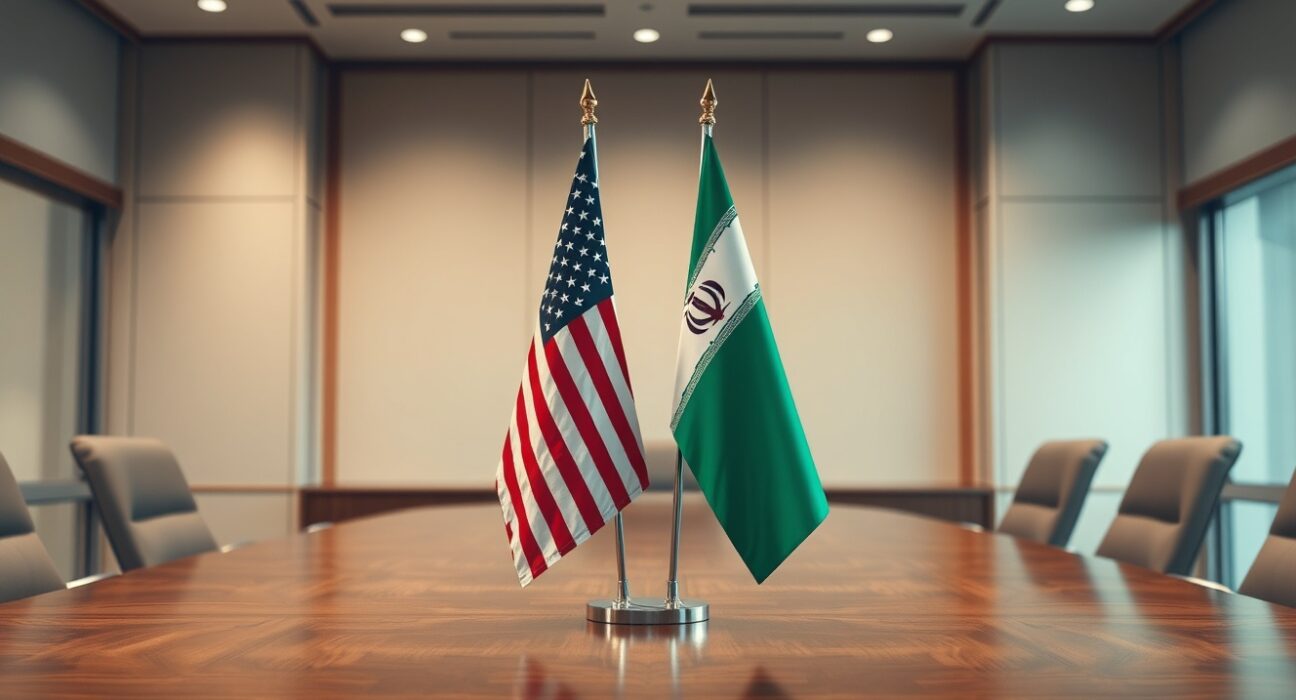
WASHINGTON, D.C. – In a significant diplomatic development, President Donald Trump confirmed that the United States is actively engaged in discussions to forge a more comprehensive agreement with Iran. The President stated that Tehran appears serious about resolving longstanding nuclear issues this time. This announcement marks a potential turning point in US-Iran relations, which have remained strained since the US withdrawal from the 2015 nuclear accord.
Trump Announces Comprehensive Iran Nuclear Deal Negotiations
President Trump made his remarks during a press briefing at the White House. He indicated that talks are currently underway. Furthermore, he suggested that both sides are exploring the possibility of a broader agreement. This potential deal would address concerns beyond the original Joint Comprehensive Plan of Action (JCPOA). The 2015 agreement primarily focused on limiting Iran’s nuclear program in exchange for sanctions relief.
However, the Trump administration withdrew from that pact in May 2018. Consequently, the US reimposed severe economic sanctions on Iran. These sanctions have significantly impacted Iran’s economy over the past several years. Now, the President’s comments suggest a possible diplomatic reopening. Importantly, he noted that Iran is demonstrating a serious approach to negotiations currently.
Historical Context of US-Iran Nuclear Diplomacy
The relationship between the United States and Iran has been complex for decades. The 2015 JCPOA, negotiated under the Obama administration, represented a major diplomatic achievement. It involved the United States, United Kingdom, France, Germany, Russia, China, and the European Union. The agreement imposed strict limits on Iran’s nuclear activities. In return, international sanctions against Iran were lifted.
President Trump, however, consistently criticized the deal. He labeled it “the worst deal ever” during his 2016 campaign. His administration argued the agreement had critical flaws. Specifically, they cited sunset clauses on key restrictions and a lack of address for Iran’s ballistic missile program. Additionally, they highlighted concerns about Iran’s regional activities. Therefore, the US pursued a “maximum pressure” campaign through sanctions after withdrawal.
- 2015: JCPOA signed after years of multilateral negotiations.
- 2018: US withdraws and reinstates sanctions, straining relations.
- 2019-2020: Tensions escalate with incidents in the Strait of Hormuz.
- 2021: Indirect talks begin in Vienna under the Biden administration.
- Present: Trump indicates new, direct discussions for a broader deal.
Expert Analysis on the Potential New Agreement
Diplomatic analysts note that a “more comprehensive” agreement would likely need to include several key elements. First, it would probably extend the duration of nuclear restrictions beyond the original JCPOA timelines. Second, it might formally incorporate limits on Iran’s ballistic missile development. Third, it could address Iran’s support for proxy groups across the Middle East. These were major points of contention for the previous US administration.
International relations scholars point to several factors that might explain Iran’s current seriousness. The country’s economy has suffered under sustained US sanctions. Additionally, domestic political pressures may be influencing Tehran’s calculus. Furthermore, regional dynamics have evolved since 2018. Several Arab states have normalized relations with Israel, altering the strategic landscape. Iran may now see value in securing a stable agreement with the United States.
Implications for Regional and Global Security
A successful negotiation for a new, comprehensive deal would have significant ramifications. For the Middle East, it could reduce the immediate risk of military confrontation. It might also create opportunities for broader regional dialogue. However, it could also concern US allies like Israel and Saudi Arabia. These nations have historically viewed Iran’s nuclear ambitions as a direct threat.
Globally, a new agreement would impact energy markets and non-proliferation efforts. Iran possesses some of the world’s largest oil and gas reserves. A deal leading to sanctions relief could increase global energy supplies. This increase might help stabilize prices. For the nuclear non-proliferation regime, a verified agreement with Iran would strengthen international norms. It would demonstrate that diplomatic solutions can address complex security challenges.
Conclusion
President Trump’s announcement regarding talks for a more comprehensive Iran nuclear deal represents a pivotal moment in international diplomacy. The potential for a new agreement addresses the shortcomings of the previous JCPOA while aiming for a broader settlement. The seriousness expressed by Iran, as noted by the President, provides a foundation for cautious optimism. The outcome of these discussions will profoundly affect US-Iran relations, Middle Eastern stability, and global non-proliferation efforts. The world will closely monitor whether these talks can translate into a durable and verifiable diplomatic solution.
FAQs
Q1: What is the JCPOA?
The Joint Comprehensive Plan of Action (JCPOA) is the 2015 international agreement that limited Iran’s nuclear program in exchange for lifting economic sanctions. The United States withdrew from the deal in 2018 under President Trump.
Q2: Why did the US leave the original Iran nuclear deal?
The Trump administration cited several reasons, including temporary “sunset clauses” on restrictions, the deal’s failure to address Iran’s ballistic missile program, and concerns over Iran’s regional activities supporting proxy groups.
Q3: What would a “more comprehensive” deal likely include?
A more comprehensive agreement would likely extend the duration of nuclear limits, include restrictions on ballistic missile development, and address Iran’s regional security activities, which were not covered by the JCPOA.
Q4: How have sanctions affected Iran’s economy?
US sanctions have significantly constrained Iran’s economy by restricting its oil exports, access to the international financial system, and foreign investment, leading to high inflation and economic hardship.
Q5: What are the main obstacles to a new agreement?
Key obstacles include building sufficient trust between the US and Iran, defining the scope of a “comprehensive” deal, addressing the concerns of US allies in the region, and creating a verification mechanism acceptable to all parties.
Disclaimer: The information provided is not trading advice, Bitcoinworld.co.in holds no liability for any investments made based on the information provided on this page. We strongly recommend independent research and/or consultation with a qualified professional before making any investment decisions.