
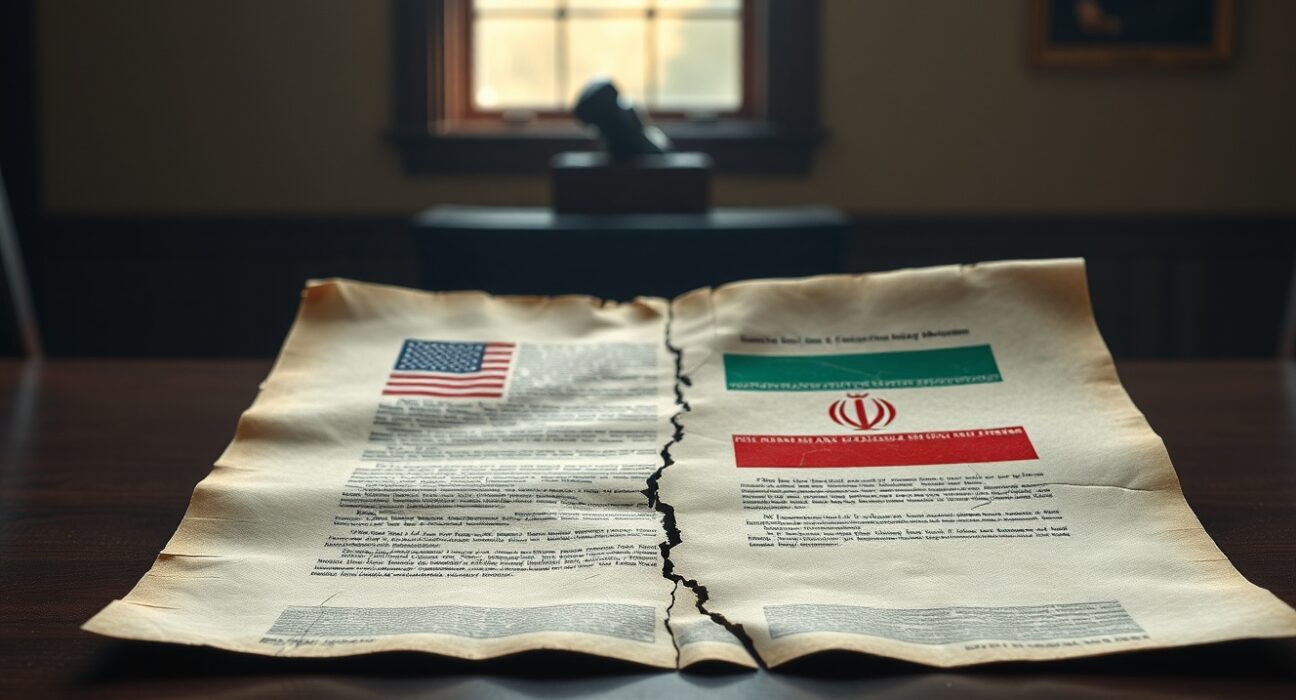
WASHINGTON, D.C., April 2, 2025 – Former President Donald Trump issued a stark public warning to Iran, urging the nation’s leadership to pursue a diplomatic agreement before facing severe consequences. This statement, delivered via social media, references recent infrastructure failures within Iran as a harbinger of further decline. Consequently, this development reignites global scrutiny of the volatile relationship between the United States and the Islamic Republic.
Trump’s Iran Deal Warning and Its Immediate Context
On April 2, former U.S. President Donald Trump directly addressed Iran on a major social media platform. He explicitly stated the time had come for Iran to “make a deal before it is too late.” Furthermore, Trump pointed to the recent collapse of a major Iranian bridge, declaring it “no longer usable.” He framed this event not as an isolated incident but as a precursor, warning that “more such events will follow.” Ultimately, Trump concluded with a grave prediction, asserting that everything with the potential to make Iran a great nation would disappear. This public commentary arrives amid a prolonged stalemate in nuclear negotiations and escalating regional tensions.
Analyzing the Reference to Iran’s Infrastructure
The specific infrastructure failure cited by Trump appears to reference the reported collapse of the Pol-e-Kohneh bridge in Lorestan Province. This bridge, a critical transportation link, reportedly suffered a catastrophic failure following heavy rainfall and flooding in late March. However, Iranian authorities have attributed the collapse to natural causes and aging infrastructure, not external sabotage. Independent engineering analyses often highlight the strain on Iran’s public works due to international sanctions limiting access to materials and technology. Therefore, while a factual event, its presentation within a geopolitical warning adds a layer of strategic interpretation.
Expert Perspectives on Strategic Messaging
Foreign policy analysts note that referencing domestic vulnerabilities is a common tactic in diplomatic pressure campaigns. “Publicly highlighting an adversary’s internal weaknesses aims to amplify a sense of urgency and leverage at the negotiating table,” explains Dr. Anya Petrova, a senior fellow at the Center for Strategic Studies. She adds, “The goal is to shape the perception of time running out and costs mounting.” Historical precedents show similar strategies, though their efficacy varies significantly based on the political resilience of the targeted state.
The Broader Landscape of US-Iran Relations
The relationship remains one of the most complex and adversarial in modern geopolitics. Key points of contention include:
- Nuclear Program: Disagreements over the scope and verification of Iran’s nuclear activities.
- Regional Proxy Influence: Iranian support for groups in Yemen, Syria, Lebanon, and Iraq.
- Sanctions Regime: Extensive U.S. economic sanctions impacting Iran’s oil exports and financial systems.
- Strategic Posturing: Military deployments and incidents in the Persian Gulf and Strait of Hormuz.
Recent diplomatic efforts have seen intermittent talks, yet a comprehensive deal has remained elusive. The table below outlines the recent major diplomatic phases:
| Period | Primary Agreement/Framework | Key Status (as of early 2025) |
|---|---|---|
| 2015-2018 | Joint Comprehensive Plan of Action (JCPOA) | U.S. withdrew in 2018; Iran gradually exceeded limits. |
| 2021-2023 | Vienna Talks for JCPOA Revival | Stalled over final guarantees and sanctions relief. |
| 2024-Present | Indirect, lower-level engagements | Focused on de-escalation and prisoner exchanges. |
Potential Impacts and Regional Repercussions
Statements from influential U.S. political figures carry significant weight in international markets and security calculations. Regional allies, including Israel and Gulf Cooperation Council states, closely monitor such rhetoric for signals about future American policy directions. Conversely, Iranian officials have consistently framed external pressure as a form of “economic terrorism” and a violation of national sovereignty. They often respond by accelerating indigenous technological programs and strengthening ties with other global powers, such as China and Russia. This dynamic creates a feedback loop of escalation that complicates conflict resolution.
Economic and Humanitarian Dimensions
Beyond high politics, sustained tension and sanctions have tangible human impacts. International organizations report challenges in delivering humanitarian aid due to financial restrictions. Moreover, the Iranian rial has experienced significant devaluation, contributing to domestic inflation and affecting living standards. These internal pressures form a critical backdrop to any discussion of diplomatic deadlines and national resilience.
Conclusion
Former President Trump’s public warning to Iran underscores the persistent fragility and high stakes characterizing US-Iran relations. By linking a specific infrastructure failure to a broader warning about national decline, the statement employs a classic pressure tactic aimed at altering Tehran’s cost-benefit analysis. Ultimately, the path forward hinges on complex negotiations, internal politics within both nations, and the unpredictable calculus of regional stability. The international community continues to watch for tangible diplomatic movements following this latest public exchange.
FAQs
Q1: What specific bridge did Trump reference in his warning?
The statement appears to refer to the Pol-e-Kohneh bridge in Iran’s Lorestan Province, which suffered a collapse in late March 2025 following severe flooding, according to regional reports.
Q2: Has the current U.S. administration commented on Trump’s statement?
As of this reporting, the White House has maintained its standard policy of not commenting on statements from former presidents, focusing instead on its own diplomatic channels.
Q3: What “deal” is Trump likely referring to?
The reference is broadly interpreted to mean a comprehensive diplomatic agreement, likely encompassing limits on Iran’s nuclear program, its ballistic missile development, and its regional activities, in exchange for sanctions relief.
Q4: How has Iran responded officially?
Iranian Foreign Ministry spokespersons have not directly addressed this specific statement but have a long-standing policy of dismissing external pressure as ineffective and vowing not to negotiate under threat.
Q5: What is the current status of nuclear negotiations with Iran?
Formal talks to revive the 2015 nuclear deal (JCPOA) remain stalled. Lower-level, indirect discussions continue, primarily focused on crisis prevention and managing regional tensions.
Disclaimer: The information provided is not trading advice, Bitcoinworld.co.in holds no liability for any investments made based on the information provided on this page. We strongly recommend independent research and/or consultation with a qualified professional before making any investment decisions.