

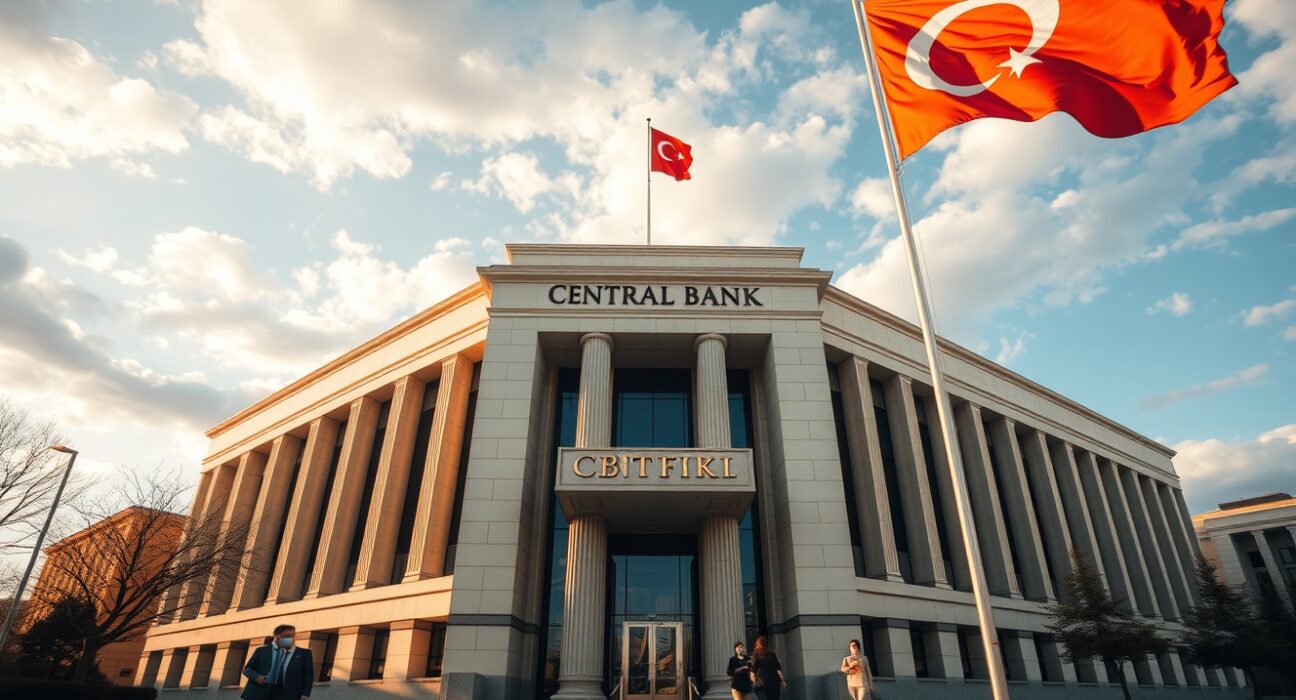
The Central Bank of the Republic of Turkey (CBRT) held its benchmark one-week repo rate steady at 50% at its July 2024 monetary policy meeting, a decision that aligned with the consensus forecast of economists surveyed by Reuters and Bloomberg. This marks the third consecutive meeting where the central bank has maintained its current stance, signaling a continued cautious approach to monetary tightening amid persistent inflationary pressures.
Decision in Line with Broad Market Expectations
Market participants had widely anticipated a hold, with 37 out of 37 economists polled by Reuters forecasting no change. The CBRT has kept rates unchanged since March 2024, following an aggressive tightening cycle that began in June 2023, when the policy rate was raised from 8.5% to 15%. Since then, the bank has cumulatively increased rates by 4,150 basis points to combat soaring inflation, which peaked at 85.5% in October 2022 and has since moderated but remains elevated above 70% as of June 2024.
The decision reflects the central bank’s assessment that current monetary conditions are sufficiently restrictive to bring inflation down over the medium term, while also monitoring for potential secondary effects from exchange rate volatility and domestic demand. The CBRT’s statement accompanying the decision reiterated its commitment to using all available instruments to achieve price stability.
Inflation Outlook and Policy Implications
Turkey’s inflation rate stood at 71.6% in June 2024, down from a peak but still far above the central bank’s 5% medium-term target. The CBRT has emphasized that it will maintain a tight monetary stance until there is a sustained decline in the underlying trend of inflation. Governor Fatih Karahan has stated that the bank will not consider rate cuts until monthly inflation figures show a clear and consistent moderation.
Analysts at Goldman Sachs and JPMorgan have noted that the hold decision was widely priced in, and the market’s focus has shifted to the timing of the first rate cut. Most economists expect the easing cycle to begin in the fourth quarter of 2024 or early 2025, contingent on a significant drop in inflation. The Turkish lira has remained relatively stable against the US dollar in recent weeks, trading around 32.8 per dollar, supported by the high carry trade appeal of the 50% policy rate.
Impact on Turkish Lira and Bond Markets
The decision had a muted immediate impact on financial markets. The lira weakened marginally by 0.1% against the dollar in afternoon trading, while the benchmark 10-year government bond yield edged up 2 basis points to 28.7%. Analysts attributed the calm reaction to the widely anticipated outcome. The real effective exchange rate has appreciated by approximately 15% since the start of the tightening cycle, reflecting improved investor confidence in Turkey’s orthodox monetary policy direction.
Foreign portfolio inflows into Turkish bonds and equities have resumed in recent months, with net inflows of $3.2 billion recorded in June 2024, according to central bank data. This reversal follows a prolonged period of capital flight triggered by the unorthodox low-rate policy pursued between 2021 and mid-2023.
Conclusion
The CBRT’s decision to hold rates at 50% underscores its commitment to maintaining a tight monetary stance until inflation shows clear signs of sustained decline. While the market response was subdued, the policy path ahead remains data-dependent. The timing of any rate cuts will hinge on monthly inflation readings and broader macroeconomic conditions, including the trajectory of domestic demand and exchange rate stability. For now, Turkey’s monetary authorities remain in a holding pattern, prioritizing price stability over growth support.
FAQs
Q1: Why did the CBRT keep interest rates unchanged at 50%?
The CBRT maintained its policy rate to sustain a restrictive monetary stance, aiming to curb persistent inflation, which remains above 70%. The decision was in line with market expectations and reflects the bank’s cautious approach to ensuring price stability.
Q2: When is the first interest rate cut expected in Turkey?
Most economists forecast the first rate cut in the fourth quarter of 2024 or early 2025, contingent on a sustained decline in monthly inflation figures. The CBRT has stated it will not ease policy until inflation shows a clear downward trend.
Q3: How has the Turkish lira reacted to the rate hold?
The lira experienced only a minor depreciation of 0.1% against the US dollar following the decision, reflecting the widely anticipated outcome. The currency has remained relatively stable in recent weeks, supported by the high carry trade appeal of the 50% interest rate.
Disclaimer: The information provided is not trading advice, Bitcoinworld.co.in holds no liability for any investments made based on the information provided on this page. We strongly recommend independent research and/or consultation with a qualified professional before making any investment decisions.
