

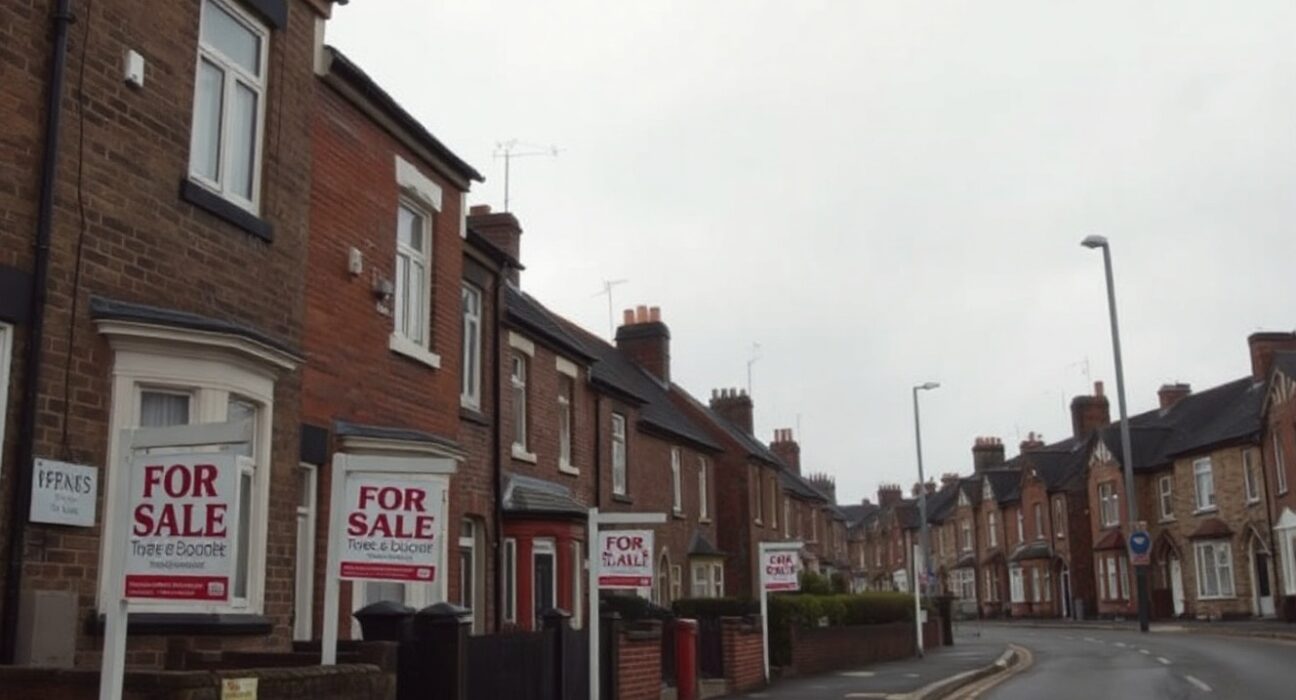
The United Kingdom’s housing market continued to show signs of strain in June, as the Royal Institution of Chartered Surveyors (RICS) Housing Price Balance fell to -33%, missing market expectations of -30%. The reading, which measures the difference between surveyors reporting price increases versus decreases, indicates a deepening pessimism across the property sector.
Market Sentiment Deteriorates
The latest RICS survey underscores a sustained period of weakness in the UK housing market, driven by elevated interest rates, persistent cost-of-living pressures, and cautious buyer sentiment. The -33% balance is the lowest reading in several months, signaling that price declines are becoming more widespread rather than isolated to specific regions or property types.
Surveyors across the country reported fewer new buyer inquiries and a continued decline in agreed sales. The data suggests that the traditional spring buying season failed to materialize, with June figures reflecting a market still adjusting to higher borrowing costs.
Interest Rates and Affordability Constraints
The Bank of England’s base rate, held at 5.25% through June, continues to weigh heavily on mortgage affordability. Although inflation has moderated from its peak, the lag effect of previous rate hikes is still filtering through to the housing market. Many potential buyers remain on the sidelines, waiting for clearer signals on rate cuts or further price corrections.
RICS data also showed a slight uptick in new instructions from sellers, suggesting that some homeowners are choosing to list properties while demand remains tepid. This imbalance between supply and demand is contributing to downward pressure on prices.
Regional Variations and Forward Guidance
While the national headline figure is negative, regional disparities persist. Surveyors in parts of northern England and Scotland reported less severe declines compared to London and the South East, where affordability constraints are most acute. The lettings market, meanwhile, continues to show robust demand, with rents rising steadily as would-be buyers remain in rental accommodation.
Looking ahead, RICS respondents expect the market to remain subdued over the next three months, with a cautious outlook for the remainder of 2024. Any recovery is likely to depend on the timing and pace of monetary policy easing by the Bank of England.
Conclusion
The June RICS Housing Price Balance of -33% provides further evidence that the UK housing market is in a sustained downturn, missing already modest forecasts. For homeowners, buyers, and investors, the data reinforces a picture of cautious sentiment, stretched affordability, and a market waiting for macroeconomic clarity. The coming months will be critical in determining whether the current softness deepens into a more pronounced correction or stabilizes as rate expectations shift.
FAQs
Q1: What does the RICS Housing Price Balance measure?
It measures the net balance of surveyors reporting house price increases versus decreases. A negative figure means more surveyors are seeing price falls than rises.
Q2: Why did the June figure miss forecasts?
Market expectations were for a -30% reading, but actual conditions were weaker due to ongoing high interest rates, low buyer demand, and affordability constraints.
Q3: What does this mean for potential homebuyers?
Buyers may find more negotiating power and lower asking prices, but mortgage costs remain high. Waiting for clearer rate signals could be prudent, though market timing remains uncertain.
Disclaimer: The information provided is not trading advice, Bitcoinworld.co.in holds no liability for any investments made based on the information provided on this page. We strongly recommend independent research and/or consultation with a qualified professional before making any investment decisions.
