
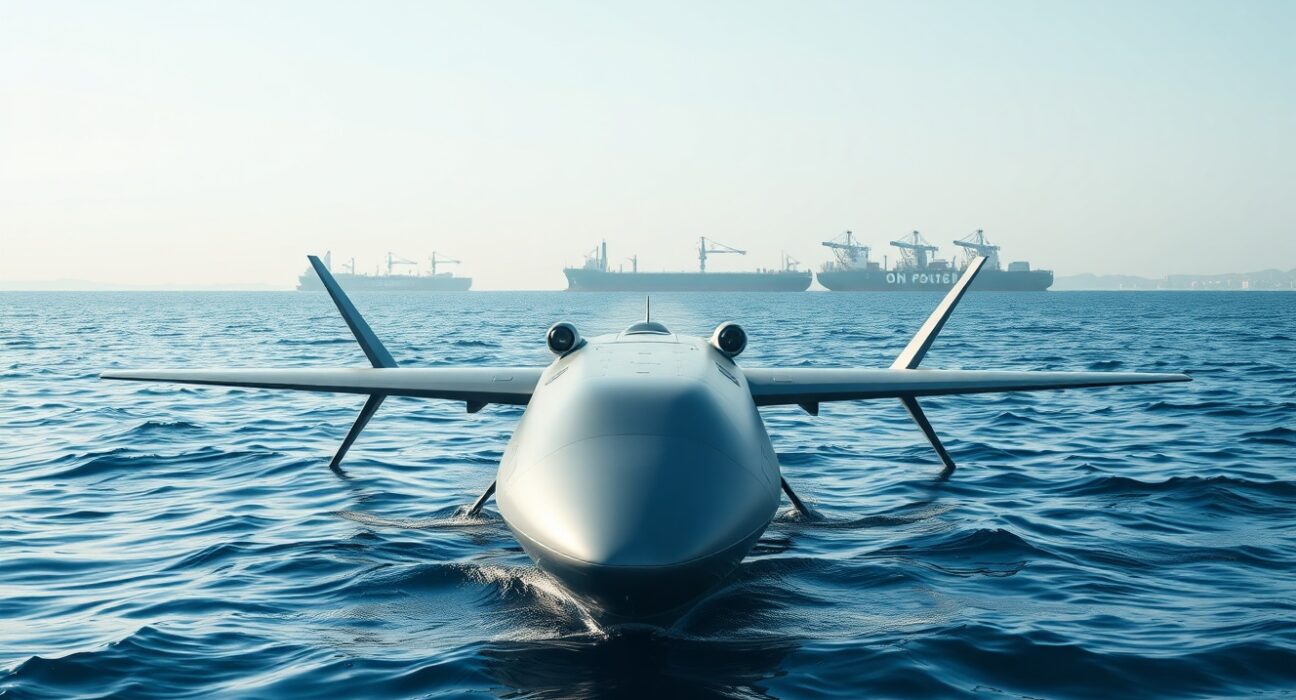
LONDON, UK – In a significant move for global maritime security, the United Kingdom is actively considering the deployment of advanced unmanned minesweeping systems to help safeguard and reopen the Strait of Hormuz. This narrow waterway, a mere 21 nautical miles wide at its narrowest point, serves as the world’s most critical oil transit chokepoint. Consequently, the UK’s potential deployment of minesweeping drones represents a pivotal technological and strategic response to persistent regional threats.
Minesweeping Drones: A New Era of Naval Operations
The Royal Navy’s potential deployment centers on cutting-edge unmanned surface vessels (USVs) specifically designed for mine countermeasures. Traditionally, minesweeping has been a perilous task for manned ships and personnel. However, modern drones now offer a revolutionary alternative. These autonomous or remotely operated systems can locate, identify, and neutralize naval mines from a safe distance. Furthermore, they provide persistent surveillance over vast maritime areas. The UK’s interest in these systems follows successful trials and integration exercises within NATO frameworks. For instance, systems like the Atlas Elektronik ARCIMS and similar platforms have demonstrated high efficacy in recent multinational exercises.
Key advantages of unmanned minesweeping drones include:
- Reduced Risk: Removing sailors from the immediate danger zone.
- Persistent Operations: Ability to conduct missions for extended durations without crew fatigue.
- Cost-Effectiveness: Lower operational costs compared to large, manned vessels.
- Stealth and Flexibility: Smaller acoustic and magnetic signatures, making them harder to detect.
The Strait of Hormuz: A Global Economic Artery
Understanding the UK’s consideration requires examining the strait’s immense global importance. This seaway connects the Persian Gulf with the Gulf of Oman and the Arabian Sea. According to the U.S. Energy Information Administration, approximately 20-21 million barrels of oil per day transited the strait in 2023. This volume represents about 21% of global petroleum liquid consumption. Moreover, most exports from Saudi Arabia, Iran, the UAE, Kuwait, and Iraq rely on this single passage. Therefore, any disruption triggers immediate volatility in global oil prices and energy security concerns. Historically, the strait has been a flashpoint. Notably, a series of attacks on tankers and mining incidents in 2019 and 2021 severely disrupted shipping. Consequently, international naval coalitions, including the UK-led International Maritime Security Construct (IMSC), have maintained a presence to deter threats.
Strategic and Diplomatic Implications
The deployment of UK minesweeping drones is not merely a technical operation; it carries profound geopolitical weight. Firstly, it signals the UK’s commitment to upholding the principle of Freedom of Navigation (FON) in a contested region. Secondly, it represents a calibrated, defensive response, utilizing technology to de-escalate potential conflicts by providing a clear defensive capability. Analysts from the Royal United Services Institute (RUSI) suggest such a move reinforces the UK’s role as a key security partner to Gulf states. Simultaneously, it avoids the escalatory profile of deploying larger combat vessels. The decision also aligns with the UK’s 2023 Integrated Review Refresh, which emphasizes forward presence and technological advantage. Ultimately, this potential action demonstrates how nations are leveraging unmanned systems to manage risk while maintaining security commitments.
Technological Capabilities and Operational Challenges
The specific drones under consideration are sophisticated multi-role platforms. Typically, they deploy towed sonars and sensors to classify seabed objects. Additionally, they can launch smaller remotely operated vehicles (ROVs) to inspect or dispose of mines. However, operating in the Strait of Hormuz presents unique challenges. The shallow, congested waters, heavy commercial traffic, and complex underwater topography complicate detection missions. Moreover, the electromagnetic environment is dense, posing potential challenges for communication and control links. The Royal Navy would likely operate these systems from a mothership or a forward base, such as in Bahrain where the UK’s Naval Support Facility is located. Success hinges on seamless integration with allied forces, including the U.S. Fifth Fleet and other IMSC partners, to ensure a unified maritime picture and coordinated response protocols.
| Potential System | Primary Role | Notable Feature |
|---|---|---|
| ARCIMS USV | Mine Countermeasures & Survey | Modular payload system, high autonomy |
| MAST-13 | Mine Detection & Neutralization | Low magnetic signature, operates in shallow water |
| SeaFox ROV | Mine Disposal | Expendable neutralizer, launched from USV |
Conclusion
The UK’s consideration of dispatching minesweeping drones to the Strait of Hormuz marks a strategic inflection point. It blends high-end naval innovation with urgent geopolitical necessity. By deploying these unmanned systems, the UK aims to provide a stabilizing, persistent capability to protect a vital global commons. This approach mitigates risk to personnel while demonstrating resolve. The situation underscores a broader global trend: the increasing reliance on autonomous systems for complex security tasks. As the UK finalizes its decision, the world will watch how this application of minesweeping drone technology influences both regional security dynamics and the future of naval warfare. The security of the Strait of Hormuz remains inextricably linked to global economic stability, making such technological solutions increasingly critical.
FAQs
Q1: What are minesweeping drones?
Minesweeping drones are unmanned surface or underwater vessels equipped with sonar, cameras, and sometimes disposal charges. They are designed to detect, identify, and neutralize naval mines without endangering human crews.
Q2: Why is the Strait of Hormuz so important?
The Strait of Hormuz is the world’s most critical oil transit chokepoint. Over one-fifth of global oil supply passes through it daily, making its security essential for international energy markets and economic stability.
Q3: Has the UK operated in the Strait of Hormuz before?
Yes. The UK Royal Navy has maintained a near-constant presence in the region for years, often leading or contributing to international maritime security coalitions like the IMSC, following attacks on commercial shipping.
Q4: How do drone minesweepers differ from traditional ships?
Traditional minesweepers are manned vessels that must approach minefields closely. Drones are smaller, cheaper, and operate remotely, keeping personnel at a safe distance and allowing for longer, riskier missions.
Q5: What are the main challenges for drones in the strait?
Primary challenges include congested shipping lanes, shallow and complex seabeds that can hide mines, potential electronic warfare interference, and the need for seamless coordination with numerous commercial and military vessels in the area.
Disclaimer: The information provided is not trading advice, Bitcoinworld.co.in holds no liability for any investments made based on the information provided on this page. We strongly recommend independent research and/or consultation with a qualified professional before making any investment decisions.