

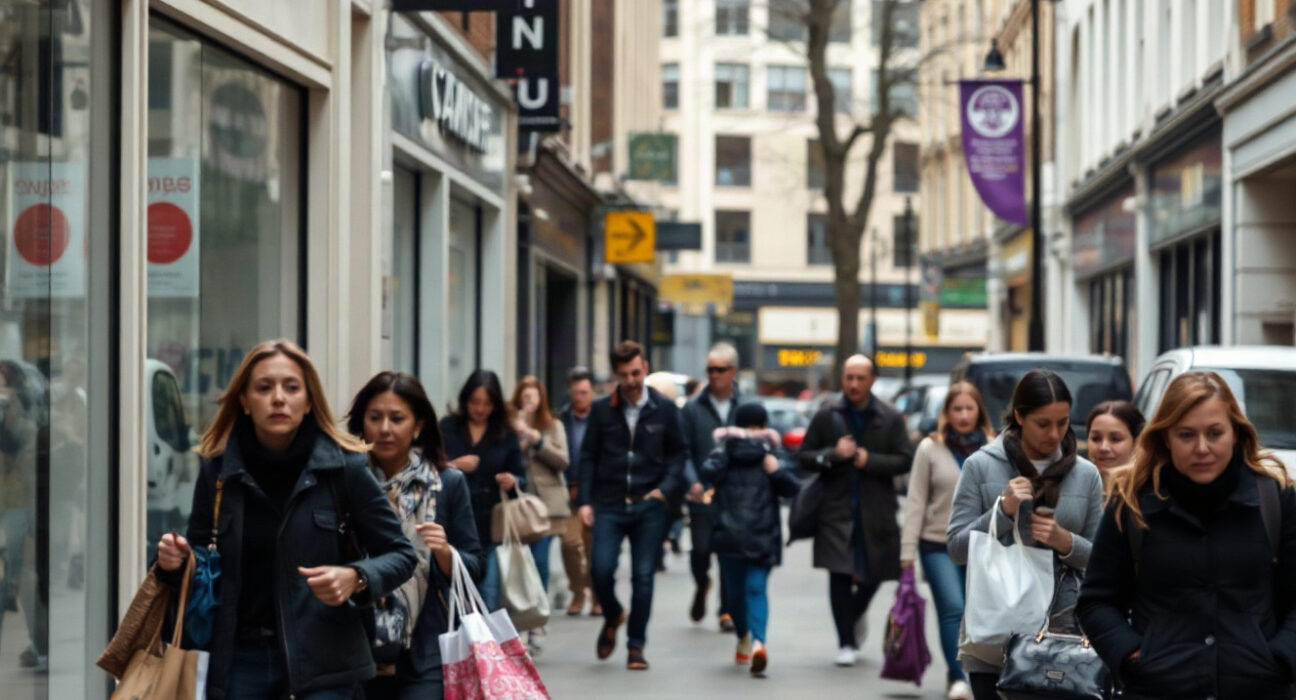
UK retail sales volumes fell by 0.5% in July compared with the previous month, according to official data released on [Date], matching economists’ forecasts and signaling a cooling in consumer spending during the summer period.
What the data shows
The Office for National Statistics (ONS) reported that retail sales declined 0.5% month-on-month in July, a slowdown from the 0.2% growth seen in June. The drop was in line with market expectations, suggesting that consumers pulled back on discretionary purchases amid persistent cost-of-living pressures and unseasonable weather.
Year-on-year, retail sales were [X]% higher than July of the previous year, though the monthly decline highlights the fragility of the recovery. Sector data showed that food stores and non-food stores both contributed to the fall, with department stores and household goods retailers particularly weak.
Why this matters
The retail sector is a key indicator of consumer confidence and overall economic health. A decline in sales, even when expected, can signal that households are tightening their belts, which may weigh on GDP growth in the third quarter. For businesses, the data could influence inventory planning and pricing strategies as they head into the crucial autumn season.
Economists note that the decline is partly a correction after a strong June, which was boosted by warm weather and promotional events. However, the underlying trend remains subdued, with real incomes still under pressure from high inflation and elevated interest rates.
Impact on consumers and the economy
For consumers, the drop in retail sales may translate into more aggressive discounting as retailers compete for a shrinking pool of spending. For policymakers, the data reinforces the case for a cautious approach to monetary policy, as the Bank of England balances inflation control against the risk of stifling growth.
Conclusion
July’s 0.5% monthly decline in UK retail sales, in line with forecasts, reflects a consumer base that remains cautious. While not a dramatic reversal, the data underscores the challenges facing the retail sector and the broader economy. As the summer fades, all eyes will be on whether spending stabilizes or continues to soften.
FAQs
Q1: What caused the UK retail sales decline in July?
The decline was primarily driven by reduced spending in food and non-food stores, with consumers cutting back on discretionary items. Unseasonable weather and ongoing cost-of-living pressures also played a role.
Q2: How does the July retail sales figure compare to expectations?
The 0.5% month-on-month drop matched economists’ forecasts exactly, meaning the data was not a surprise to markets.
Q3: What could this mean for the UK economy?
A sustained decline in retail sales could weigh on economic growth, as consumer spending is a major component of GDP. However, a single monthly drop is not necessarily a trend, and economists will watch upcoming months for confirmation.
Disclaimer: The information provided is not trading advice, Bitcoinworld.co.in holds no liability for any investments made based on the information provided on this page. We strongly recommend independent research and/or consultation with a qualified professional before making any investment decisions.
