

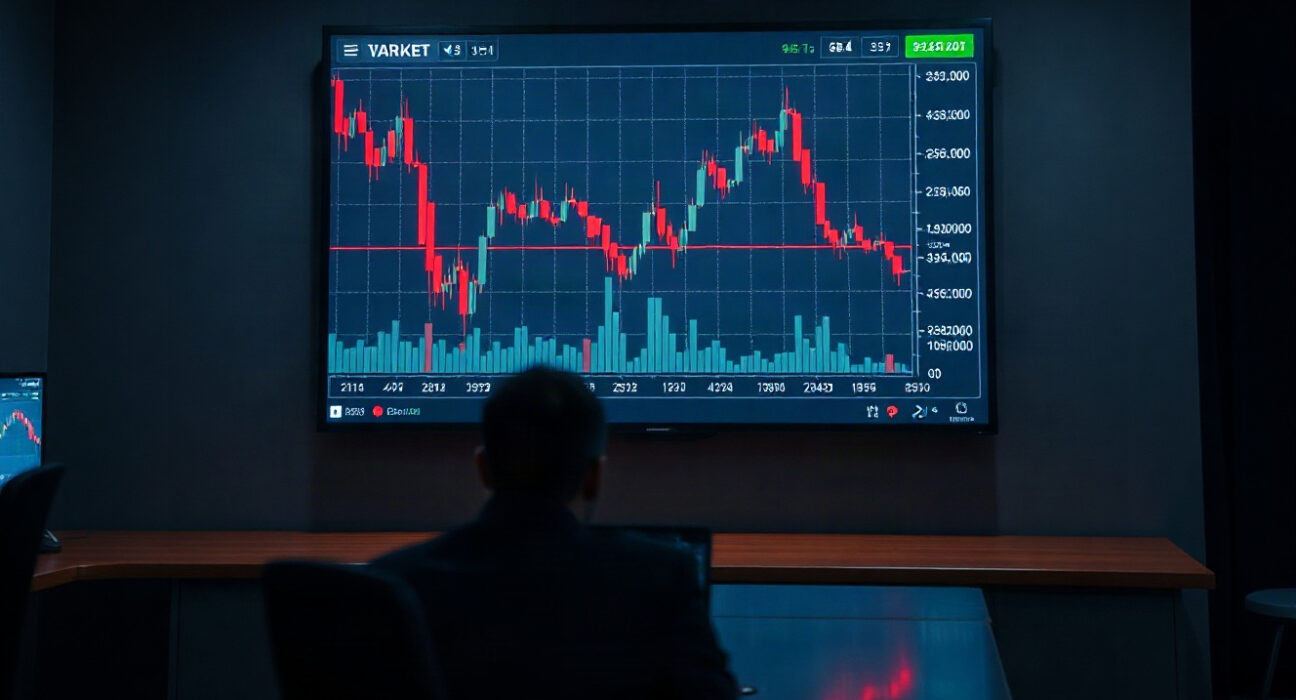
Upbit, South Korea’s largest cryptocurrency exchange, recorded approximately 1.15 trillion won ($840 million) in trading volume within a single hour as the crypto market plunged and volatility spiked. The surge occurred around 5:00 a.m. UTC today, when major cryptocurrencies, including Bitcoin, briefly tumbled before showing elevated price swings, prompting a sharp increase in trading activity among South Korean investors.
Exchange-wide volume spike
Over the past 24 hours, trading volume on Upbit reached an estimated 5.29 trillion won ($3.86 billion), while Bithumb, another major South Korean exchange, saw 2.71 trillion won ($1.98 billion) in trades. Coinone, a smaller platform, logged 240 billion won ($175 million) during the same period. These figures highlight the intense retail participation that characterizes South Korea’s crypto market, where local exchanges often see outsized activity during periods of high volatility.
The sudden volume spike reflects a broader trend: South Korean traders are known for rapid, sentiment-driven reactions to global market moves. The country’s crypto market operates on a premium often referred to as the ‘Kimchi premium,’ where prices can diverge from global averages due to local demand and capital controls. During sell-offs, this premium can widen or narrow sharply, fueling arbitrage and speculative trading.
Market context and implications
The sell-off comes amid a period of heightened uncertainty in global financial markets. Bitcoin and other digital assets have been sensitive to macroeconomic factors, including interest rate expectations and regulatory developments. While the exact trigger for today’s drop remains unclear, the swift recovery in prices suggests that leveraged positions were liquidated, a common pattern in crypto corrections.
For South Korean investors, the volatility underscores the risks of high-leverage trading, which is popular on local platforms. The country’s financial regulators have repeatedly warned about the dangers of speculative crypto trading, and the government has implemented strict know-your-customer (KYC) rules for exchanges. Despite these measures, retail participation remains robust, with crypto trading often rivaling stock market volumes on local exchanges.
Why this matters
This event is significant not just for traders but for anyone tracking the global crypto ecosystem. South Korea is one of the largest crypto markets in the world, and its trading patterns can influence price movements elsewhere. The volume spike on Upbit demonstrates how quickly sentiment can shift and how local events can amplify global trends.
For regulators, this episode may renew calls for tighter oversight of leveraged trading and market manipulation. For investors, it serves as a reminder of the inherent volatility of digital assets, where double-digit percentage swings can occur within minutes.
Conclusion
Upbit’s record hourly volume during today’s sell-off illustrates the intense trading activity that defines South Korea’s crypto market. As global markets remain jittery, similar spikes could occur, underscoring the need for caution and robust risk management among retail investors. The event also highlights the growing importance of Asian exchanges in shaping global crypto dynamics.
FAQs
Q1: Why did Upbit see such a high trading volume in one hour?
The volume spike was driven by a sudden crypto market sell-off, which triggered sharp price declines and increased volatility. South Korean investors, known for active trading, responded by increasing their activity, leading to a surge in transactions on Upbit and other local exchanges.
Q2: What is the ‘Kimchi premium’?
The ‘Kimchi premium’ refers to the price difference between cryptocurrencies on South Korean exchanges and global exchanges. It occurs due to local demand, capital controls, and limited arbitrage opportunities. During volatile periods, this premium can widen, attracting traders who seek to profit from the gap.
Q3: How do South Korean crypto regulations affect trading?
South Korea has implemented strict regulations, including mandatory real-name verification and KYC procedures for crypto exchanges. These measures aim to prevent money laundering and protect investors. However, they do not restrict trading volumes, and retail participation remains high, especially during periods of market volatility.
Disclaimer: The information provided is not trading advice, Bitcoinworld.co.in holds no liability for any investments made based on the information provided on this page. We strongly recommend independent research and/or consultation with a qualified professional before making any investment decisions.
