

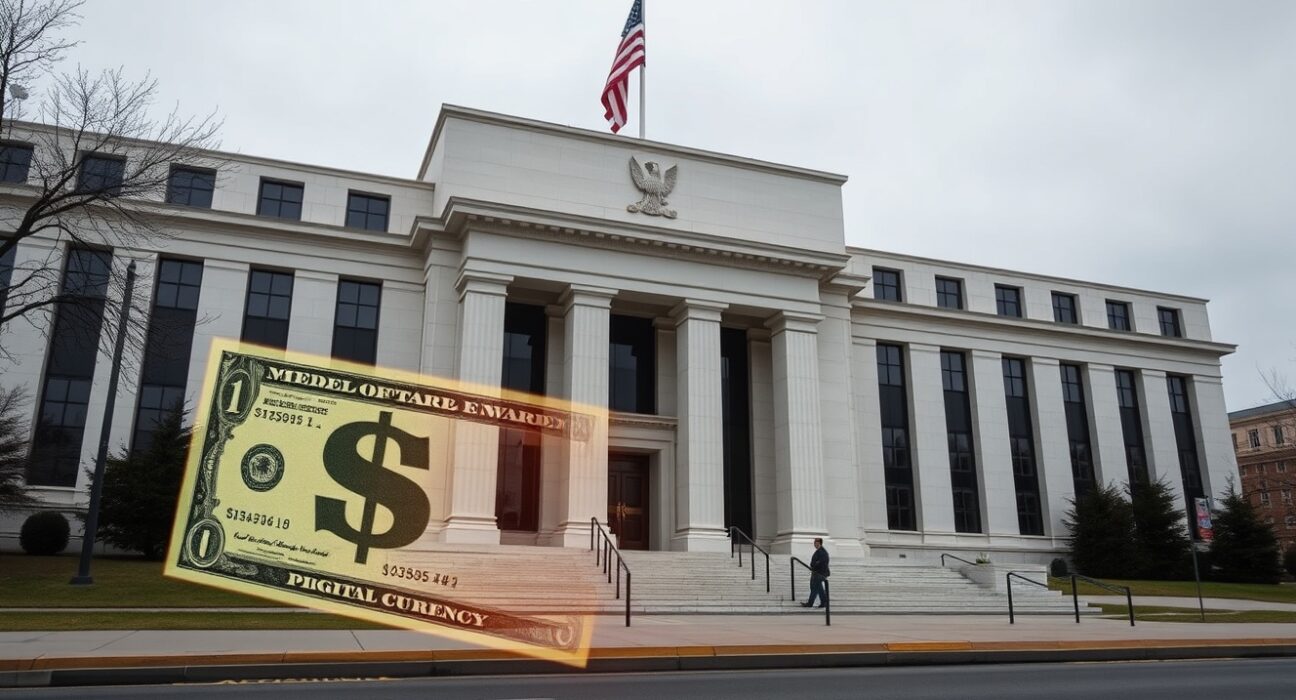
A provision that prohibits the U.S. Federal Reserve from issuing a central bank digital currency (CBDC) has automatically become law without President Donald Trump’s signature, marking a significant legislative development for the cryptocurrency industry. The ban is embedded within the broader ROAD to Housing Act, a bipartisan bill aimed at addressing housing affordability.
How the Ban Became Law
According to a report from The Block, the bill took effect under a U.S. constitutional rule that allows legislation passed by Congress to become law if the president neither signs nor vetoes it within 10 days. President Trump had previously stated he would not sign the housing bill unless the SAVE America Act, a separate piece of legislation restricting non-citizen voting, was passed first. By not acting on the ROAD to Housing Act, the CBDC prohibition was enacted automatically.
What the Ban Means for Digital Currency
The key component for the cryptocurrency sector is the explicit clause that forbids the Federal Reserve from issuing a CBDC. This effectively blocks any near-term development of a U.S. digital dollar, a concept that has been debated by policymakers and financial regulators for years. While the Fed had previously explored CBDC research, this law now places a statutory barrier on any future issuance without further congressional action.
Implications for the Crypto Industry
For the cryptocurrency industry, the ban removes a potential government-backed competitor to private digital assets like Bitcoin and Ethereum. Many crypto advocates have argued that a CBDC could centralize financial control and threaten privacy. The law’s passage is seen as a victory for those who favor decentralized digital currencies over a state-issued alternative. However, it also means the U.S. will not have a government-backed digital currency for the foreseeable future, potentially leaving the field open for other nations, such as China, which has already launched a digital yuan pilot.
Broader Context of the ROAD to Housing Act
The ROAD to Housing Act is a bipartisan measure designed to ease housing costs by increasing supply and providing financial support. Its primary focus is on housing affordability, but the inclusion of the CBDC ban demonstrates how digital asset policy has become intertwined with broader legislative efforts. The bill’s passage highlights the complex political landscape in Washington, where cryptocurrency regulations are often attached to larger, must-pass legislation.
Conclusion
The automatic enactment of the U.S. CBDC ban represents a clear, legislated stance against a central bank digital dollar. While the move is welcomed by many in the crypto space, it also underscores the divided views on digital currency within the U.S. government. For now, the Federal Reserve’s role in digital currency is legally restricted, and the future of a U.S. digital dollar will require new legislation to reverse this ban.
FAQs
Q1: What is a CBDC?
A CBDC, or central bank digital currency, is a digital form of a country’s fiat currency issued and regulated by its central bank. Unlike cryptocurrencies, it is centralized and backed by the government.
Q2: Why did President Trump not sign the bill?
President Trump stated he would not sign the ROAD to Housing Act unless the SAVE America Act, a separate bill on non-citizen voting, was passed first. By not signing or vetoing it within 10 days, the bill became law automatically under the U.S. Constitution.
Q3: Can the Federal Reserve still research CBDCs?
The law explicitly forbids the Federal Reserve from issuing a CBDC, but it does not necessarily prohibit all research. However, any practical steps toward a digital dollar are now blocked without new legislation.
Disclaimer: The information provided is not trading advice, Bitcoinworld.co.in holds no liability for any investments made based on the information provided on this page. We strongly recommend independent research and/or consultation with a qualified professional before making any investment decisions.
