

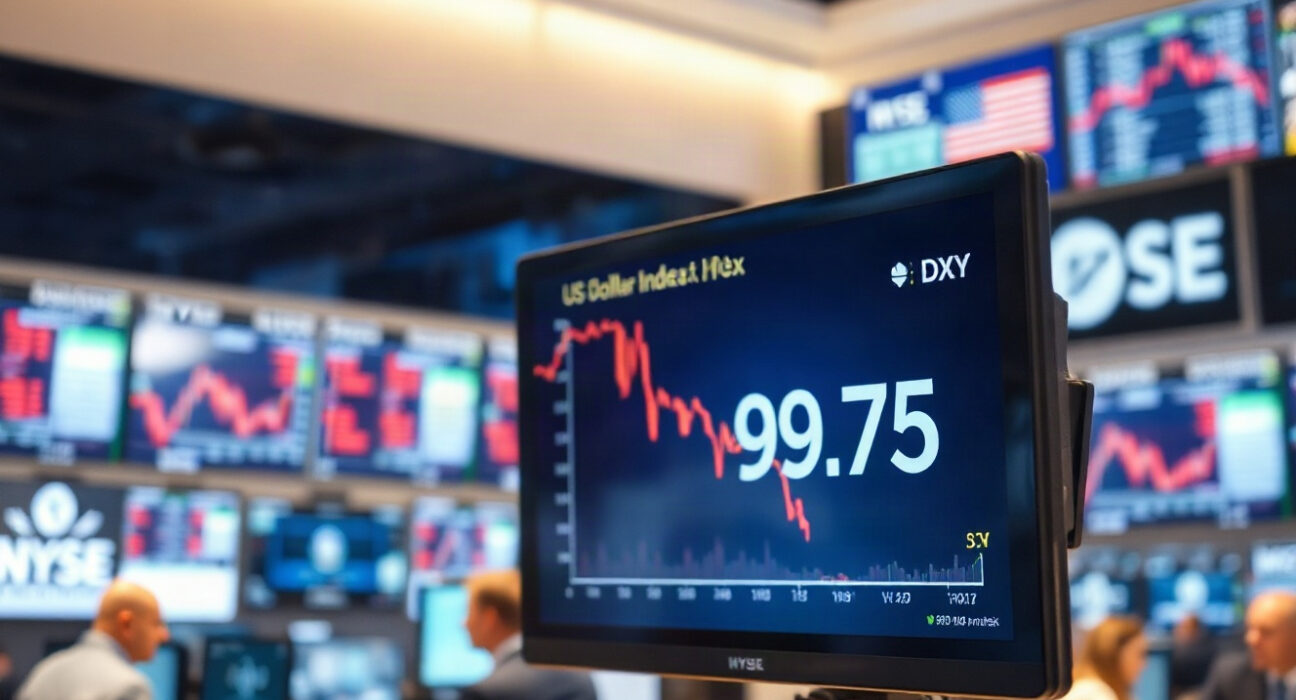
The US Dollar Index (DXY) is trading around 99.75–99.70, holding near its lowest level in three months as of today, reflecting a broad shift in market sentiment toward the greenback.
Why the Dollar Is Under Pressure
The index, which measures the dollar against a basket of major currencies, has been declining as traders adjust their expectations for Federal Reserve policy. Recent economic data, including softer inflation readings and mixed employment figures, have fueled speculation that the Fed may begin cutting interest rates sooner than previously anticipated.
Lower interest rates typically reduce the appeal of dollar-denominated assets, prompting investors to seek higher yields elsewhere. This dynamic has weighed on the DXY, which has fallen from its recent highs earlier this year.
Global Market Implications
A weaker dollar has significant ripple effects across global markets. Emerging market currencies often benefit from a softer dollar, as it eases debt servicing costs and attracts capital inflows. Commodities priced in dollars, such as oil and gold, also tend to rise when the dollar weakens, providing a tailwind for commodity-exporting nations.
For multinational corporations, a lower dollar can boost overseas earnings when converted back to USD, potentially supporting stock valuations. However, it also makes US exports more competitive, which could help narrow the trade deficit.
What to Watch Next
Traders will closely monitor upcoming Fed speeches and economic indicators, particularly the next CPI report and jobs data, for clues on the timing of potential rate cuts. Any hawkish surprise could halt the dollar’s slide, while dovish signals may push the DXY to new lows.
Conclusion
The US Dollar Index’s slide to a three-month low underscores shifting market dynamics as investors position for a potential Fed pivot. While the near-term direction remains uncertain, the implications for currencies, commodities, and global trade are substantial. Market participants should stay attuned to incoming data and central bank commentary for further guidance.
FAQs
Q1: What is the US Dollar Index (DXY)?
The US Dollar Index measures the value of the US dollar against a basket of six major currencies: the euro, Japanese yen, British pound, Canadian dollar, Swedish krona, and Swiss franc. It is a widely used benchmark for the dollar’s overall strength in global markets.
Q2: Why does the dollar weaken when the Fed cuts rates?
When the Federal Reserve lowers interest rates, US assets become less attractive to yield-seeking investors. This reduces demand for dollars, causing the currency to depreciate relative to others.
Q3: How does a weaker dollar affect emerging markets?
A weaker dollar generally benefits emerging markets by lowering the cost of servicing dollar-denominated debt and attracting foreign investment. It can also boost commodity prices, aiding exporting nations.
Disclaimer: The information provided is not trading advice, Bitcoinworld.co.in holds no liability for any investments made based on the information provided on this page. We strongly recommend independent research and/or consultation with a qualified professional before making any investment decisions.
