
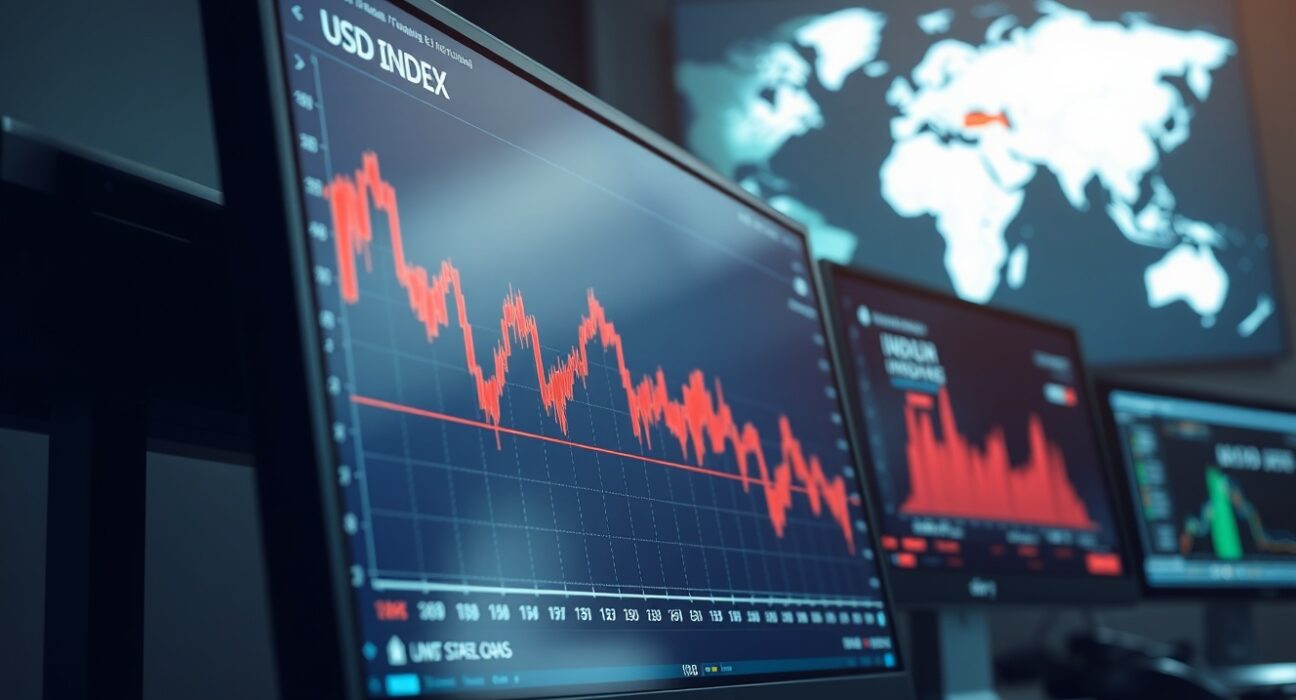
NEW YORK, March 15, 2025 – The U.S. dollar traded marginally lower against a basket of major currencies in early Friday trading, a direct reaction to escalating geopolitical instability. This movement follows Iran’s formal rejection of a proposed United Nations-backed ceasefire deal and a series of intensified threats from former President Donald Trump regarding foreign policy. Consequently, investors swiftly moved towards traditional safe-haven assets, applying subtle but significant pressure on the world’s primary reserve currency.
U.S. Dollar Faces Immediate Pressure from Dual Crises
The Dollar Index (DXY), which measures the greenback against six major peers, fell 0.3% to 103.85. This decline marks its weakest point in over a week. Market analysts immediately cited the dual geopolitical headlines as the primary catalysts. Firstly, Iran’s Supreme National Security Council publicly dismissed the ceasefire framework intended to de-escalate regional conflicts. Secondly, former President Trump delivered a campaign speech vowing a “dramatically different” approach to Iran and global alliances if re-elected. These events collectively injected fresh uncertainty into financial markets.
Forex traders typically react to geopolitical risk by adjusting their portfolios. In this instance, the Swiss franc and Japanese yen saw modest gains. Meanwhile, gold prices edged higher. “The market is pricing in a renewed risk premium,” stated Dr. Anya Petrova, Chief Strategist at Global Macro Insights. “While the dollar’s drop is measured now, the underlying narrative of prolonged instability could trigger more sustained capital flows away from dollar-denominated assets in the coming weeks.”
Iran’s Ceasefire Rejection: A Deepening Regional Stalemate
Iran’s rejection represents a significant setback for diplomatic efforts led by European and regional powers. The proposed deal, details of which were leaked to major news outlets, reportedly included provisions for:
- An immediate halt to support for proxy militias outside its borders.
- Verifiable limits on certain ballistic missile activities.
- In return for phased sanctions relief on non-energy sectors.
An Iranian government spokesman called the terms “a violation of national sovereignty and strategic depth.” Regional security experts note this hardline position likely reflects internal political dynamics. Furthermore, it signals Tehran’s confidence in its current regional posture. The immediate market impact extends beyond forex. Brent crude oil futures initially spiked over 2% before paring gains, highlighting the ever-present link between Middle East tensions and global energy prices.
Historical Context and Market Memory
Financial markets possess a long memory regarding U.S.-Iran relations. Previous episodes of heightened tension, such as the 2020 assassination of General Qasem Soleimani and the 2019 attacks on Saudi oil facilities, triggered similar patterns. During those events, the U.S. dollar often experienced short-term volatility. However, its status as the global safe-haven currency ultimately reasserted itself during periods of extreme global fear. The current scenario presents a nuanced test. It combines regional conflict with domestic U.S. political uncertainty, a potentially more complex recipe for sustained dollar weakness.
Trump’s Foreign Policy Threats Amplify Uncertainty
Compounding the market’s reaction, former President Donald Trump’s latest remarks introduced another layer of unpredictability. Speaking at a rally, he criticized current administration policies as “weak” and promised a return to “maximum pressure” on Iran. He also questioned the future of NATO funding arrangements. Political analysts and market strategists quickly parsed these comments. They assessed the potential for a dramatic shift in U.S. foreign policy after the next election.
“Markets abhor uncertainty, and Trump’s statements directly contribute to a foggy long-term outlook for U.S. diplomatic and trade relations,” explained Michael Chen, a political risk advisor at Eurasia Group. “When the world’s largest economy signals potential isolationism or aggressive unilateralism, it forces a recalibration of global growth and currency stability assumptions.” The following table contrasts potential market impacts under different policy scenarios:
| Policy Scenario | Potential USD Impact | Key Risk Factor |
|---|---|---|
| Renewed “Maximum Pressure” on Iran | Short-term strength from safe-haven flows, then potential long-term weakness from trade disruption. | Spike in oil prices, disruption of Strait of Hormuz shipping. |
| Questioning NATO Commitments | Gradual weakening due to doubts about U.S. global leadership role. | Strengthening of Euro and other allied currencies if European defense integration accelerates. |
| Aggressive Tariff Threats | Volatile, but generally negative due to risks of trade wars and inflation. | Retaliatory measures from trading partners, supply chain re-pricing. |
Broader Economic Implications and Expert Analysis
The immediate dip in the dollar, while notable, forms part of a larger economic picture. Central banks worldwide monitor such geopolitical shocks closely. For instance, the Federal Reserve must consider whether sustained risk-off sentiment could dampen economic growth. Conversely, it must also watch for inflationary pressures from rising oil prices. This complex balance influences future interest rate decisions.
Dr. Sarah Jennings, an economist at the Brookings Institution, provided deeper context. “The dollar’s privileged status rests on twin pillars: the depth of U.S. financial markets and perceived political stability. Events that chip away at the latter, especially when they involve core security alliances or volatile regions, introduce a new variable. Over time, repeated shocks could encourage a gradual diversification of global reserves into other currencies or assets.” She emphasized, however, that no immediate alternative to the dollar’s dominance currently exists.
The Role of Digital Assets and Commodities
Interestingly, the geopolitical news also sparked activity in alternative asset classes. Bitcoin and other major cryptocurrencies saw a slight uptick in trading volume. Some observers interpret this as a nascent hedge against traditional financial system risk. Similarly, silver and other industrial metals with strategic applications experienced buying interest. This broader asset movement underscores how modern markets transmit geopolitical stress across a wide spectrum of instruments, not just traditional forex pairs.
Conclusion
The U.S. dollar’s decline, though modest, serves as a clear financial barometer of rising global tensions. Iran’s rejection of diplomacy and the re-emergence of confrontational U.S. political rhetoric have combined to unsettle investors. While the dollar’s foundational strength remains intact for now, this episode highlights its vulnerability to geopolitical narratives. The coming weeks will be critical. Markets will watch for any diplomatic breakthroughs or further escalations. Ultimately, the trajectory of the U.S. dollar will depend heavily on whether these geopolitical risks intensify or begin to subside.
FAQs
Q1: Why does the U.S. dollar often fall on geopolitical bad news?
The dollar is a safe-haven asset, but its reaction is nuanced. While it can rise on pure global fear, it often falls when the bad news directly involves U.S. foreign policy uncertainty or potential economic disruption (like oil shocks) that could hurt the U.S. economy specifically.
Q2: What is the Dollar Index (DXY)?
The U.S. Dollar Index is a measure of the value of the United States dollar relative to a basket of six major world currencies: the Euro, Japanese yen, British pound, Canadian dollar, Swedish krona, and Swiss franc. A falling DXY means the dollar is weakening against this basket.
Q3: How could this affect everyday Americans?
A weaker dollar makes imported goods more expensive, contributing to inflation. It can make foreign travel costlier. However, it also makes U.S. exports cheaper for foreign buyers, potentially helping certain industries. The impact on gas prices, via oil market reactions, is often the most immediate consumer effect.
Q4: What are ‘safe-haven’ assets?
Safe-haven assets are investments expected to retain or increase in value during times of market turbulence. Traditional examples include gold, the Japanese yen, the Swiss franc, and U.S. Treasury bonds. Their appeal rises when geopolitical or economic risks escalate.
Q5: Has the dollar’s role as the world’s reserve currency changed?
The U.S. dollar remains the dominant global reserve currency, comprising about 60% of all central bank reserves. No single alternative currently matches the depth and liquidity of U.S. markets. However, discussions about diversification have increased following events like sanctions and geopolitical shifts, suggesting a slow, long-term evolution rather than a sudden change.
Disclaimer: The information provided is not trading advice, Bitcoinworld.co.in holds no liability for any investments made based on the information provided on this page. We strongly recommend independent research and/or consultation with a qualified professional before making any investment decisions.