

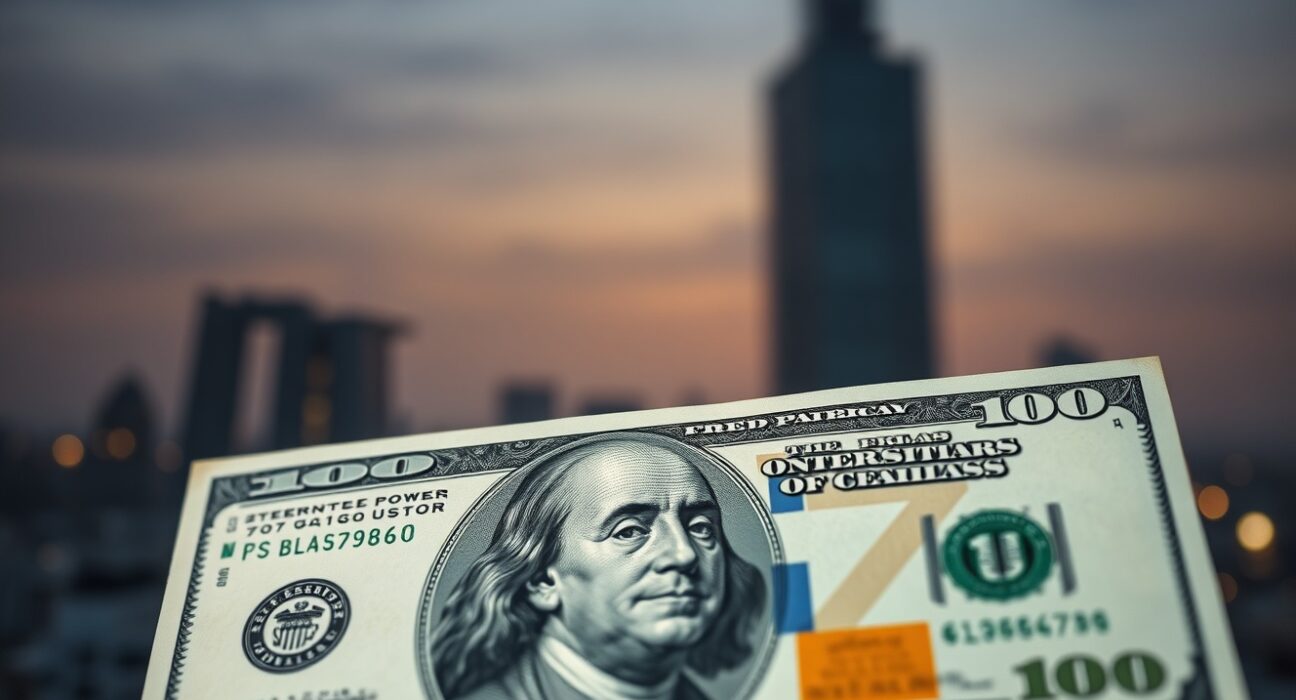
NEW YORK, April 2025 – The U.S. dollar has surged to its highest level in over ten months, a dramatic move financial analysts directly attribute to escalating military conflict in the Middle East. Consequently, global investors are flocking to the world’s primary reserve currency as a traditional safe haven. This flight to safety is reshaping foreign exchange markets and applying pressure on currencies worldwide.
U.S. Dollar Index Climbs on Geopolitical Fears
The ICE U.S. Dollar Index (DXY), which measures the greenback against a basket of six major currencies, jumped significantly in Thursday’s trading session. Specifically, it breached a key technical resistance level not seen since the previous June. Market data shows the index gained over 1.2% in a single day, its largest daily advance in months. Meanwhile, the euro and the British pound both fell sharply against the dollar. Similarly, risk-sensitive currencies like the Australian dollar also faced substantial selling pressure.
This rally stems from a sharp escalation in hostilities across several Middle Eastern flashpoints. Reports indicate a significant intensification of ground and aerial operations, raising fears of a broader regional conflict. Historically, such geopolitical ruptures trigger capital flows into assets perceived as stable. “The dollar’s role as the global safe-haven currency is being powerfully reaffirmed,” noted a senior strategist at a major investment bank, citing client movements into dollar-denominated assets.
The Mechanics of a Safe-Haven Surge
During periods of global uncertainty, investors execute a predictable series of actions. First, they reduce exposure to risky assets like equities in emerging markets. Next, they seek the liquidity and perceived safety of U.S. Treasury bonds. Finally, purchasing these Treasuries requires U.S. dollars, creating immediate and sustained demand for the currency. This process, known as a ‘flight to quality,’ exerts powerful upward pressure on the dollar’s exchange rate.
Historical Precedents and Current Parallels
Financial history provides clear context for this movement. For instance, during the initial phase of the Russia-Ukraine conflict in 2022, the DXY index experienced a similar rapid appreciation. Likewise, periods of acute stress in global markets, such as the early 2020 pandemic sell-off, saw the dollar strengthen dramatically. The current situation mirrors these events, with the scale of the dollar’s move correlating directly with the perceived escalation of risk.
The impact extends far beyond forex markets. A stronger dollar makes dollar-denominated commodities like oil more expensive for countries using other currencies, potentially exacerbating inflationary pressures abroad. Furthermore, nations with high levels of dollar-denominated debt face increased servicing costs, straining public finances. Central banks outside the U.S. may now face a complex dilemma: combat domestic inflation while managing currency depreciation.
Global Market Reactions and Ripple Effects
Equity markets in Europe and Asia traded lower following the news, with energy and industrial sectors particularly affected. Conversely, traditional safe-haven assets saw inflows. Gold prices moved higher, and yields on benchmark 10-year U.S. Treasury notes fell as prices rose. This bond market movement signals a dual demand for both safety and the expectation that prolonged instability could delay monetary policy tightening.
The commodity complex presented a mixed picture. While Brent crude oil futures rose on supply disruption fears, industrial metals like copper declined on worries about dampened global economic growth. This divergence highlights the market’s struggle to price simultaneous supply shocks and potential demand destruction. Analysts are closely monitoring shipping routes and insurance premiums in key regional waterways, as increases there would signal further market stress.
Central Bank Watch and Policy Implications
The Federal Reserve now operates in an increasingly complex environment. A robust dollar helps curb import price inflation in the United States, a factor that could influence the pace of future interest rate decisions. However, Fed officials have consistently stated that monetary policy is set for domestic goals, not to manage the currency. In contrast, other major central banks, including the European Central Bank and the Bank of Japan, may express concern over excessive volatility in their currency pairs.
Market participants are also assessing the sustainability of this move. If the geopolitical situation shows signs of de-escalation, some of the dollar’s gains could quickly reverse as investors re-engage with risk. Conversely, a prolonged or widening conflict could cement the dollar’s strength for an extended period. Currency volatility indices have spiked, indicating traders expect larger swings in exchange rates ahead.
Regional Currency Vulnerabilities Exposed
The dollar’s strength has exposed vulnerabilities in several regional economies. Currencies in emerging markets with current account deficits have come under pronounced pressure. These nations often rely on foreign capital inflows, which can stall during risk-off episodes. Local central banks may be forced to intervene in forex markets or raise interest rates to defend their currencies, actions that could slow economic growth.
Major currency pairs tell a clear story. The USD/JPY pair rose, reflecting the yen’s own safe-haven status being overshadowed by the dollar’s dominance and the interest rate differential. The USD/CHF pair also climbed, though the Swiss franc retained relative strength. The following table illustrates the scale of the move for key pairs over a 24-hour period:
| Currency Pair | Change (%) | Key Level Breached |
|---|---|---|
| EUR/USD | -1.5% | Fell below 1.0700 |
| GBP/USD | -1.3% | Dropped to 1.2500 support |
| USD/JPY | +0.9% | Rose above 154.00 |
| AUD/USD | -1.8% | Approached 0.6450 |
Market technicians note that a decisive and sustained break above the DXY’s 10-month high could open the path for further appreciation. The next significant resistance level sits near the multi-decade peak reached in 2022. However, momentum indicators are now flashing overbought signals, suggesting the possibility of a short-term consolidation or pullback.
Conclusion
The U.S. dollar’s ascent to a over 10-month high serves as a stark barometer of rising global anxiety. This surge, directly fueled by escalating conflict in the Middle East, demonstrates the enduring role of the dollar as the world’s premier safe-haven asset. The move has immediate consequences for global trade, commodity prices, and international debt markets. Ultimately, the trajectory of the U.S. dollar will remain tightly coupled with geopolitical developments, with financial markets poised for further volatility as the situation evolves.
FAQs
Q1: Why does the U.S. dollar strengthen during geopolitical crises?
The dollar is considered the world’s primary reserve currency, offering deep liquidity and stability. During crises, global investors sell risky assets and buy U.S. Treasury bonds for safety, which requires dollars, driving up demand and its value.
Q2: What is the U.S. Dollar Index (DXY)?
The DXY is an index that measures the value of the U.S. dollar relative to a basket of six foreign currencies: the euro, Japanese yen, British pound, Canadian dollar, Swedish krona, and Swiss franc. It’s a key benchmark for dollar strength.
Q3: How does a stronger dollar affect other countries?
A stronger dollar can increase inflation in other nations by making imported goods and dollar-denominated commodities like oil more expensive. It also raises the cost of servicing dollar-denominated debt for foreign governments and corporations.
Q4: Could this dollar surge affect Federal Reserve policy?
Potentially. A stronger dollar helps dampen U.S. import price inflation, which could give the Fed more flexibility. However, the Fed primarily sets policy based on domestic employment and inflation data, not direct currency targets.
Q5: What are the main risks if the dollar’s rally continues?
Sustained dollar strength could lead to significant financial stress in emerging markets with dollar debts, suppress corporate earnings for U.S. multinational companies, and contribute to tighter global financial conditions, potentially slowing worldwide economic growth.
Disclaimer: The information provided is not trading advice, Bitcoinworld.co.in holds no liability for any investments made based on the information provided on this page. We strongly recommend independent research and/or consultation with a qualified professional before making any investment decisions.
