

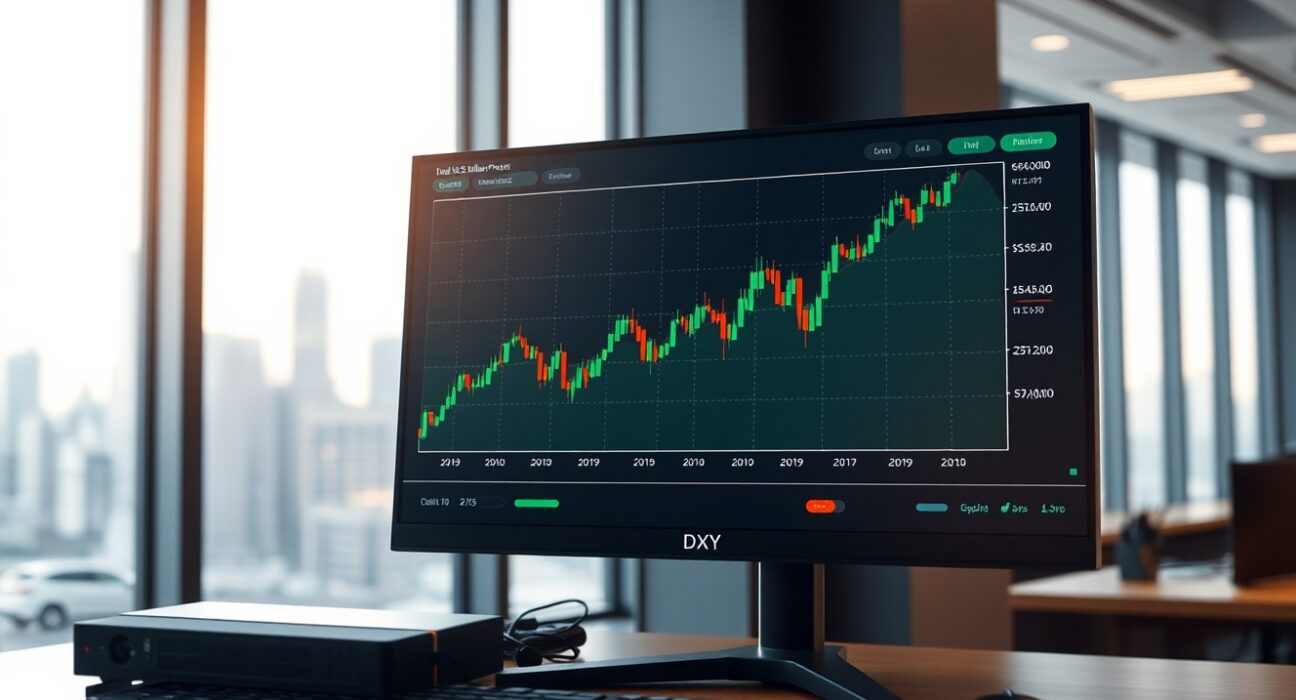
The US Dollar Index (DXY) has edged higher, trading firmly above the 99.00 mark during Tuesday’s session, as growing uncertainty surrounding a potential truce deal between the United States and Iran continues to influence market sentiment. Investors are closely monitoring diplomatic developments, with any shift in geopolitical risk appetite likely to drive further dollar movements.
Geopolitical tensions support safe-haven demand
The dollar’s recent strength reflects renewed safe-haven buying amid unclear signals from Washington and Tehran regarding a possible ceasefire or nuclear agreement. Reports over the past 48 hours indicate that negotiations have stalled on key issues, including uranium enrichment limits and the timeline for sanctions relief. This lack of clarity has prompted traders to reduce exposure to riskier assets, favoring the greenback and gold.
Market participants are now pricing in a higher probability of prolonged diplomatic friction, which historically benefits the dollar due to its status as the world’s primary reserve currency. The DXY, which measures the dollar against a basket of six major currencies, has recovered from last week’s lows near 98.50, finding support from both geopolitical jitters and a cautious tone from Federal Reserve officials.
Technical outlook and key levels
From a technical perspective, the DXY’s move above 99.00 is significant, as this level has acted as both support and resistance in recent trading sessions. The index is now testing the 99.20–99.30 zone, a region that previously capped gains in late March. A sustained break above this area could open the path toward the 100.00 psychological barrier, a level not seen since early February.
On the downside, immediate support lies at 98.80, followed by the 98.50 region. Traders should watch for any headline-driven volatility, particularly around US-Iran talks, which could trigger rapid reversals.
Why this matters for traders and investors
The dollar’s trajectory has broad implications beyond forex markets. A stronger dollar typically pressures commodity prices, particularly oil and gold, which are priced in USD. It also affects emerging market currencies and debt servicing costs. For equity investors, a rising dollar can weigh on multinational corporate earnings due to unfavorable currency translation effects.
Furthermore, any resolution to the US-Iran standoff could reduce safe-haven demand, potentially reversing the dollar’s recent gains. Conversely, an escalation or prolonged stalemate would likely reinforce the dollar’s bid, keeping the DXY elevated in the near term.
Conclusion
The US Dollar Index’s push above 99.00 underscores the market’s cautious stance amid unresolved US-Iran tensions. While the dollar benefits from safe-haven flows, the sustainability of this move depends on diplomatic outcomes and broader risk appetite. Traders should remain alert to headline risk and monitor key technical levels for directional cues.
FAQs
Q1: What is the US Dollar Index (DXY)?
The US Dollar Index (DXY) measures the value of the US dollar relative to a basket of six major foreign currencies: the euro, Japanese yen, British pound, Canadian dollar, Swedish krona, and Swiss franc. It is widely used as a benchmark for dollar strength.
Q2: Why does the US-Iran truce deal affect the dollar?
Geopolitical uncertainty, such as stalled negotiations between the US and Iran, often drives investors toward safe-haven assets like the US dollar. When diplomatic progress stalls, risk appetite declines, boosting demand for the dollar.
Q3: What are the key levels to watch in the DXY?
Key resistance is at 99.20–99.30, with a break above targeting 100.00. Key support lies at 98.80 and 98.50. A move below 98.50 could signal a return to bearish pressure.
Disclaimer: The information provided is not trading advice, Bitcoinworld.co.in holds no liability for any investments made based on the information provided on this page. We strongly recommend independent research and/or consultation with a qualified professional before making any investment decisions.
