

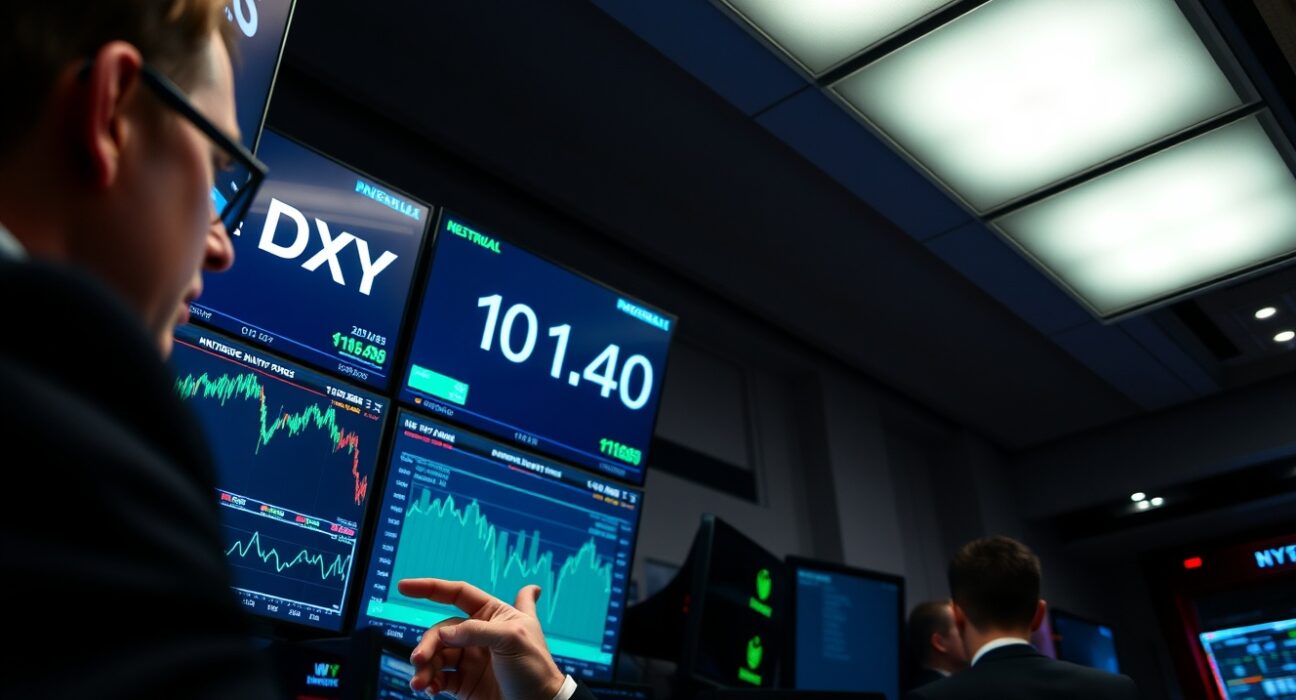
The US Dollar Index (DXY) weakened below the 101.50 mark on Friday, extending its recent decline after the release of the Personal Consumption Expenditures (PCE) price index, the Federal Reserve’s preferred inflation gauge. The data showed inflation moderating more than expected, prompting traders to further reduce bets on additional interest rate hikes this year.
PCE Inflation Data Signals Cooling Price Pressures
The core PCE price index, which excludes volatile food and energy components, rose 0.2% month-over-month in the latest reading, slightly below the 0.3% forecast. On an annual basis, core PCE came in at 2.8%, down from 2.9% previously and below the 2.9% consensus estimate. The headline PCE, which includes all items, increased 0.1% monthly and 2.5% annually, also softer than anticipated.
These figures reinforce the narrative that inflation is gradually moving toward the Fed’s 2% target, reducing the urgency for further monetary tightening. Market-implied probabilities for a rate hike at the next Federal Open Market Committee (FOMC) meeting dropped sharply following the release, with CME FedWatch data now showing less than a 10% chance of a quarter-point increase.
Market Reaction and Dollar Weakness
The dollar’s decline accelerated after the PCE data, with the DXY falling from the 101.70 area to test support near 101.30 before stabilizing around 101.45. The index is now on track for its third consecutive weekly loss, reflecting growing expectations that the Fed may begin cutting rates as early as September.
Currency markets reacted broadly: the euro strengthened above 1.0850 against the dollar, while the Japanese yen gained ground, pushing USD/JPY below 154.00. The British pound also rose, with GBP/USD climbing above 1.2700. These moves suggest investors are rotating out of dollar-denominated assets in anticipation of a less hawkish Fed.
Implications for Investors and the Broader Economy
A weaker dollar has significant implications across financial markets. For multinational corporations, a declining dollar boosts the value of overseas earnings when converted back to USD. Commodity prices, particularly gold and oil, tend to rise when the dollar falls, as they are priced in dollars. Gold prices, already supported by geopolitical tensions, extended gains above $2,350 per ounce.
For emerging markets, a softer dollar eases debt repayment pressures and can attract capital inflows. However, the shift in Fed policy expectations also introduces uncertainty about the pace of economic growth and the timing of any potential recession.
Conclusion
The US Dollar Index’s slide below 101.50 reflects a decisive market reassessment of Fed policy following the latest PCE inflation data. With rate hike odds fading and disinflation trends intact, the dollar faces headwinds in the near term. Traders will now focus on upcoming labor market data and Fed commentary for further direction. The broader message for investors is clear: the inflation battle appears to be yielding results, but the path forward for the dollar hinges on how quickly the Fed pivots from restraint to accommodation.
FAQs
Q1: What is the US Dollar Index (DXY)?
The US Dollar Index (DXY) measures the value of the US dollar against a basket of six major currencies: the euro, Japanese yen, British pound, Canadian dollar, Swedish krona, and Swiss franc. It is a widely used benchmark for the dollar’s overall strength in global forex markets.
Q2: Why does PCE inflation data matter for the dollar?
The PCE price index is the Federal Reserve’s preferred inflation measure. When PCE data shows inflation cooling, it reduces the likelihood of interest rate hikes, which typically weakens the dollar because lower rates make dollar-denominated assets less attractive to foreign investors.
Q3: What happens to other assets when the dollar weakens?
A weaker dollar often boosts commodity prices (gold, oil, copper), supports emerging market currencies and stocks, and increases the value of foreign earnings for US multinational companies. Conversely, it can make imports more expensive for US consumers and businesses.
Disclaimer: The information provided is not trading advice, Bitcoinworld.co.in holds no liability for any investments made based on the information provided on this page. We strongly recommend independent research and/or consultation with a qualified professional before making any investment decisions.
