

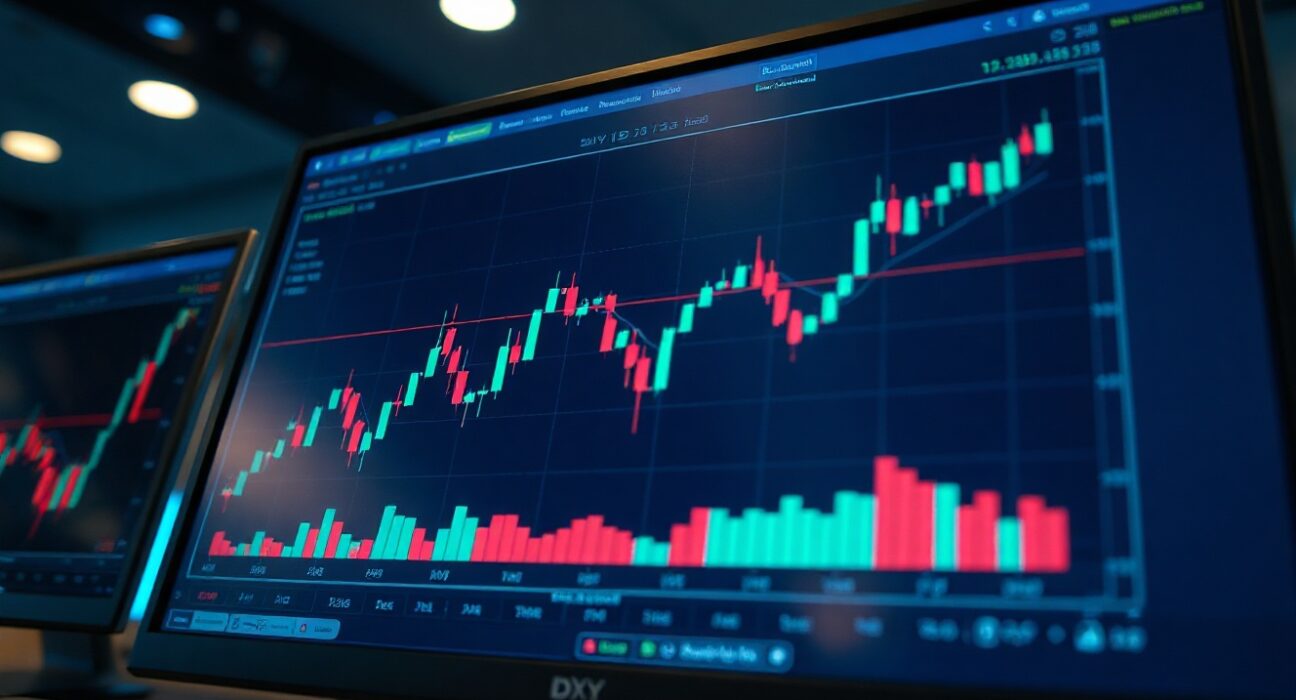
The US Dollar Index (DXY) is showing signs of consolidation just below a significant resistance level, according to analysts at OCBC Bank. The development comes as traders assess the next directional move for the greenback amid shifting expectations for Federal Reserve policy and global risk sentiment.
Technical Picture: Stalling at a Critical Level
OCBC strategists highlight that the DXY has been trading in a narrow range in recent sessions, struggling to break decisively above the resistance zone. This pattern of consolidation often suggests a period of indecision in the market, where buyers and sellers are evenly matched. The index had rallied in the preceding weeks, driven by resilient US economic data and a cautious tone from other major central banks, but has now lost some upward momentum.
From a technical analysis perspective, the current resistance level is a key area that has historically acted as a ceiling for the dollar. A sustained break above it could open the door for further gains, while a failure to clear it may lead to a pullback toward lower support levels. Volume and momentum indicators, such as the Relative Strength Index (RSI), are likely being closely watched by traders for confirmation of the next move.
Market Context and Broader Implications
The consolidation comes against a backdrop of mixed macroeconomic signals. While the US labor market remains tight and inflation has proven sticky, there are growing concerns about the pace of economic growth in other regions, particularly in Europe and China. This divergence has provided some support for the dollar as a relative safe haven.
However, the market is also pricing in the possibility of the Federal Reserve cutting interest rates later this year, which could cap the dollar’s upside. OCBC’s analysis suggests that the near-term path for the DXY will be heavily influenced by upcoming US inflation data and commentary from Fed officials. Any surprise in the data could trigger a breakout from the current consolidation range.
What This Means for Traders
For currency traders, the consolidation near resistance represents a tactical decision point. A breakout above the level could signal a continuation of the dollar’s recent uptrend, favoring long dollar positions against major currencies like the euro and yen. Conversely, a rejection from resistance could provide an opportunity for short-dollar trades, particularly if accompanied by a risk-on shift in broader markets.
It is important to note that consolidation phases can sometimes be followed by sharp, directional moves once the pent-up energy is released. Traders are advised to monitor the price action closely and manage risk carefully, as false breakouts are common at key technical levels.
Conclusion
The US Dollar Index is at a critical juncture, consolidating near a resistance level that could determine its trajectory in the coming weeks. OCBC’s analysis provides a timely reminder of the technical factors at play, but the final direction will likely depend on incoming economic data and shifts in central bank expectations. For now, the market remains in a wait-and-see mode.
FAQs
Q1: What is the US Dollar Index (DXY)?
The US Dollar Index (DXY) measures the value of the US dollar against a basket of six major foreign currencies: the euro, Japanese yen, British pound, Canadian dollar, Swedish krona, and Swiss franc. It is a widely used benchmark for the dollar’s overall strength in the forex market.
Q2: What does ‘consolidation near resistance’ mean?
It means the price of the DXY is moving sideways or within a narrow range just below a specific price level (resistance) that has historically prevented it from rising further. This often indicates a pause in the trend as the market gathers momentum for the next move.
Q3: Why does OCBC’s analysis matter for traders?
OCBC is a major financial institution with a respected research team. Their technical analysis provides professional insight into key market levels and potential trading opportunities, helping traders make more informed decisions based on expert evaluation of price patterns and market dynamics.
Disclaimer: The information provided is not trading advice, Bitcoinworld.co.in holds no liability for any investments made based on the information provided on this page. We strongly recommend independent research and/or consultation with a qualified professional before making any investment decisions.
