

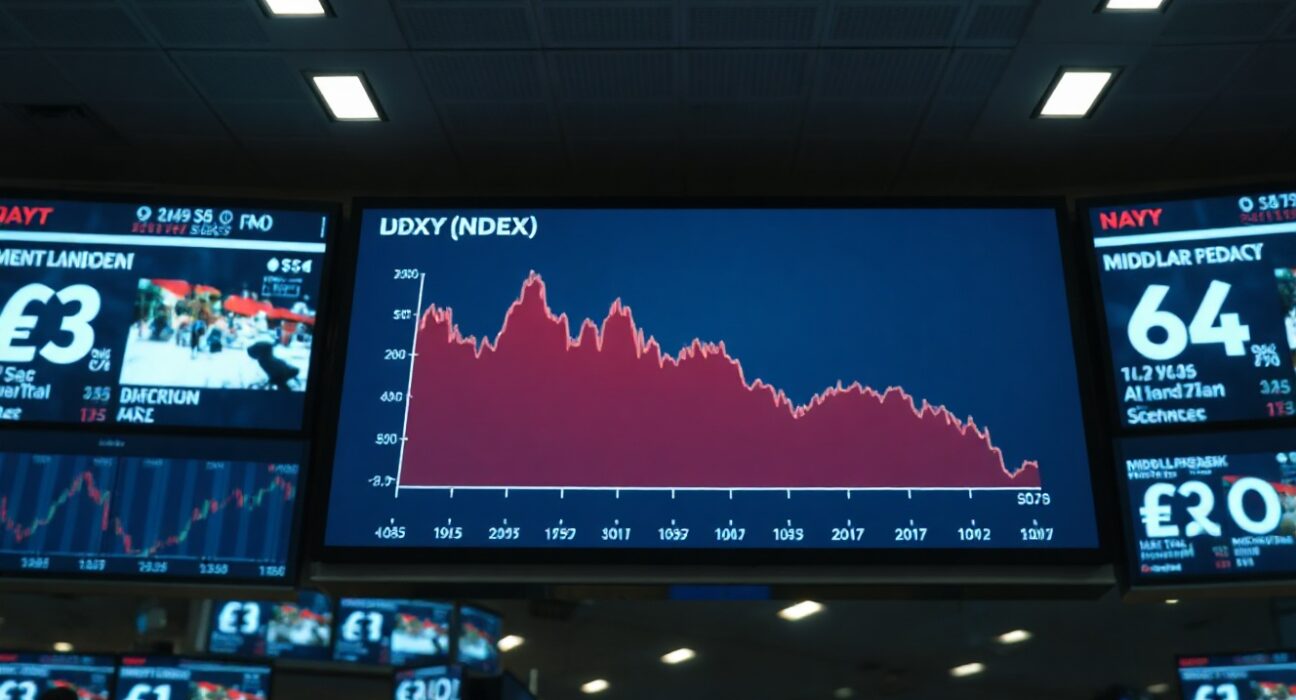
The US Dollar Index (DXY) softened in early trading on Monday after Iran announced a halt to its military operations against Israel, reducing immediate safe-haven demand for the greenback. The index, which measures the dollar against a basket of six major currencies, edged lower as geopolitical tensions in the Middle East showed signs of de-escalation.
Market Reaction to Geopolitical Shift
Investors had pushed the dollar higher in recent sessions amid fears of a broader regional conflict following tit-for-tat strikes between Iran and Israel. However, Tehran’s decision to suspend offensive operations has prompted a reassessment of risk, leading to a modest pullback in the dollar and a corresponding uptick in risk-sensitive currencies such as the euro and the British pound.
Analysts noted that the dollar’s decline was relatively contained, as uncertainty remains over the durability of the ceasefire and the potential for renewed hostilities. The move also reflects broader market expectations that the Federal Reserve may maintain higher interest rates for longer, which continues to underpin the dollar’s underlying strength.
Broader Implications for Currency Markets
The development comes at a critical juncture for currency markets, where traders are balancing geopolitical risks against monetary policy signals from major central banks. The easing of Middle East tensions could shift focus back to economic data and central bank guidance, particularly from the Fed, which is set to release minutes from its latest meeting later this week.
Safe-haven currencies like the Japanese yen and Swiss franc also retreated as risk appetite improved, while oil prices fell on expectations that supply disruptions in the region may be avoided. The moves underscore the sensitivity of financial markets to geopolitical headlines and the rapid repricing of risk premiums.
What This Means for Investors
For traders and investors, the dollar’s pullback signals a potential short-term opportunity to reduce safe-haven exposure and rotate into higher-yielding assets. However, the situation remains fluid, and any escalation could quickly reverse the current trend. The dollar’s longer-term trajectory will likely depend on whether the ceasefire holds and on upcoming US economic data that could influence Fed policy.
Conclusion
The US Dollar Index’s decline following Iran’s decision to halt military operations against Israel reflects a classic safe-haven unwind in currency markets. While the immediate risk premium has diminished, investors should remain cautious as the geopolitical landscape remains uncertain. The coming days will be critical in determining whether this easing is a temporary reprieve or the start of a broader shift in market sentiment.
FAQs
Q1: Why did the US Dollar Index fall after Iran halted military operations?
The dollar had strengthened as a safe-haven asset during the conflict. When Iran announced a halt to operations, investors reduced their safe-haven positions, leading to a decline in the dollar against other major currencies.
Q2: What is the US Dollar Index (DXY)?
The US Dollar Index measures the value of the US dollar relative to a basket of six major currencies: the euro, Japanese yen, British pound, Canadian dollar, Swedish krona, and Swiss franc. It is a widely used benchmark for dollar strength.
Q3: Could the dollar resume its rally if tensions escalate again?
Yes. If geopolitical tensions in the Middle East intensify, investors are likely to return to safe-haven assets like the US dollar, which could push the DXY higher again. The market remains highly sensitive to any new developments in the region.
Disclaimer: The information provided is not trading advice, Bitcoinworld.co.in holds no liability for any investments made based on the information provided on this page. We strongly recommend independent research and/or consultation with a qualified professional before making any investment decisions.
