
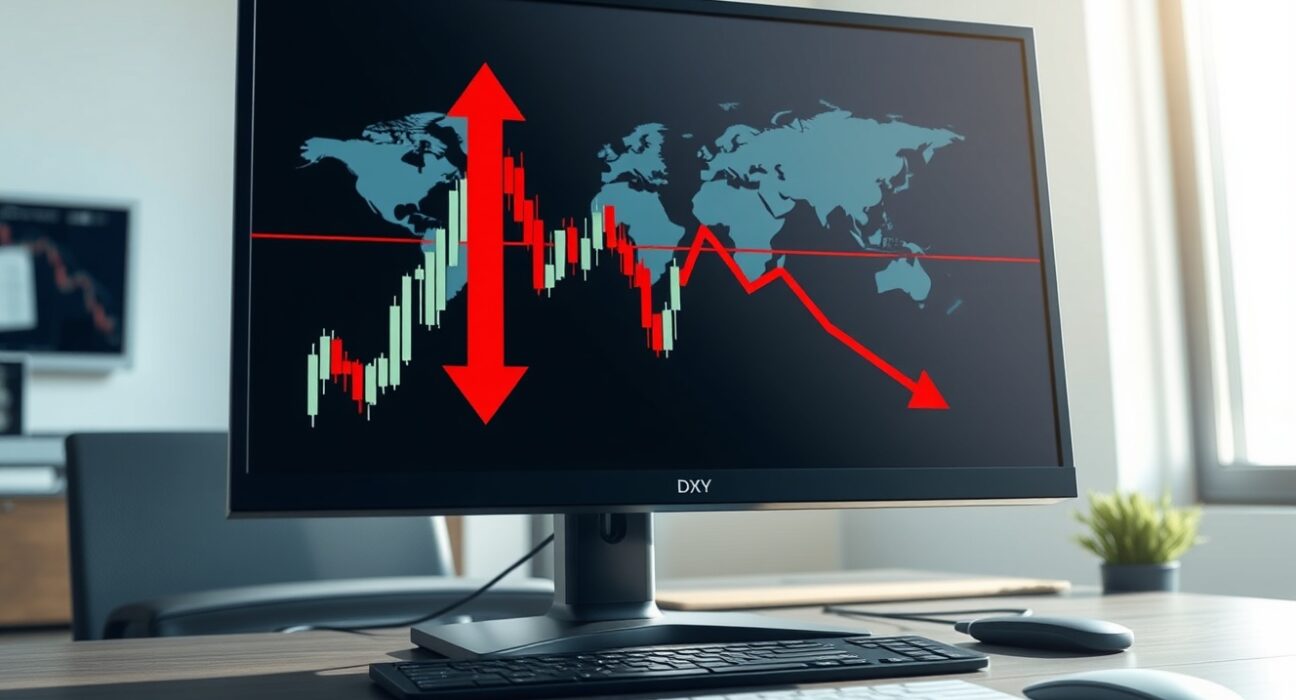
In a dramatic shift for global currency markets, the US Dollar Index (DXY) reversed sharply lower in early 2025, as emerging diplomatic signals fueled widespread hopes for de-escalation in the longstanding Iran nuclear standoff. This significant move immediately rippled through forex pairs, commodities, and bond yields, highlighting the dollar’s acute sensitivity to geopolitical risk premiums.
US Dollar Index Reverses on Geopolitical Shift
The ICE US Dollar Index, which tracks the greenback against a basket of six major currencies, fell over 1.2% in a single session. This marked its steepest one-day decline in several months. Consequently, the euro and Swiss franc, traditional safe-haven peers, gained notably. Market analysts directly attributed the sell-off to reports from European mediators suggesting a potential breakthrough in indirect talks. These developments aimed at reviving the 2015 nuclear accord, formally known as the Joint Comprehensive Plan of Action (JCPOA).
Historically, the dollar often strengthens during periods of international tension. Investors typically seek its perceived safety and liquidity. Therefore, any reduction in such tension logically removes a key support pillar. The recent price action confirms this long-established market dynamic. Furthermore, the reversal was amplified by a concurrent drop in crude oil prices. Brent crude futures fell nearly 3% on the same news, easing inflation concerns and reducing demand for dollar-denominated hedging.
Anatomy of the DXY Sell-Off
The sell-off was broad-based but most pronounced against European currencies. The EUR/USD pair surged above the 1.0950 handle, while USD/CHF broke below key technical support. Market depth data showed unusually high volume during the European trading session, indicating institutional participation. A comparison of key forex pair movements during the event illustrates the dollar’s broad weakness:
| Currency Pair | Intraday Move | Primary Driver |
|---|---|---|
| EUR/USD | +1.4% | Risk-on flows, ECB policy divergence |
| USD/JPY | -0.8% | Lower US Treasury yields, safe-haven yen bid |
| GBP/USD | +1.1% | Broad USD weakness, UK economic data |
| USD/CHF | -1.5% | Strong Swiss franc safe-haven demand |
Several technical factors converged to accelerate the move. Firstly, the DXY had been testing a major resistance level near 105.50 for multiple sessions. Secondly, failing to break higher often triggers profit-taking. Finally, the sudden geopolitical catalyst provided a fundamental reason for the reversal, creating a powerful technical-fundamental alignment.
Expert Analysis on Market Implications
Financial strategists note that the reaction underscores a market heavily positioned for continued uncertainty. “The scale of the reversal reveals how much geopolitical risk premium was baked into the dollar’s valuation,” stated a senior analyst at a global macro research firm. “Markets are now repricing the probability of a stabilized Middle East, which affects energy prices, inflation expectations, and ultimately, Federal Reserve policy projections.”
Central bank watchers point to a nuanced impact on monetary policy. A weaker dollar, all else equal, could import slight inflationary pressures. However, the larger effect comes from lower oil prices reducing headline inflation. This complex interplay may allow the Federal Reserve more flexibility in its rate-cutting cycle anticipated for 2025. Conversely, the European Central Bank may find less urgency to ease policy if a weaker dollar supports European exports and growth.
Historical Context and Regional Impact
The Iran nuclear issue has been a persistent source of market volatility for over a decade. Key events include the original JCPOA agreement in 2015, the US withdrawal in 2018, and subsequent periods of heightened military posturing. Each phase has correlated with measurable moves in the DXY and oil markets. A de-escalation in 2025 would represent a significant geopolitical reset.
The potential impacts extend far beyond forex:
- Emerging Markets: Currencies like the Turkish lira and Egyptian pound could stabilize with lower regional risk.
- Global Trade: Secure shipping lanes in the Strait of Hormuz support smoother global supply chains.
- Defense Sector: Equity markets may see rotation out of defense stocks into cyclical industries.
- Gold Prices: The traditional safe-haven asset also faced selling pressure alongside the dollar.
Regional economies in the Gulf Cooperation Council (GCC), heavily reliant on oil exports and dollar-pegged currencies, face a mixed outlook. Lower oil revenues pressure fiscal budgets, but reduced security threats lower defense spending and improve long-term investment appeal.
Conclusion
The sharp reversal in the US Dollar Index provides a clear case study in how geopolitical developments drive currency valuations. Hopes for Iran de-escalation acted as a catalyst, unwinding the risk premium that had supported the greenback. This event reinforces the interconnected nature of diplomacy, commodity prices, and central bank policy. Moving forward, traders will scrutinize any confirmation or rejection of the diplomatic progress, as the DXY’s path will hinge on the durability of this newfound geopolitical calm. The market’s dramatic response underscores that in the modern financial system, peace can be as powerful a market mover as conflict.
FAQs
Q1: What is the US Dollar Index (DXY)?
The US Dollar Index is a measure of the value of the United States dollar relative to a basket of six major world currencies: the euro, Japanese yen, British pound, Canadian dollar, Swedish krona, and Swiss franc. It provides a general indicator of the dollar’s international strength.
Q2: Why does geopolitical tension typically strengthen the US dollar?
The US dollar is considered the world’s primary reserve currency and a safe-haven asset. During global uncertainty, investors and governments flock to US Treasury bonds and dollar-denominated assets for their perceived safety and liquidity, increasing demand for the currency.
Q3: How does Iran de-escalation affect oil prices and the dollar?
Iran is a major oil producer. De-escalation reduces the risk of supply disruptions in the Middle East, often leading to lower crude oil prices. Since oil is traded in dollars, lower prices can reduce global dollar demand and ease inflationary pressures, potentially altering central bank policies that affect the dollar.
Q4: Could this DXY reversal be a long-term trend?
While the initial move was sharp, its sustainability depends on concrete diplomatic progress, subsequent Federal Reserve policy, and relative economic growth. A single news event often sparks volatility, but establishing a long-term trend requires fundamental shifts in policy and economic data.
Q5: Which assets benefit from a falling US Dollar Index?
Generally, a weaker dollar benefits commodities priced in dollars (like gold and oil), emerging market equities and debt, and the currencies of US trading partners. It also helps the earnings of US multinational companies that generate revenue overseas.
Disclaimer: The information provided is not trading advice, Bitcoinworld.co.in holds no liability for any investments made based on the information provided on this page. We strongly recommend independent research and/or consultation with a qualified professional before making any investment decisions.