

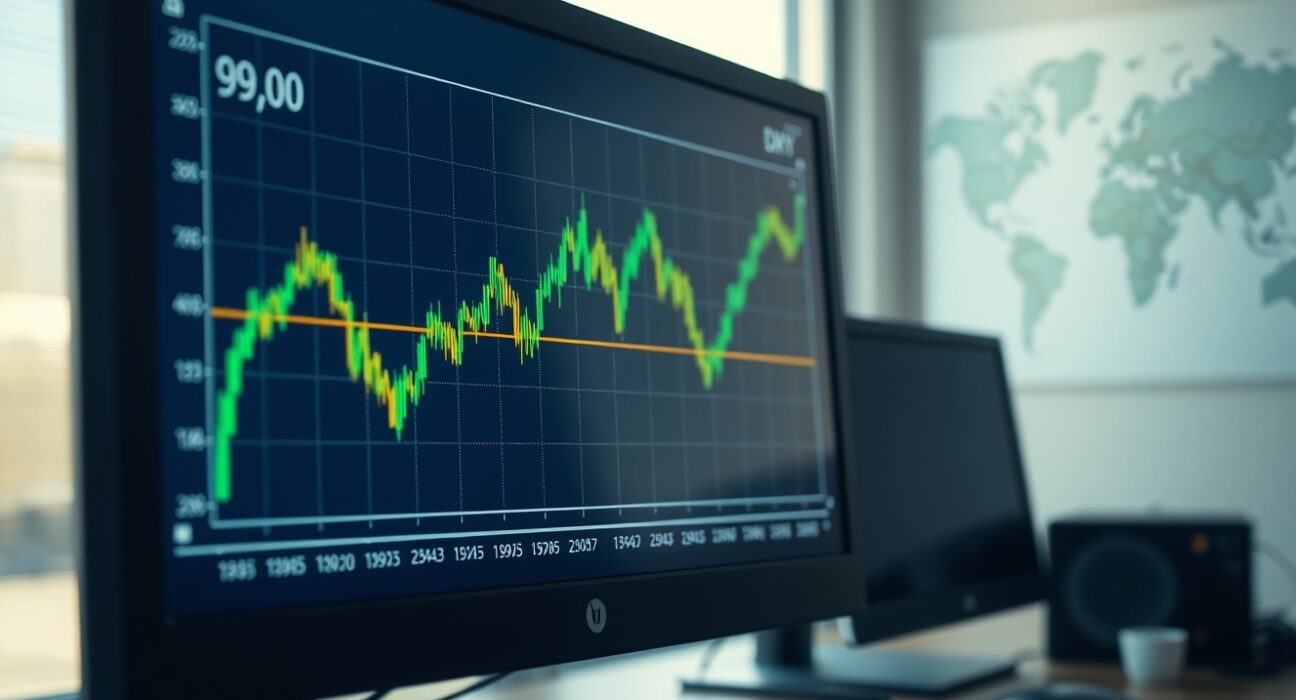
NEW YORK, March 2025 – The US Dollar Index (DXY) demonstrates remarkable resilience, holding firmly above the 99.00 psychological threshold as diplomatic talks between the United States and Iran inject significant uncertainty into global financial markets. This stability occurs despite swirling geopolitical currents that typically trigger currency volatility. Market analysts closely monitor the DXY, a critical gauge measuring the dollar’s strength against a basket of six major world currencies, for signals about broader economic sentiment and safe-haven flows. The index’s current posture suggests a complex interplay between cautious optimism and defensive positioning among international investors.
US Dollar Index Technical Analysis and Current Position
The US Dollar Index currently trades at 99.25, according to latest market data. This level represents a consolidation zone following recent fluctuations. The 99.00 mark acts as a crucial support level, a fact confirmed by multiple tests over the past week. Consequently, a sustained break below this level could signal a shift toward bearish momentum for the greenback. Conversely, resistance appears near the 99.50 handle. The index’s 50-day and 200-day moving averages provide additional context for its medium and long-term trends. Market technicians note that the DXY’s ability to hold this ground, especially amid headline risk, underscores underlying dollar strength. This strength partly stems from relative interest rate expectations and the dollar’s enduring role as the world’s primary reserve currency.
Several key technical indicators currently shape the DXY outlook:
- Relative Strength Index (RSI): Sits in neutral territory, indicating neither overbought nor oversold conditions.
- Moving Average Convergence Divergence (MACD): Shows a potential for bullish momentum, though the signal remains weak.
- Key Support: The 99.00 level, followed by the 98.50 region.
- Key Resistance: The 99.50 level, with a major hurdle at the 100.00 psychological barrier.
Geopolitical Context: The US-Iran Negotiations
The ongoing diplomatic discussions between Washington and Tehran represent a primary source of market uncertainty. These talks, aimed at addressing regional security and nuclear concerns, have entered a delicate phase. Historically, tensions in the Middle East provoke a flight to safety, often benefiting the US dollar and Treasury bonds. However, the prospect of a diplomatic breakthrough introduces a different dynamic. A successful agreement could reduce the regional risk premium, potentially weakening the dollar’s safe-haven appeal. Conversely, a collapse in talks might reignite tensions, spurring volatility and boosting demand for dollar-denominated assets. This binary outcome keeps traders on edge, explaining the DXY’s tentative movements within a defined range.
Historical Precedents and Market Memory
Financial markets possess a long memory regarding US-Iran relations. The 2015 Joint Comprehensive Plan of Action (JCPOA) and its subsequent abandonment in 2018 caused significant currency and commodity market dislocations. For instance, the imposition of sanctions led to a sharp reduction in Iranian oil exports, affecting global supply and currency correlations. Today, traders reference this history to model potential outcomes. The current DXY behavior suggests markets are pricing in a cautious, wait-and-see approach. Furthermore, other global factors, including monetary policy divergence between the Federal Reserve and other central banks, also exert influence on the dollar’s valuation, creating a multifaceted price driver.
Broader Market Impacts and Correlations
The DXY’s stability above 99.00 has ripple effects across multiple asset classes. A strong or stable dollar typically exerts downward pressure on dollar-priced commodities like gold and oil. However, the geopolitical element of the Iran talks complicates this relationship for crude oil. The currency’s strength also impacts multinational corporations and emerging markets. Companies with large international revenue streams often see earnings pressured by a robust dollar when converting foreign profits back to USD. Meanwhile, emerging market nations with dollar-denominated debt face higher servicing costs. The following table outlines key correlations observed in recent sessions:
| Asset | Correlation with DXY (Recent) | Primary Driver |
|---|---|---|
| Gold (XAU/USD) | Negative | Safe-haven competition, dollar strength |
| Crude Oil (WTI) | Inverse (typically) | Dollar pricing, Iran supply expectations |
| Euro (EUR/USD) | Strongly Negative | DXY basket weight (~57.6%) |
| US Treasury Yields | Positive | Interest rate differential expectations |
Expert Analysis and Forward-Looking Scenarios
Market strategists emphasize the importance of monitoring central bank commentary alongside geopolitics. The Federal Reserve’s data-dependent approach to interest rates remains a fundamental pillar for the dollar’s value. Recent inflation and employment data will guide future policy, directly impacting yield differentials. Experts from major financial institutions generally agree that the DXY’s near-term path hinges on the clarity, or lack thereof, emerging from the diplomatic channel. A clear roadmap from negotiators would likely reduce volatility and allow traditional macroeconomic drivers to reassert dominance. Until then, the index may continue to exhibit choppy, range-bound behavior, reflecting the market’s indecision.
The Role of Macroeconomic Fundamentals
Beyond geopolitics, underlying economic fundamentals continue to support the dollar. The United States economy shows relative resilience compared to several other major economies. This resilience supports the case for maintaining higher interest rates for a longer period. Higher rates generally attract foreign capital seeking yield, boosting demand for the currency. Therefore, the DXY’s hold above 99.00 is not solely a geopolitical phenomenon. It is also a reflection of comparative economic strength and monetary policy expectations. Traders must therefore weigh transient geopolitical news against these more enduring structural factors when assessing the dollar’s trajectory.
Conclusion
The US Dollar Index’s firm stance above the 99.00 level highlights a market in equilibrium amid significant uncertainty. While US-Iran talks create headline volatility, the DXY’s resilience points to underlying confidence in the dollar’s fundamental backdrop. Technical indicators suggest a balanced, range-bound market awaiting a clearer catalyst. The path forward for the index will likely be determined by the outcome of diplomatic efforts and subsequent shifts in global risk sentiment. Investors and traders should prepare for potential breakouts in either direction, with key support at 99.00 and resistance at 99.50 serving as critical markers for the next major move in the US Dollar Index.
FAQs
Q1: What is the US Dollar Index (DXY)?
The US Dollar Index is a measure of the value of the United States dollar relative to a basket of six major foreign currencies: the Euro, Japanese Yen, British Pound, Canadian Dollar, Swedish Krona, and Swiss Franc. It provides a broad indication of the dollar’s international strength.
Q2: Why do US-Iran talks affect the US Dollar Index?
Geopolitical events in key regions like the Middle East influence global risk sentiment. The dollar is considered a safe-haven asset. Talks that reduce tension can lessen safe-haven demand, while failed talks or escalation can increase it, causing volatility in the DXY.
Q3: What does holding above 99.00 mean for the DXY?
In technical analysis, key round numbers like 99.00 often act as psychological support or resistance. Holding above it suggests bullish or neutral sentiment and buying interest at that level. A break below could indicate weakening momentum and lead to further declines.
Q4: What other factors influence the DXY besides geopolitics?
The primary drivers are interest rate differentials (set by the Federal Reserve vs. other central banks), relative economic growth and inflation data in the US versus other nations, and overall global risk appetite in financial markets.
Q5: How can traders track the impact of these talks on the DXY?
Traders monitor news feeds for official statements, analyze trading volumes and price action around key DXY levels, and watch correlated assets like oil prices and Treasury yields for confirmation of shifting market narratives.
Disclaimer: The information provided is not trading advice, Bitcoinworld.co.in holds no liability for any investments made based on the information provided on this page. We strongly recommend independent research and/or consultation with a qualified professional before making any investment decisions.