

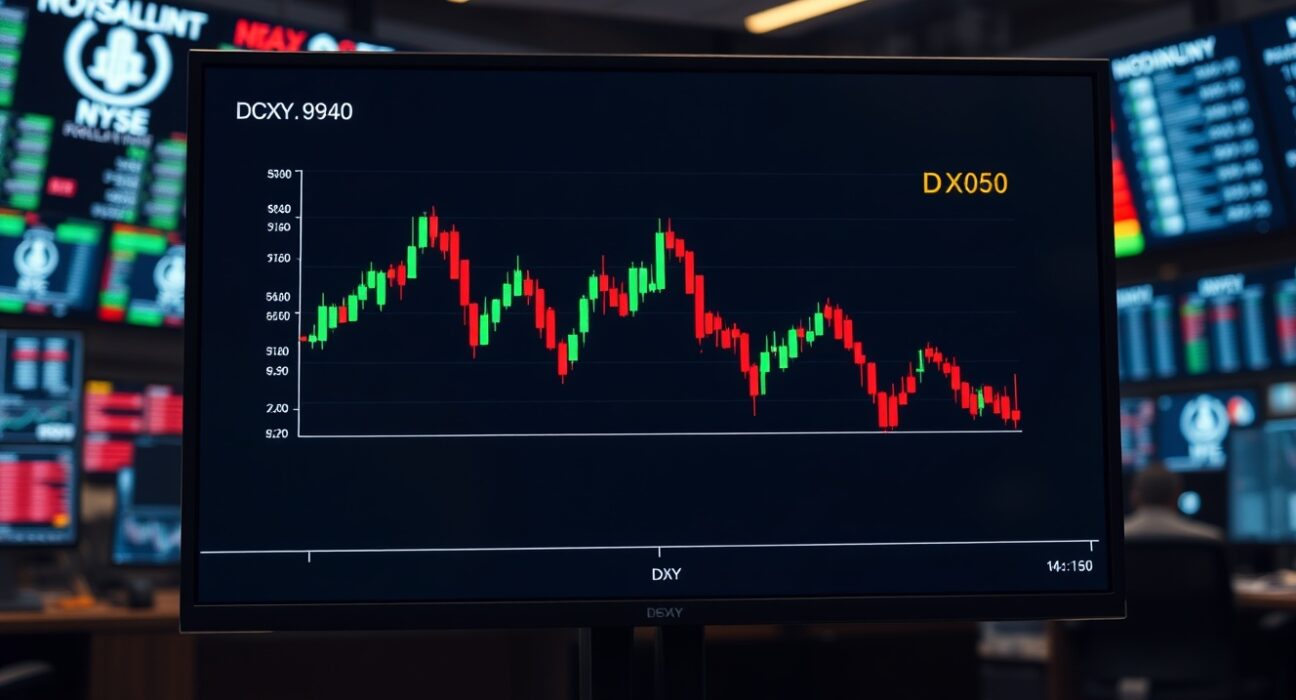
The US Dollar Index (DXY) edged lower on Wednesday, hovering around the 99.00 mark, as growing optimism over a potential US-Iran peace agreement reduced demand for the safe-haven dollar. The index, which measures the greenback against a basket of six major currencies, has been under pressure this week following reports of indirect talks between Washington and Tehran mediated by regional diplomats.
Geopolitical Shift Dampens Dollar Appeal
Market participants are closely monitoring diplomatic signals from both capitals. Over the weekend, a senior US official indicated willingness to lift certain sanctions in exchange for verifiable steps toward de-escalation by Iran. While no formal agreement has been reached, the mere prospect of easing tensions in the Middle East has triggered a repositioning among currency traders.
The dollar has historically benefited from geopolitical uncertainty as investors flock to its perceived stability. However, the current narrative of potential rapprochement has eroded that premium. The DXY has declined roughly 1.5% from its recent peak above 100.50 recorded two weeks ago.
Broader Market Implications
The dollar’s weakness has provided a tailwind for risk-sensitive currencies. The euro, sterling, and emerging market currencies have all gained ground against the greenback. Oil prices, which often spike on Middle East tensions, have also moderated, further supporting the risk-on mood.
Analysts caution that the dollar’s trajectory remains tied to the credibility and durability of any diplomatic breakthrough. “We are still in the early stages,” said a currency strategist at a major European bank. “Markets are pricing in a best-case scenario, but the path to a final deal is fraught with obstacles. Any setback could quickly reverse the move.”
What This Means for Traders and Investors
For forex traders, the 99.00 level represents a key psychological and technical support zone. A sustained break below could open the door to further losses toward 98.50. Conversely, if peace hopes fade, the dollar could rebound sharply.
Investors with exposure to dollar-denominated assets should consider the potential for continued volatility. A weaker dollar typically boosts the relative performance of non-US equities and commodities.
Conclusion
The US Dollar Index’s slide toward 99.00 reflects a market adjusting to the possibility of a major geopolitical shift. While peace hopes have driven the move, the lack of a concrete agreement means the outlook remains uncertain. Traders should watch for official statements and any concrete steps from both sides, as these will determine whether the dollar’s weakness deepens or reverses.
FAQs
Q1: What is the US Dollar Index (DXY)?
The US Dollar Index measures the value of the US dollar against a basket of six major currencies: the euro, Japanese yen, British pound, Canadian dollar, Swedish krona, and Swiss franc. It is widely used as a benchmark for the dollar’s overall strength.
Q2: Why does a US-Iran peace deal affect the dollar?
The dollar is considered a safe-haven asset. During geopolitical tensions, investors buy dollars for stability. When peace hopes rise, demand for safe havens falls, putting downward pressure on the dollar.
Q3: Is the DXY likely to fall further?
It depends on the progress of US-Iran talks. If negotiations advance and a credible deal emerges, the dollar could weaken further. However, if talks stall or break down, the dollar is likely to recover quickly.
Disclaimer: The information provided is not trading advice, Bitcoinworld.co.in holds no liability for any investments made based on the information provided on this page. We strongly recommend independent research and/or consultation with a qualified professional before making any investment decisions.
