

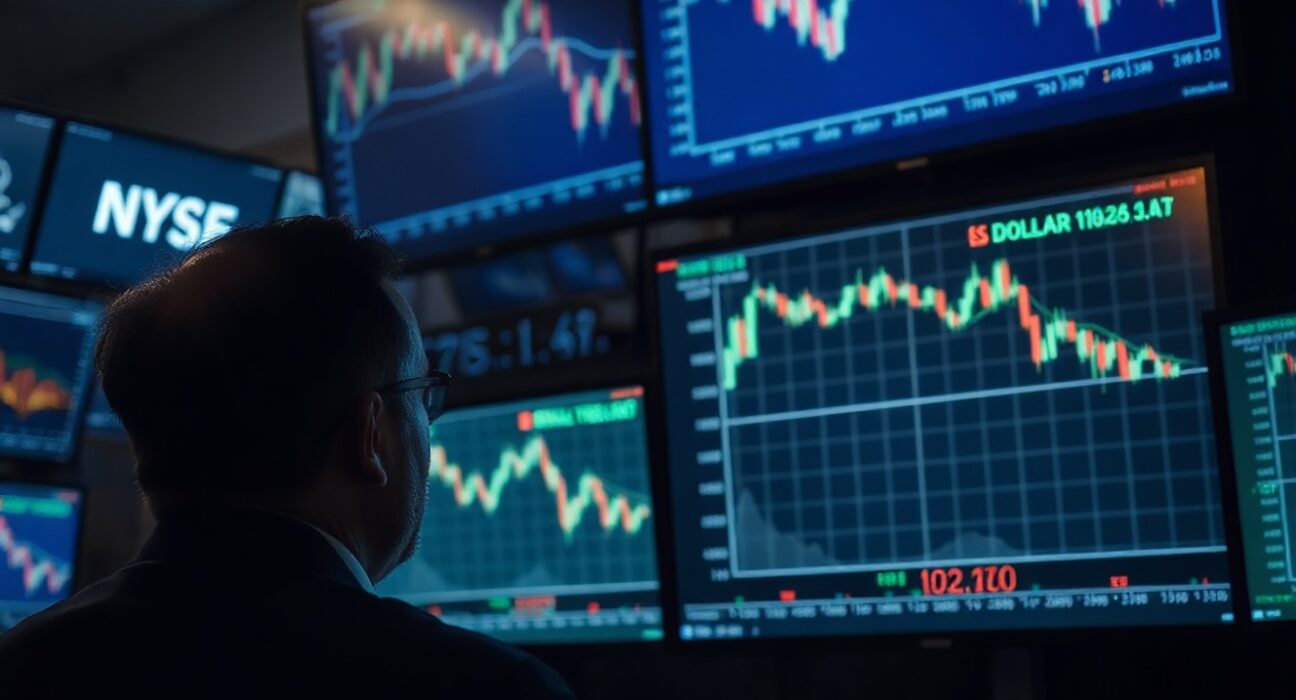
The US Dollar Index (DXY) retreated from session highs on Thursday after reports emerged that President Donald Trump had called off planned military strikes on Iran. The move underscored how quickly shifting geopolitical risks can influence currency markets, with traders reassessing safe-haven demand.
Market Reaction to the Reversal
The dollar had initially strengthened earlier in the week amid escalating rhetoric between Washington and Tehran. However, the decision to stand down from a direct military response triggered a reversal in risk perception. The DXY, which measures the greenback against a basket of six major currencies, slipped as traders unwound some safe-haven positions.
Analysts noted that the pullback was relatively measured, suggesting that markets had not fully priced in a major conflict. The move also reflected a broader reassessment of Federal Reserve policy expectations, with rate-cut bets remaining a key driver for the dollar.
Geopolitical Context and Market Implications
The cancellation of strikes followed a period of heightened tension after an attack on US assets in the region. President Trump’s decision to de-escalate was seen as a pragmatic move, but it also left the situation unresolved. For currency markets, this creates a persistent uncertainty that could keep the dollar sensitive to further headlines.
Historically, the dollar tends to benefit from geopolitical turmoil due to its status as a global reserve currency and safe haven. However, prolonged uncertainty without actual conflict can lead to volatility as traders weigh the costs of sustained tension against the potential for diplomatic resolution.
What This Means for Traders
For forex traders, the immediate takeaway is that the dollar’s safe-haven premium is fragile and subject to rapid shifts based on political decisions. The retreat in the DXY also highlights the interplay between geopolitics and monetary policy, with the Federal Reserve’s next moves remaining a dominant theme. A weaker dollar could provide short-term relief for emerging market currencies and commodities priced in dollars, such as gold and oil.
Conclusion
The US Dollar Index’s retreat after President Trump called off strikes on Iran demonstrates the market’s sensitivity to geopolitical signals. While the immediate risk of a direct military confrontation has receded, the underlying tensions persist. Traders should remain alert to further developments, as any renewed escalation could quickly reverse the dollar’s recent losses.
FAQs
Q1: Why did the US Dollar Index fall after Trump canceled strikes on Iran?
The dollar had risen earlier on safe-haven demand due to geopolitical tensions. When the threat of immediate military action subsided, traders reduced those safe-haven positions, causing the DXY to retreat.
Q2: Is the US dollar still a safe-haven currency?
Yes, the US dollar remains a primary safe-haven asset. However, its value can fluctuate rapidly based on the perceived likelihood of conflict versus de-escalation.
Q3: How might this affect other markets?
A weaker dollar can support commodity prices like gold and oil, as well as emerging market currencies. It also influences the competitiveness of US exports and the value of dollar-denominated assets.
Disclaimer: The information provided is not trading advice, Bitcoinworld.co.in holds no liability for any investments made based on the information provided on this page. We strongly recommend independent research and/or consultation with a qualified professional before making any investment decisions.
