
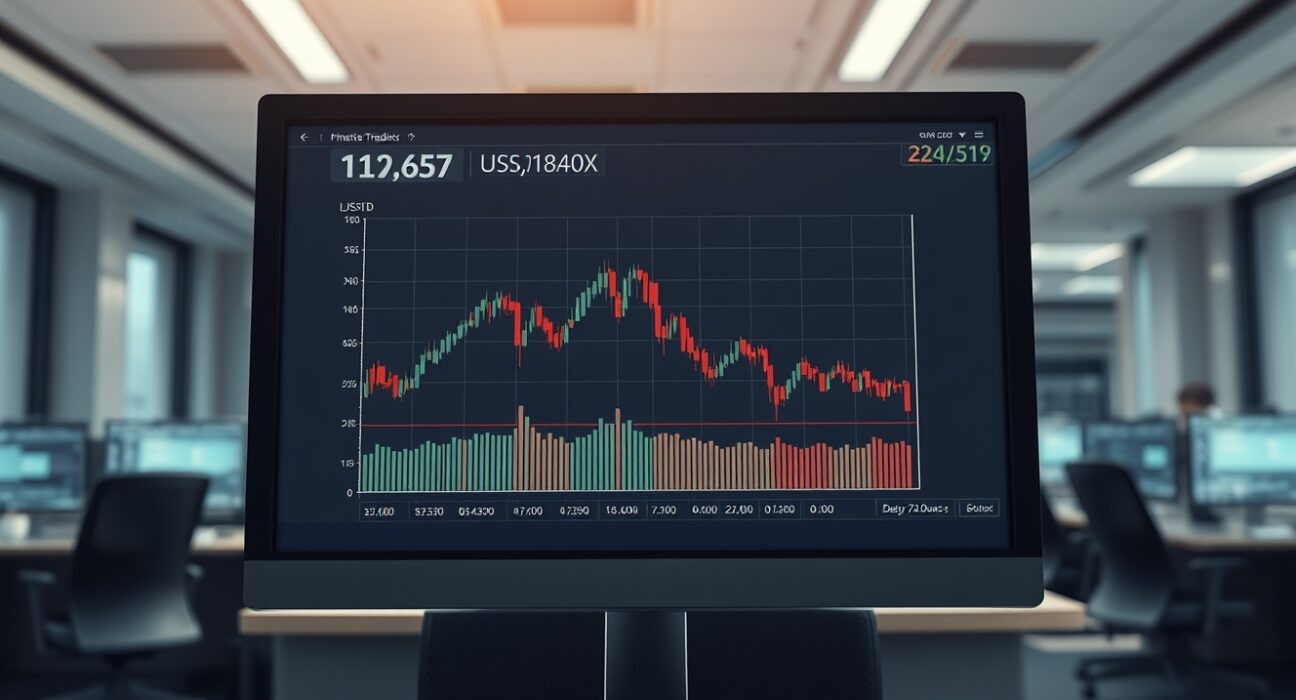
The U.S. dollar’s recent surge against major global currencies has hit a significant pause this week, creating ripple effects across international financial markets. Market analysts point to a dual pressure system: escalating geopolitical tensions involving Iran and a notably cautious stance from the Federal Reserve regarding future interest rate moves. Consequently, the dollar index (DXY), which tracks the greenback against a basket of six major peers, retreated from multi-month highs, signaling a potential shift in trader sentiment and capital flows.
U.S. Dollar Rally Meets Resistance from Global Headwinds
For several months, the U.S. dollar enjoyed a powerful rally, buoyed by expectations of sustained higher interest rates and its traditional role as a safe-haven asset. However, this momentum has demonstrably stalled. The primary catalyst for this shift is a complex interplay of international events and domestic policy signals. Specifically, renewed fears of a broader conflict in the Middle East, centered on Iran, have introduced a volatile element into risk calculations. Simultaneously, recent commentary from Federal Reserve officials has tempered earlier market expectations for aggressive monetary tightening. This combination has prompted investors to reassess their positions, leading to profit-taking and a search for stability in alternative assets.
Market data clearly illustrates this trend. The dollar index fell from a peak above 105.00 to trade around 104.20, a move that, while not catastrophic, represents a meaningful correction. Furthermore, the euro and the British pound both clawed back some ground, with the EUR/USD pair rising above 1.0850. Analysts at major financial institutions, including Goldman Sachs and JPMorgan Chase, have published notes highlighting the change in dynamics. They cite a “risk-off” environment that is no longer exclusively dollar-positive, as regional conflicts can also spur demand for other traditional havens like gold and the Swiss franc.
Expert Analysis on Forex Volatility
Jane Miller, Chief Currency Strategist at Global Forex Advisors, provided context in a recent client briefing. “The dollar’s strength was largely built on a narrative of American economic exceptionalism and predictable Fed policy,” Miller stated. “Currently, we see that narrative being challenged. Geopolitical instability introduces an unpredictable variable that can disrupt trade flows and energy prices, which indirectly pressures the dollar. Meanwhile, the Fed’s apparent desire to avoid overtightening removes a key pillar of support.” This expert perspective underscores the market’s sensitivity to both external shocks and central bank communication.
Iran Tensions Inject Uncertainty into Currency Markets
The geopolitical landscape in the Middle East remains a critical focus for currency traders. Recent developments involving Iran, including military posturing and diplomatic stalemates, have heightened fears of an expanded regional conflict. Historically, such tensions trigger a flight to safety, but the market reaction this time appears more nuanced. While the dollar often benefits, the specific nature of the risk—potentially involving oil supply disruptions—also boosts currencies of other commodity-exporting nations and can lead to broader market stress that is not solely dollar-positive.
The immediate impact is visible in oil prices and correlated currency pairs. A spike in crude oil prices typically supports commodity-linked currencies like the Canadian dollar (CAD) and the Norwegian krone (NOK). This dynamic can dilute the dollar’s safe-haven appeal. The table below summarizes recent currency movements against this backdrop:
| Currency Pair | Weekly Change | Primary Driver |
|---|---|---|
| USD/JPY | -0.8% | Safe-haven flow into Yen |
| EUR/USD | +0.9% | Dollar broad weakness, short covering |
| USD/CAD | -1.2% | Rising oil prices (WTI) |
| GBP/USD | +0.6% | Technical rebound, dollar selling |
Furthermore, central banks in Asia and Europe have begun to voice concerns about imported inflation should energy prices climb sharply. This prospect could force them to maintain or even tighten their own monetary policies, narrowing the interest rate differential that has favored the dollar—a concept known in forex circles as “divergence trade.”
Federal Reserve’s Cautious Stance Alters Rate Expectations
Domestically, the Federal Reserve’s latest communications have been pivotal. Minutes from the most recent Federal Open Market Committee (FOMC) meeting revealed a governing body increasingly attentive to dual-sided risks. While inflation remains above target, officials expressed growing concern about the lagged effects of previous rate hikes on the broader economy. Several Fed presidents, including notable dove Neel Kashkari and centrist John Williams, have publicly emphasized a data-dependent approach, suggesting a higher bar for additional rate increases.
This shift in rhetoric has directly impacted interest rate futures. The market-implied probability of a rate hike at the next meeting has fallen substantially, from near 40% two weeks ago to under 20% currently. Key economic indicators are now under intense scrutiny:
- Consumer Price Index (CPI): The next release will be critical for confirming whether disinflation is stalling or progressing.
- Non-Farm Payrolls: Labor market strength informs wage growth and consumer spending potential.
- Retail Sales: A measure of the American consumer’s resilience in the face of higher borrowing costs.
This data-dependent pause creates an environment of uncertainty. Without the clear forward guidance of an unwavering hawkish stance, the dollar loses one of its most reliable drivers. Investors are now forced to weigh each data point, leading to increased short-term volatility rather than a sustained directional trend.
The Impact on Global Capital Flows
The softening dollar outlook has tangible effects on international finance. Emerging market currencies, which often suffer during a strong dollar period due to debt servicing costs, have found temporary relief. Countries with dollar-denominated debt see a slight easing of pressure. Conversely, American multinational corporations may report more favorable foreign earnings when converted back to dollars. This shift in capital flow patterns underscores the dollar’s central role in the global financial system and how subtle changes in its trajectory can have widespread consequences.
Conclusion
The U.S. dollar rally has indeed taken a breather, influenced decisively by the twin forces of geopolitical anxiety surrounding Iran and a more measured, cautious posture from the Federal Reserve. This pause reflects a market in transition, recalibrating risks and rewards in a less predictable environment. While the dollar’s long-term fundamentals remain tied to U.S. economic performance, the immediate path will likely be characterized by heightened volatility as traders digest incoming data and geopolitical developments. The current stall in the dollar rally is not merely a technical correction but a signal of the complex, interconnected forces that drive modern foreign exchange markets.
FAQs
Q1: Why is the U.S. dollar rally pausing?
The pause is driven by two main factors: increased geopolitical risk from tensions involving Iran, which creates complex safe-haven flows, and a more cautious, data-dependent stance from the U.S. Federal Reserve, which has reduced expectations for near-term interest rate hikes.
Q2: How do Iran tensions specifically affect the U.S. dollar?
While the dollar is a traditional safe haven, Middle East tensions that threaten oil supplies can also boost commodity-linked currencies and increase global market stress in ways that are not exclusively positive for the dollar. It can lead to a more fragmented flight to safety, benefiting assets like gold, the Japanese yen, and the Swiss franc alongside or instead of the dollar.
Q3: What did the Federal Reserve say to cause this shift?
Recent FOMC meeting minutes and speeches from Fed officials highlighted increased concern about the risks of overtightening monetary policy. They emphasized a commitment to being data-dependent, lowering the market’s perceived likelihood of further aggressive rate increases that had previously supported the dollar.
Q4: What are the broader market implications of a stalling dollar rally?
A softer dollar can provide relief to emerging market economies and currencies, ease pressure on companies with dollar-denominated debt, and improve the translated overseas earnings of U.S. multinational corporations. It may also support prices for dollar-denominated commodities like gold.
Q5: Could the U.S. dollar resume its rally?
Yes. If upcoming U.S. economic data (like CPI inflation or jobs reports) comes in hotter than expected, it could force the Fed to reconsider its cautious stance, reigniting dollar strength. Alternatively, a rapid de-escalation of geopolitical tensions could refocus the market purely on interest rate differentials, potentially benefiting the dollar.
Disclaimer: The information provided is not trading advice, Bitcoinworld.co.in holds no liability for any investments made based on the information provided on this page. We strongly recommend independent research and/or consultation with a qualified professional before making any investment decisions.