

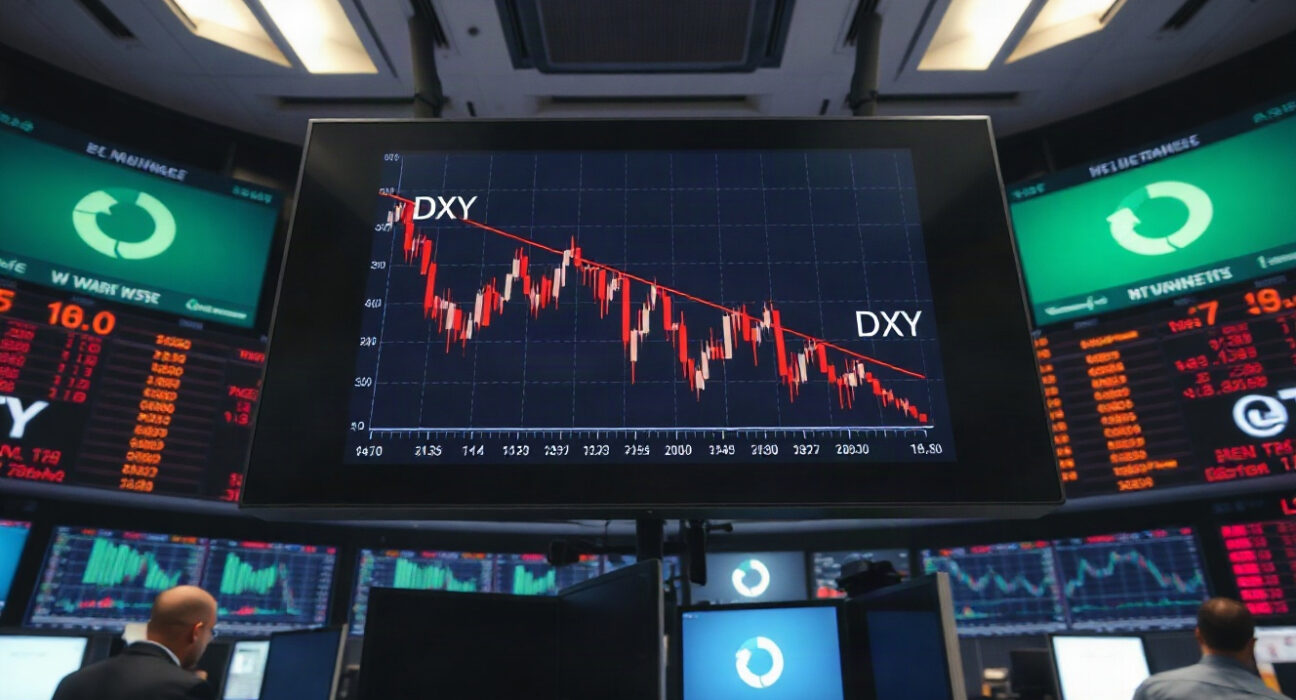
The US dollar is exhibiting a risk-on pattern, with the DXY index softening, according to a recent note from ING analysts. This movement reflects a shift in market sentiment toward higher-risk assets, often at the expense of the safe-haven dollar.
What’s Driving the Dollar’s Softness?
ING’s analysis points to a combination of factors contributing to the dollar’s softer tone. A key driver is the market’s growing confidence that the Federal Reserve may begin cutting interest rates sooner than previously anticipated. This expectation reduces the yield advantage of holding US assets, making the dollar less attractive to international investors.
Additionally, improving global economic data, particularly from Europe and China, has bolstered risk appetite. As investors become more willing to take on risk, they tend to move capital away from the dollar and into higher-yielding currencies and equities. This dynamic is a classic risk-on pattern, where the dollar typically weakens.
Market Implications and Investor Response
The softer DXY has implications for various asset classes. A weaker dollar can benefit emerging market currencies and commodities, which are often priced in dollars. For multinational corporations, a softer dollar can also be a tailwind, as it makes their exports more competitive and translates foreign earnings back into dollars at a more favorable rate.
Investors are closely watching upcoming US economic data, particularly inflation reports and labor market figures, for further clues on the Fed’s policy path. Any signs of cooling inflation could reinforce the case for rate cuts, potentially putting additional downward pressure on the dollar.
Expert Insight: ING’s Perspective
ING’s note suggests that this risk-on pattern may persist in the near term, but they also caution that the dollar’s decline could be limited. The US economy remains relatively resilient, and geopolitical uncertainties could quickly reignite safe-haven demand. Therefore, while the current trend favors a softer dollar, the outlook is not without risks.
Conclusion
In summary, the US dollar is currently trading in a risk-on pattern, with the DXY softening as markets anticipate potential Fed rate cuts and global risk appetite improves. This trend has broad implications for investors, from currency markets to commodities and equities. However, the sustainability of this move depends on upcoming economic data and global events, making it a key area to watch in the coming weeks.
FAQs
Q1: What is the DXY?
The DXY, or US Dollar Index, measures the value of the US dollar against a basket of six major world currencies: the euro, Japanese yen, British pound, Canadian dollar, Swedish krona, and Swiss franc. It is a widely used benchmark for the dollar’s overall strength.
Q2: What does a ‘risk-on’ pattern mean for the dollar?
In a risk-on environment, investors are more willing to invest in riskier assets like stocks and high-yield currencies. This typically leads to a weaker US dollar, as funds move away from safe-haven assets. Conversely, a ‘risk-off’ pattern often strengthens the dollar as investors seek safety.
Q3: How does Federal Reserve policy affect the dollar?
The Federal Reserve’s interest rate decisions significantly impact the dollar. Higher rates attract foreign investment, strengthening the dollar, while lower rates can weaken it. Expectations of future rate changes, such as cuts, can also influence the dollar’s value in advance.
Disclaimer: The information provided is not trading advice, Bitcoinworld.co.in holds no liability for any investments made based on the information provided on this page. We strongly recommend independent research and/or consultation with a qualified professional before making any investment decisions.
