
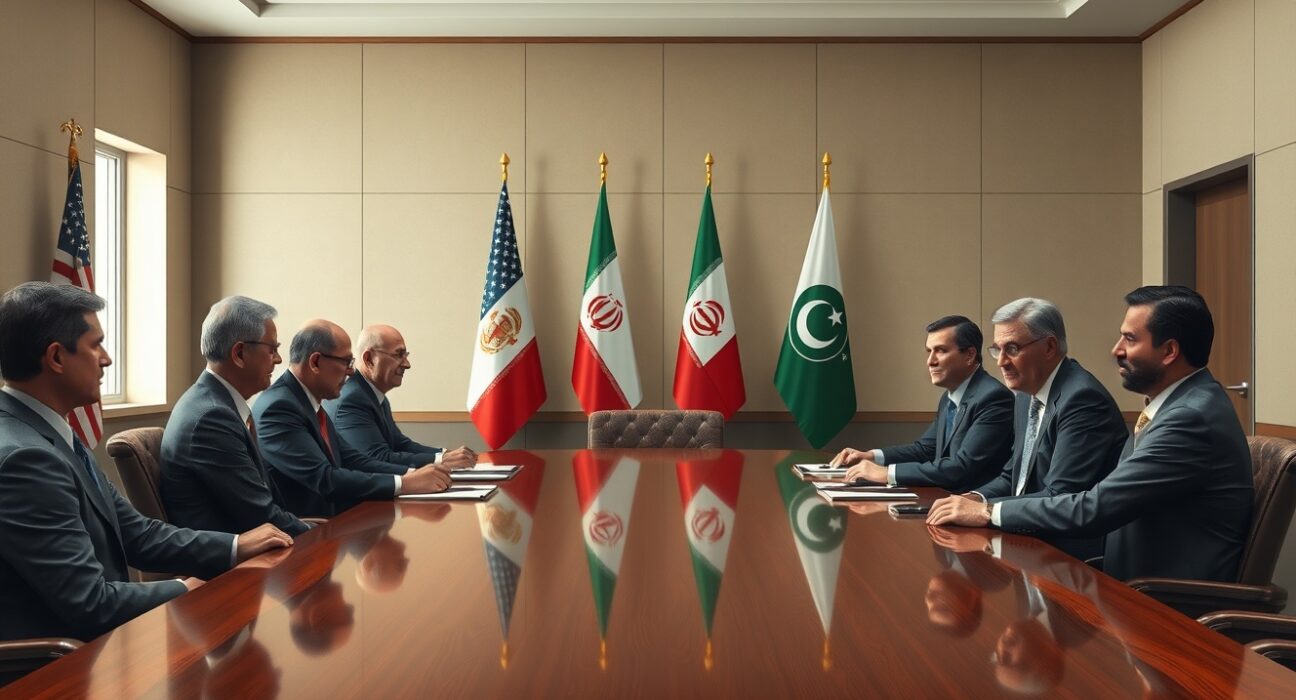
In a significant diplomatic development, the United States and Iran will commence direct ceasefire negotiations in Islamabad, Pakistan, on April 11, 2025. This historic move, first reported by Turkey’s Anadolu Agency, marks a pivotal attempt to establish a permanent cessation of hostilities through Pakistani mediation. Consequently, the talks represent a major shift in a long-standing adversarial relationship. The negotiations will occur at a heavily guarded military facility, underscoring the sensitive nature of the discussions. Furthermore, this initiative follows years of indirect communication and regional proxy conflicts. The international community now watches closely as these two powers engage in face-to-face dialogue.
US Iran Ceasefire Talks: Structure and Security Protocols
The upcoming US Iran ceasefire talks in Islamabad feature a flexible, security-conscious format. According to a Pakistani government source, the negotiations have no fixed schedule. The process will include both direct and indirect contact between the delegations. Additionally, each side will hold separate meetings with Pakistani officials. Due to the complex agenda, discussions could extend over several days. However, direct face-to-face meetings are not expected to exceed two to three days for security reasons. This cautious approach reflects the high-stakes environment. The choice of a Pakistani military facility further emphasizes the need for absolute discretion and protection.
Pakistan’s role as mediator is particularly noteworthy. The country maintains diplomatic relations with both Washington and Tehran. This unique position allows Islamabad to act as a credible intermediary. Historically, Pakistan has facilitated backchannel communications in the region. The military venue also ensures a controlled environment free from media intrusion. Security analysts highlight the importance of such measures. They prevent potential leaks that could derail sensitive negotiations. The structured yet adaptable format aims to build incremental trust. This method is crucial for tackling deeply entrenched issues.
Historical Context of US-Iran Relations
Understanding the April 11 talks requires examining decades of tension. Relations between the US and Iran have been strained since the 1979 Islamic Revolution. Subsequent events include the hostage crisis, sanctions regimes, and the 2015 nuclear deal (JCPOA). The US withdrawal from the JCPOA in 2018 intensified hostilities. Recent years have seen incidents like the 2020 assassination of General Qasem Soleimani and attacks on shipping lanes. Regional proxy conflicts in Yemen, Syria, and Iraq further complicate the relationship. Therefore, these Islamabad negotiations represent a rare diplomatic opening. They aim to address not just a ceasefire but the underlying drivers of conflict.
Regional Implications and Global Impact
The potential success or failure of the Islamabad talks carries profound regional implications. A permanent ceasefire could significantly de-escalate tensions across the Middle East. It might lead to reduced violence in Yemen and Syria, where both nations support opposing factions. Moreover, it could stabilize global energy markets. The Strait of Hormuz, a critical oil chokepoint, has been a flashpoint. Securing this waterway benefits global trade. For Gulf Cooperation Council (GCC) states, the talks present both opportunities and anxieties. These countries have long relied on US security guarantees against perceived Iranian threats. A US-Iran détente could reshape regional security architectures.
Key regional stakeholders are monitoring the process closely:
- Israel: Views any US-Iran agreement with skepticism, concerned about its security posture.
- Saudi Arabia: Engaged in its own dialogue with Iran but wary of a comprehensive US deal.
- China & Russia: Major powers with vested interests in Middle Eastern stability and energy flows.
- European Union: Supports diplomatic efforts, having worked to preserve the nuclear deal framework.
The global impact extends beyond geopolitics. A stable US-Iran relationship could facilitate cooperation on shared challenges. These include nuclear non-proliferation, counter-terrorism, and regional infrastructure projects. However, numerous obstacles remain. Domestic politics in both Washington and Tehran constrain negotiators. Hardliners in each capital oppose concessions. The talks in Islamabad must navigate these internal pressures carefully.
Analysis of Pakistan’s Mediation Role
Pakistan’s selection as mediator is a strategic masterstroke with multiple dimensions. The country shares a long, porous border with Iran and maintains a strong, albeit complex, relationship with the United States. This dual connectivity provides unique leverage. Pakistan’s military and intelligence services have deep regional knowledge. They understand the security concerns of both parties. Furthermore, Islamabad has recently sought to recalibrate its foreign policy. It aims to transition from a security-centric approach to one emphasizing economic connectivity and diplomacy. Successfully mediating these talks would elevate Pakistan’s international standing considerably.
However, the role is not without risks. Pakistan must maintain strict neutrality to retain trust from both sides. Any perception of bias could collapse the entire process. The military facility venue helps Pakistan control the environment. It minimizes external influence and potential sabotage attempts. Experts suggest Pakistan’s motivation is multifaceted. It seeks regional stability on its western border with Iran. It also desires to demonstrate its value as a reliable partner to the United States. A successful outcome could bring economic dividends, including potential investments and enhanced diplomatic capital.
Logistical and Diplomatic Challenges
The logistical execution of the US Iran ceasefire talks presents immense challenges. Security is the paramount concern, given the history of targeted assassinations and cyber attacks. The Pakistani military will implement unprecedented measures. Communication between the delegations will likely involve secure, dedicated lines. The agenda, while undisclosed, certainly includes core issues: sanctions relief, nuclear program limits, and support for regional militias. Negotiators must craft agreements that are sellable domestically. This requires creative diplomatic language and phased implementation plans. The absence of a fixed schedule, while flexible, also risks prolonging talks without results. Momentum must be carefully managed.
Potential Outcomes and Scenarios
Analysts outline several potential outcomes from the Islamabad negotiations. A breakthrough leading to a formal ceasefire agreement is the optimal scenario. This would likely involve reciprocal, verifiable steps. For example, Iran might limit uranium enrichment. The US could concurrently unfreeze certain Iranian assets. A second scenario is a limited understanding or “cooling-off” period. This would reduce immediate tensions but leave core disputes unresolved. A third, less desirable outcome is a complete breakdown in talks. This could lead to renewed and possibly intensified conflict. The table below summarizes key possibilities:
| Scenario | Likelihood | Primary Impact |
|---|---|---|
| Comprehensive Ceasefire Deal | Medium | Regional de-escalation, sanctions relief, renewed nuclear diplomacy. |
| Limited Understanding / Memorandum | High | Temporary reduction in hostilities, continuation of indirect talks. |
| Talks Collapse Without Agreement | Low-Medium | Renewed proxy conflict, potential for direct military confrontation. |
The most likely path is a phased agreement. Initial steps would build confidence for more substantive deals later. This incremental approach mirrors past successful diplomacy. It allows each side to test the other’s compliance. The international community, including the UN and EU, would play a crucial verification role. Ultimately, the success of the US Iran ceasefire talks hinges on political will. Leaders in both nations must prioritize long-term stability over short-term political gains.
Conclusion
The commencement of direct US Iran ceasefire talks in Islamabad on April 11 is a landmark event in international diplomacy. Mediated by Pakistan and held under tight security, these negotiations offer a fragile hope for durable peace. The complex historical context and profound regional implications underscore their importance. While significant challenges remain, the very act of sitting at the same table represents progress. The world will observe whether this dialogue can translate into tangible de-escalation and a more stable Middle East. The success of these talks could redefine regional politics for a generation.
FAQs
Q1: What is the main goal of the April 11 talks in Islamabad?
The primary goal is to negotiate a permanent ceasefire agreement between the United States and Iran, aiming to end hostilities and establish a framework for future diplomatic engagement.
Q2: Why was Pakistan chosen as the mediator for these US Iran ceasefire talks?
Pakistan maintains diplomatic relations with both nations, possesses deep regional expertise, and can provide a secure, neutral venue, making it a credible and practical intermediary.
Q3: How long are the negotiations expected to last?
While the overall dialogue could extend over several days due to a complex agenda, the direct face-to-face meetings between US and Iranian delegations are expected to be limited to two or three days for security reasons.
Q4: What are the major obstacles to a successful agreement?
Key obstacles include deep-seated mutual distrust, domestic political opposition in both countries, disagreements over Iran’s nuclear program, and conflicting interests in regional proxy conflicts.
Q5: How could a successful ceasefire impact the broader Middle East?
A successful deal could significantly reduce violence in conflict zones like Yemen and Syria, stabilize global energy markets by securing the Strait of Hormuz, and potentially lead to a broader regional security dialogue involving Gulf Arab states.
Disclaimer: The information provided is not trading advice, Bitcoinworld.co.in holds no liability for any investments made based on the information provided on this page. We strongly recommend independent research and/or consultation with a qualified professional before making any investment decisions.