

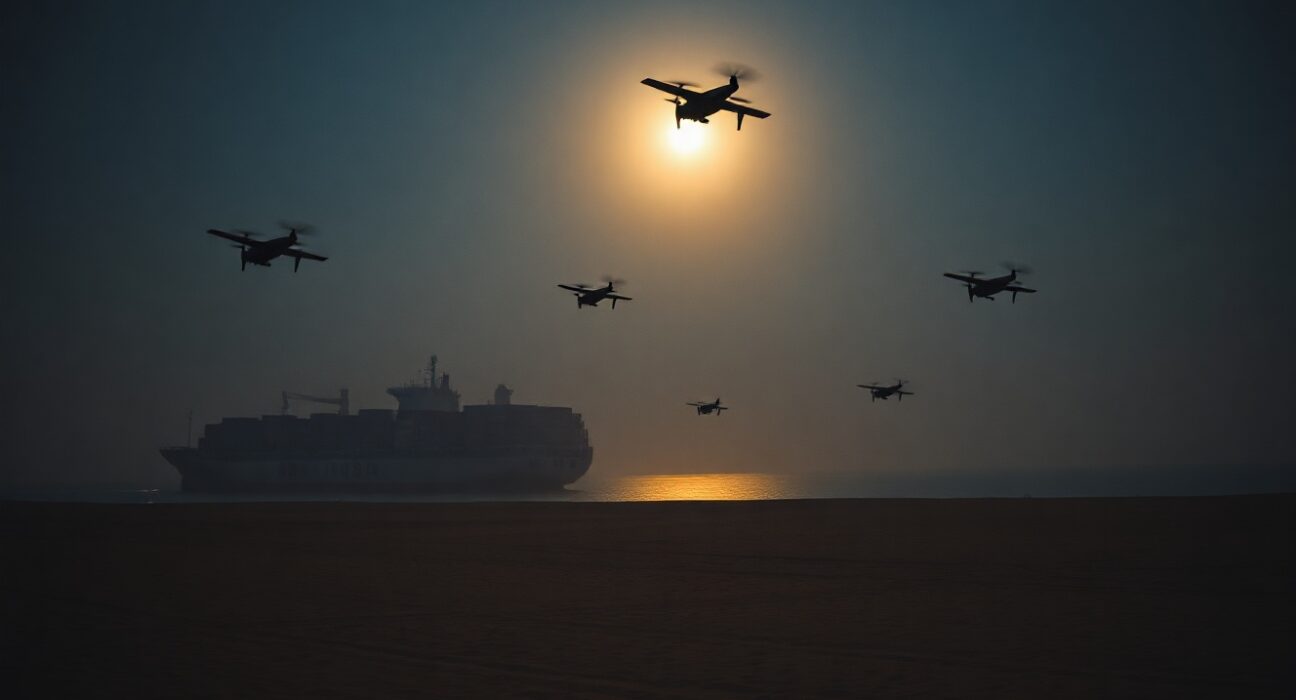
The United States military has carried out new strikes against Iranian military facilities and shot down multiple drones that posed a direct threat to American forces and commercial shipping in the strategic Strait of Hormuz, according to a U.S. military official cited by Reuters.
Details of the Military Action
The operation, which took place in recent hours, targeted Iranian military installations believed to be linked to ongoing threats in the region. U.S. forces also intercepted and destroyed several unmanned aerial vehicles (UAVs) that were approaching positions near the Strait of Hormuz, a critical chokepoint for global oil shipments.
Officials confirmed that the drones were assessed as an imminent danger to both U.S. naval assets and civilian commercial vessels transiting the waterway. No casualties have been reported on the U.S. side, and the extent of damage to Iranian facilities remains unconfirmed.
Strategic Importance of the Strait of Hormuz
The Strait of Hormuz, connecting the Persian Gulf to the Gulf of Oman, is one of the world’s most vital maritime passages. Approximately 20% of global oil consumption passes through its narrow waters daily. Any disruption to shipping there has immediate consequences for global energy markets and supply chains.
This latest escalation follows a series of tit-for-tat incidents between the U.S. and Iran over the past year, including previous drone interceptions and retaliatory strikes. The region remains on high alert as both nations maintain a significant military presence.
Implications for Regional Stability
The strikes underscore the fragile security environment in the Middle East, where proxy conflicts and direct confrontations have become increasingly common. Analysts warn that continued hostilities risk drawing in other regional actors and could further destabilize an already volatile area.
For commercial shipping operators, the situation adds another layer of risk assessment. Insurance premiums for vessels transiting the Strait have already risen, and some companies may consider rerouting despite the added costs and delays.
Conclusion
The U.S. military’s latest action against Iranian facilities and drone threats near the Strait of Hormuz represents a significant escalation in an already tense geopolitical standoff. With global energy security and maritime trade at stake, the situation demands close monitoring. Both sides have signaled readiness for further engagement, leaving the door open for either de-escalation or deeper conflict.
FAQs
Q1: Why is the Strait of Hormuz important?
The Strait of Hormuz is a narrow waterway connecting the Persian Gulf to the Gulf of Oman, through which about 20% of the world’s oil passes daily. It is a critical chokepoint for global energy supplies.
Q2: What kind of drones were shot down?
The U.S. military confirmed that multiple unmanned aerial vehicles (UAVs) were intercepted. Specific models or origins have not been disclosed, but they were assessed as posing an imminent threat.
Q3: Could this lead to a wider conflict?
While the situation is serious, both the U.S. and Iran have historically avoided full-scale war. However, repeated strikes and counter-strikes increase the risk of miscalculation or unintended escalation.
Disclaimer: The information provided is not trading advice, Bitcoinworld.co.in holds no liability for any investments made based on the information provided on this page. We strongly recommend independent research and/or consultation with a qualified professional before making any investment decisions.
