

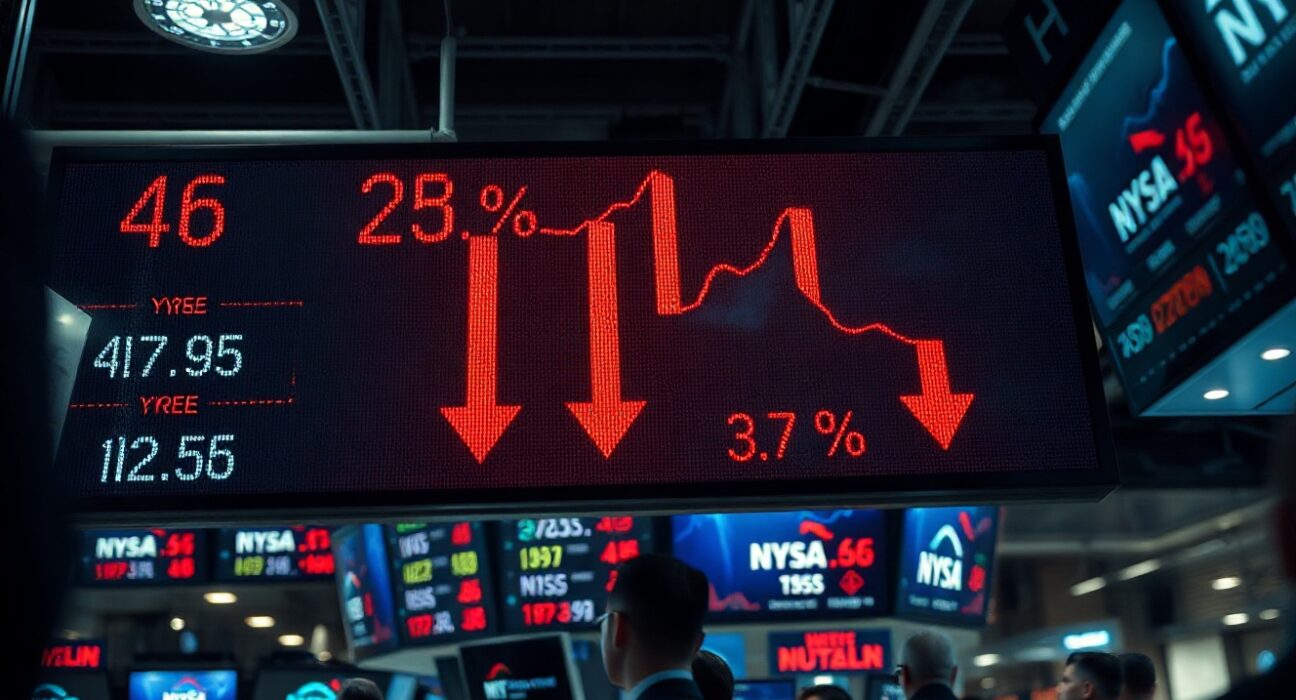
In a dramatic start to the trading day, more than $1 trillion was wiped from the value of U.S. stocks within the first two hours of the session, according to data reported by Watcher.Guru. The rapid selloff sent shockwaves through financial markets, raising fresh concerns about economic stability and investor sentiment.
What Triggered the Selloff?
While the exact catalyst for the sharp decline remains under analysis, early indications point to a confluence of factors. Traders cited renewed fears over persistent inflation, disappointing corporate earnings reports from major technology firms, and uncertainty surrounding upcoming Federal Reserve policy decisions. The selloff was broad-based, hitting sectors from technology to industrials, with the S&P 500 and Nasdaq both recording significant losses in the opening window.
Market Context and Historical Perspective
Losses of this magnitude are rare but not unprecedented. The last comparable event occurred during the early pandemic selloff in March 2020, when markets experienced extreme volatility. Today’s decline, however, comes after a period of relative calm and modest gains, making the sudden drop particularly jarring for investors. The speed of the selloff—erasing over a trillion dollars in market capitalization in just 120 minutes—underscores the fragility of current market confidence.
What This Means for Investors
For retail and institutional investors alike, the immediate impact is a sharp reduction in portfolio values. Retirement accounts, mutual funds, and individual stock holdings have all been affected. Financial advisors are urging clients to avoid panic selling, emphasizing that market downturns are a normal part of the economic cycle. However, the scale of today’s loss may prompt a reassessment of risk exposure and asset allocation strategies.
Broader Economic Implications
The stock market is often viewed as a barometer of economic health, and a decline of this magnitude can have ripple effects. Consumer confidence may weaken, potentially leading to reduced spending. Businesses may face higher borrowing costs if credit markets tighten in response to the volatility. Policymakers and regulators will be closely monitoring the situation for signs of systemic stress.
Conclusion
The $1 trillion loss in the opening hours of U.S. trading represents a significant market event that demands close attention. While the full implications will unfold in the coming days and weeks, the immediate takeaway is a stark reminder of the inherent volatility in financial markets. Investors and analysts alike will be watching for any official statements from the Federal Reserve or Treasury Department that might address the selloff and provide guidance on the path forward.
FAQs
Q1: What caused the stock market to lose over $1 trillion?
A1: The exact cause is still being determined, but early reports point to a combination of inflation concerns, weak corporate earnings, and uncertainty about Federal Reserve policy. The selloff was rapid and broad-based across multiple sectors.
Q2: How does a $1 trillion loss affect the average investor?
A2: The loss directly reduces the value of stocks held in portfolios, retirement accounts, and mutual funds. Investors may see significant short-term declines, though financial experts generally advise against panic selling during market downturns.
Q3: Is this market decline part of a larger trend?
A3: It is too early to determine if this is a one-day event or the start of a prolonged downturn. Market analysts will be watching trading activity in the coming sessions for clues about sustained investor sentiment and economic fundamentals.
Disclaimer: The information provided is not trading advice, Bitcoinworld.co.in holds no liability for any investments made based on the information provided on this page. We strongly recommend independent research and/or consultation with a qualified professional before making any investment decisions.
