
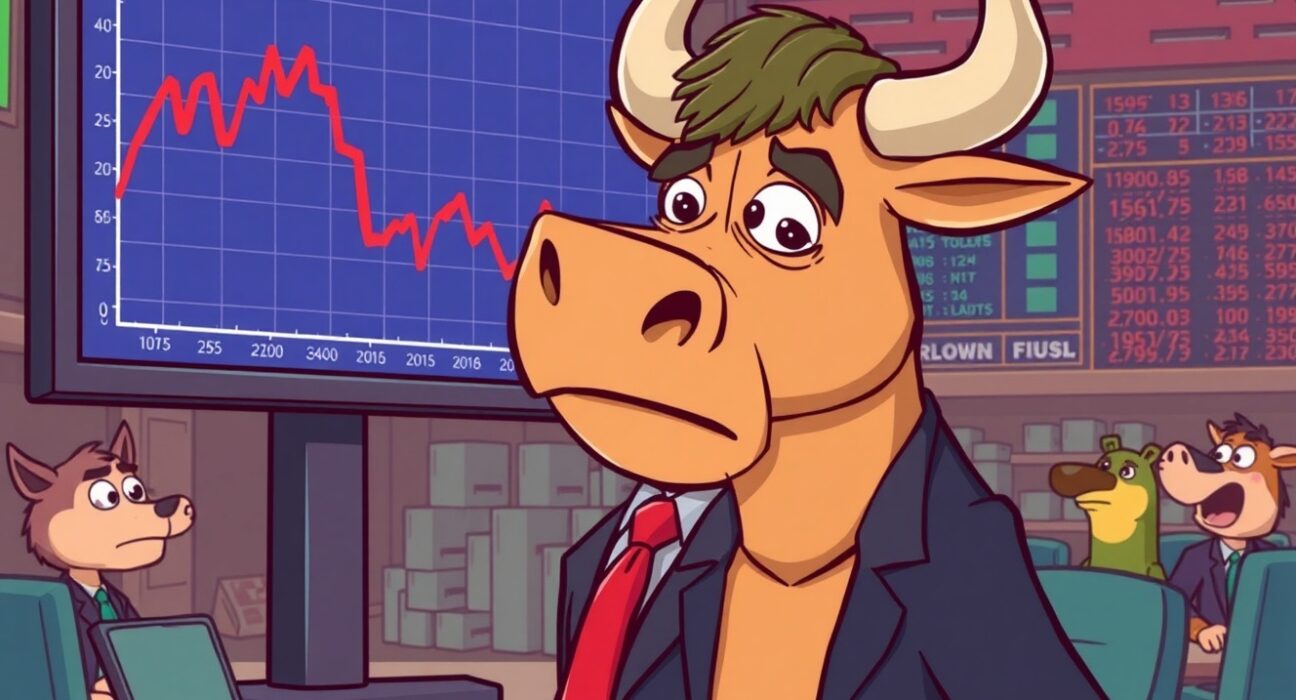
NEW YORK, NY – In a broad-based retreat that captured investor attention, US stocks closed lower today, marking a significant down day for the three major equity benchmarks. The S&P 500 fell 0.94%, the Nasdaq Composite declined 1.02%, and the Dow Jones Industrial Average dropped 0.83%, reflecting widespread pressure across market sectors. This movement arrives amid a complex tapestry of economic data and shifting monetary policy expectations, prompting analysts to scrutinize the underlying drivers.
US Stocks Close Lower: Dissecting the Day’s Market Performance
Today’s session delivered a clear downward trajectory for Wall Street. Consequently, every major index finished in negative territory. The technology-heavy Nasdaq Composite led the declines, a typical signal of reduced risk appetite among market participants. Meanwhile, the benchmark S&P 500, representing 500 of the largest US companies, posted a nearly one percent loss. Similarly, the blue-chip Dow Jones Industrial Average, comprising 30 stalwart corporations, saw a substantial drop. This synchronized decline suggests a market-wide reassessment rather than isolated sectoral weakness.
To illustrate the scale of the pullback, consider the following table of key index performances:
| Index | Percentage Change | Point Change (Approx.) |
|---|---|---|
| S&P 500 | -0.94% | -47 points |
| Nasdaq Composite | -1.02% | -160 points |
| Dow Jones Industrial Average | -0.83% | -330 points |
Market breadth, a measure of advancing versus declining stocks, was decidedly negative. Furthermore, trading volume surged above recent averages, indicating conviction behind the sell-off. This data collectively paints a picture of a decisive risk-off shift during the trading day.
Contextualizing the Market Pullback
Understanding why US stocks closed lower requires examining several concurrent factors. Primarily, investors are digesting recent commentary from Federal Reserve officials. Their statements have reinforced a patient stance on interest rate cuts, dousing earlier hopes for imminent policy easing. Additionally, a slight uptick in Treasury bond yields exerted pressure on equity valuations, particularly for growth-oriented stocks. The 10-year Treasury yield, a crucial benchmark for global borrowing costs, edged higher throughout the session.
Simultaneously, corporate earnings season continues to deliver mixed signals. While many companies have surpassed profit expectations, forward guidance has occasionally disappointed. Specifically, concerns about consumer spending resilience and input cost inflation have surfaced in management commentary. Geopolitical tensions also remain a background concern, influencing commodity prices and global trade expectations. These elements combined to create a cautious atmosphere on the trading floor.
Expert Analysis and Sector-Specific Impacts
Financial analysts point to sector rotation as a key feature of today’s decline. For instance, the information technology and consumer discretionary sectors, which are sensitive to interest rate expectations, were among the worst performers. Conversely, more defensive sectors like utilities and consumer staples showed relative strength, though they still ended the day lower. This pattern aligns with historical behavior during periods of economic uncertainty or rising rate fears.
“Today’s market action reflects a recalibration of expectations,” noted a senior strategist at a major investment bank, referencing the collective analysis from their morning briefing. “The market is processing the reality of ‘higher for longer’ interest rates alongside robust but not accelerating economic data. It’s a healthy consolidation after a strong first-quarter rally.” This perspective is echoed by several market observers who view the pullback as a normalization rather than the start of a deeper correction.
The decline also impacted key market segments:
- Mega-Cap Technology: Shares of several trillion-dollar companies contributed significantly to the Nasdaq’s drop.
- Small-Caps: The Russell 2000 index of smaller companies underperformed the major averages, often a sign of tightening financial conditions.
- International Markets: European and Asian indices also faced pressure, highlighting the global nature of current market sentiment.
Historical Comparisons and Market Psychology
Historically, single-day declines of this magnitude are not uncommon within a bull market trend. In fact, data from market research firms shows that the S&P 500 experiences an average of three to four 1% down days per month, even in positive years. Therefore, today’s movement falls well within normal volatility parameters. However, the context is crucial. This drop follows a period of low volatility and steady gains, making it more psychologically pronounced for market participants.
Market technicians are watching key support levels. For example, the S&P 500’s 50-day moving average now represents an important technical benchmark. A sustained break below that level could signal further downside, whereas holding above it would suggest underlying strength. The volume profile of today’s selling will be analyzed overnight to gauge whether it was driven by institutional rebalancing or broader sentiment shift. This technical analysis provides a data-driven framework beyond the headline numbers.
Conclusion
In summary, US stocks closed lower in a session defined by broad-based selling and heightened investor caution. The declines in the S&P 500, Nasdaq, and Dow Jones reflect a market adjusting to the prospects of sustained higher interest rates and evaluating mixed corporate fundamentals. While the day’s losses are notable, they represent a standard fluctuation within the ongoing market cycle. For long-term investors, such periods often present opportunities for strategic portfolio assessment. The key focus now shifts to upcoming economic reports, particularly inflation data, which will likely dictate the market’s next major directional move.
FAQs
Q1: Why did US stocks close lower today?
The primary drivers were heightened expectations that the Federal Reserve will maintain higher interest rates for longer, a rise in Treasury yields, and some cautious forward guidance from companies during earnings season. These factors combined to reduce investor risk appetite.
Q2: Which index performed the worst?
The Nasdaq Composite, with a decline of 1.02%, saw the largest percentage drop. This is typical in risk-off environments, as the Nasdaq is heavily weighted toward growth-oriented technology stocks that are more sensitive to interest rate changes.
Q3: Is this a sign of a coming bear market or recession?
A single-day decline of this size is not, by itself, a reliable predictor of a bear market or recession. It is a normal occurrence within market cycles. Analysts view it more as a consolidation or pullback following a period of gains, though continued monitoring of economic data is essential.
Q4: How does this affect the average investor’s portfolio?
Most diversified portfolios will see a decrease in value on such a day. However, for investors with a long-term horizon, short-term volatility is expected. The event underscores the importance of asset allocation and having an investment strategy that can weather market fluctuations.
Q5: What should investors watch for next?
Key indicators to watch include upcoming Consumer Price Index (CPI) and Producer Price Index (PPI) reports for inflation trends, continued commentary from Federal Reserve officials, and the next wave of corporate earnings reports for clues about economic health.
Disclaimer: The information provided is not trading advice, Bitcoinworld.co.in holds no liability for any investments made based on the information provided on this page. We strongly recommend independent research and/or consultation with a qualified professional before making any investment decisions.