
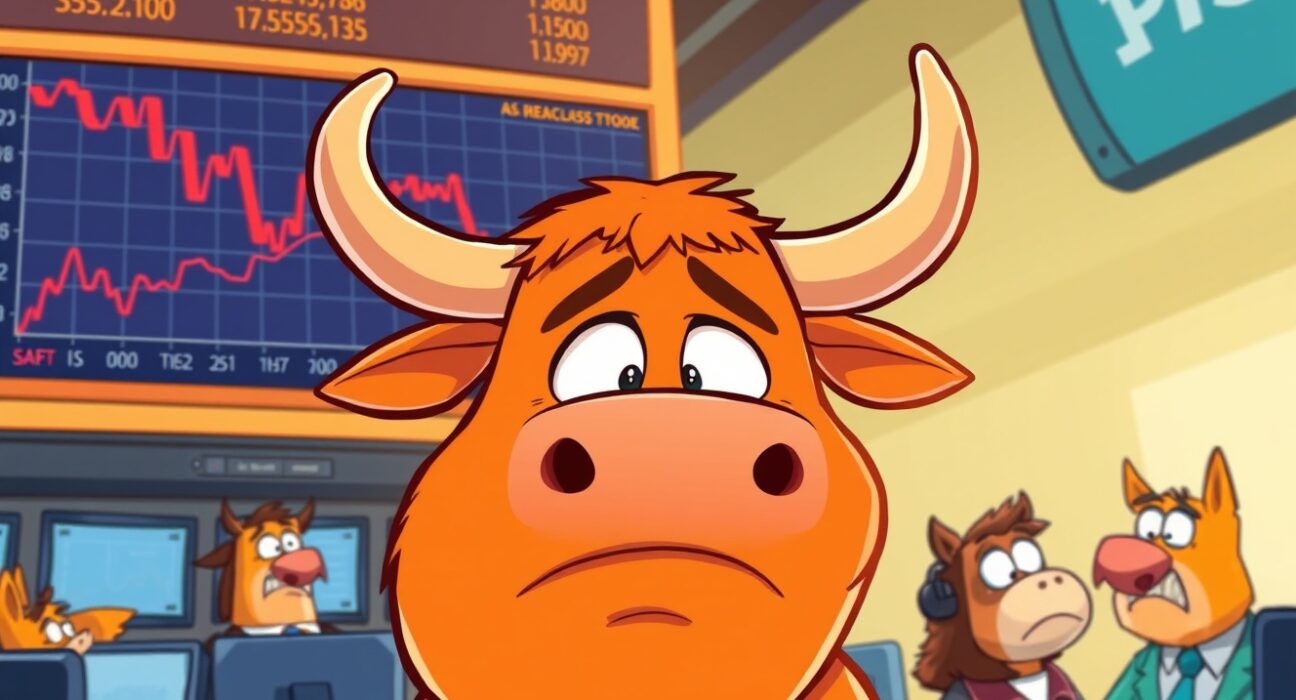
If you checked your portfolio this Tuesday morning, you might have noticed a familiar sinking feeling. US stocks open lower once again, continuing a pattern that has many investors asking questions. The S&P 500 fell 0.03%, the Nasdaq Composite dropped 0.24%, and the Dow Jones Industrial Average declined 0.08% at the opening bell. But what’s really happening beneath these numbers?
Why Did US Stocks Open Lower Today?
Tuesday’s market opening tells a story of cautious trading. When US stocks open lower, it typically signals investor uncertainty about upcoming economic data or corporate earnings. Today’s slight declines across major indices suggest traders are taking a wait-and-see approach. The technology-heavy Nasdaq showing the largest drop indicates particular concern about growth stocks in the current environment.
Several factors could be contributing to this morning’s soft opening:
- Anticipation of key economic reports later this week
- Ongoing concerns about interest rate policies
- Mixed signals from corporate earnings season
- Global economic uncertainties affecting market sentiment
What Does This Mean for Your Investments?
Seeing US stocks open lower might trigger immediate concern, but context matters. These opening movements represent just the beginning of the trading day. Historically, markets often recover from early losses as more data becomes available and trading volume increases. However, consistent patterns of lower openings can indicate broader market trends worth monitoring.
Consider these actionable insights for today’s market:
- Don’t panic sell based on opening movements alone
- Review your portfolio’s exposure to different sectors
- Look for buying opportunities in quality companies
- Maintain a long-term perspective despite short-term volatility
How Should Investors Respond to Lower Openings?
When US stocks open lower, disciplined investors see both challenge and opportunity. The key is understanding whether this represents a temporary dip or the beginning of a larger trend. Today’s modest declines suggest normal market fluctuations rather than dramatic shifts. However, they serve as a reminder that markets don’t move in a straight line upward.
Successful investors use these moments to:
- Reassess their risk tolerance and investment strategy
- Look for fundamentally strong companies trading at better prices
- Diversify across different asset classes and sectors
- Stay informed about economic indicators driving market movements
The Bigger Picture Beyond Today’s Opening
While today’s news focuses on how US stocks open lower, smart investors look at the complete trading day and longer trends. Opening prices represent just one data point in the market’s daily journey. What matters more is how stocks perform throughout the session and what fundamental factors are driving these movements.
Remember these crucial points:
- Market openings reflect overnight and pre-market sentiment
- Closing prices often tell a different story than openings
- Long-term trends matter more than daily fluctuations
- Economic fundamentals ultimately drive sustainable growth
Conclusion: Navigating Market Volatility with Confidence
Today’s market opening reminds us that investing requires both patience and perspective. When US stocks open lower, it’s not necessarily a signal to make drastic changes but rather an opportunity to review your strategy. The modest declines across major indices suggest normal market breathing rather than significant distress. By staying informed, maintaining discipline, and focusing on long-term goals, investors can navigate these fluctuations successfully.
The market’s daily movements, including when US stocks open lower, are part of the normal investment landscape. What separates successful investors is their ability to maintain perspective during both up and down days.
Frequently Asked Questions
What does it mean when US stocks open lower?
When US stocks open lower, it means major market indices like the S&P 500, Dow Jones, and Nasdaq begin the trading day at prices below their previous closing levels. This typically indicates negative sentiment from overnight news or pre-market trading.
Should I sell when stocks open lower?
Generally, no. Opening movements don’t necessarily predict how the full trading day will unfold. Many professional investors advise against making decisions based solely on opening prices, as markets often recover throughout the day.
What causes stocks to open lower?
Several factors can cause lower openings including negative overnight news, poor earnings reports released before market open, economic data concerns, or negative trends in international markets that trade during US off-hours.
How often do US stocks open lower?
Market openings vary, but statistically, stocks open lower approximately 40-45% of trading days. This is normal market behavior and doesn’t necessarily indicate a bear market or sustained decline.
Can I predict if stocks will open lower?
While you can monitor pre-market trading and overnight futures, predicting exact opening movements is challenging. Many factors influence opening prices, and even experienced traders find consistent prediction difficult.
What’s the difference between opening lower and closing lower?
Opening lower refers to the price at the start of trading, while closing lower refers to the price at the end of trading. They can tell different stories – stocks might open lower but recover to close higher, or vice versa.
Found this market analysis helpful? Share this article with fellow investors who need to understand what happens when US stocks open lower. Your network will appreciate the clear explanations and actionable insights. Click the share button below to spread valuable market knowledge!
To learn more about the latest stock market trends, explore our article on key developments shaping market analysis and future investment opportunities.
Disclaimer: The information provided is not trading advice, Bitcoinworld.co.in holds no liability for any investments made based on the information provided on this page. We strongly recommend independent research and/or consultation with a qualified professional before making any investment decisions.