

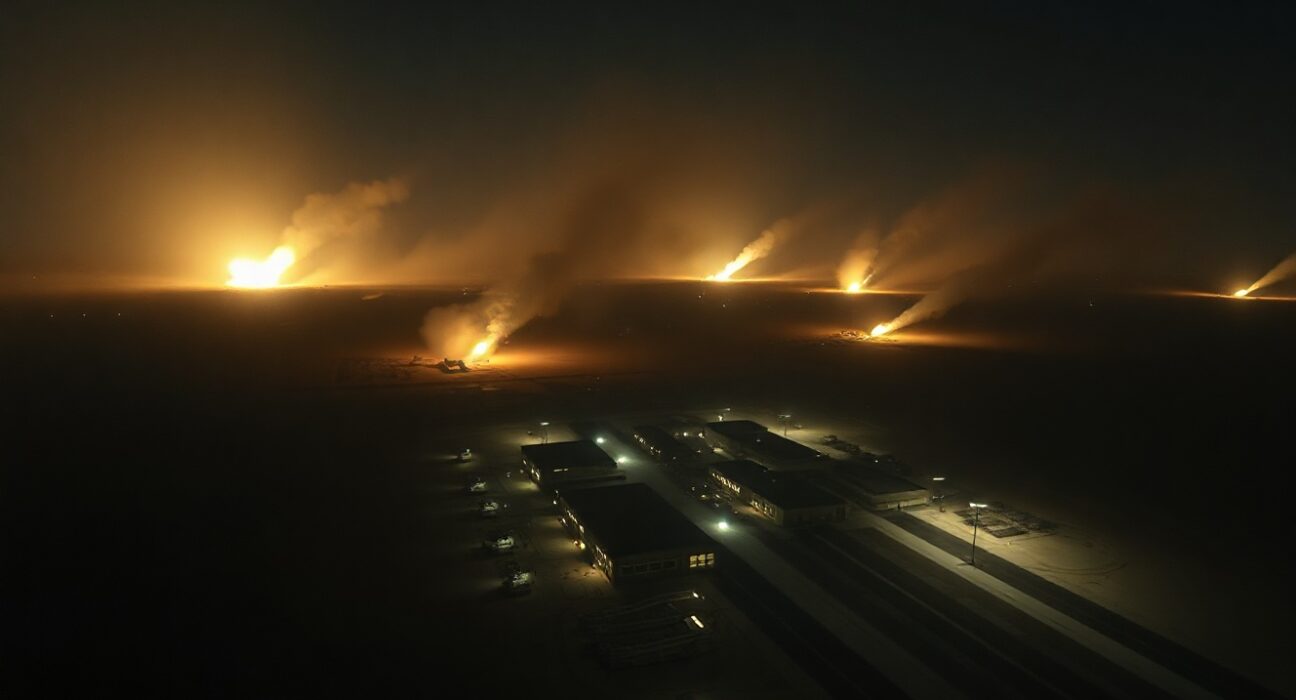
The United States military has initiated a third wave of precision strikes against Iranian targets, following reports of ballistic missile launches from the Isfahan region. The escalation marks a significant intensification of hostilities between the two nations, with both sides confirming military operations in central Iran.
Third Wave of Strikes Targets Military Infrastructure
According to U.S. defense officials, the latest wave of airstrikes targeted missile storage facilities, air defense systems, and command-and-control centers linked to Iran’s Islamic Revolutionary Guard Corps (IRGC). The strikes come after earlier waves focused on naval assets and drone manufacturing sites along Iran’s southern coast. The Pentagon has stated that the operations are intended to degrade Iran’s ability to launch further attacks against U.S. forces and regional allies.
Reports from Isfahan, a major industrial and military hub, indicate that at least two ballistic missiles were fired from the area shortly before the third wave began. Iranian state media confirmed explosions near military installations but did not immediately provide casualty figures. The semiofficial Fars News Agency described the strikes as “limited” and claimed that air defense systems intercepted several incoming projectiles.
Strategic Significance of Isfahan
Isfahan is home to several key military and nuclear-related facilities, including the Isfahan Nuclear Technology Center and the IRGC’s missile production complexes. The region has been a focal point of international concern due to its role in Iran’s ballistic missile program, which has supplied weapons used by proxy forces across the Middle East. Analysts note that strikes in this area carry a higher risk of escalation, given its proximity to civilian infrastructure and the symbolic importance of the city as a cultural and historical center.
Regional and Global Reactions
The escalation has drawn swift reactions from global powers. The United Nations called for an immediate de-escalation, while European Union foreign policy officials urged both sides to exercise restraint. Russia and China issued statements condemning the U.S. strikes and warning against further military action. Meanwhile, Israel, a key U.S. ally in the region, has remained publicly silent but is widely believed to have coordinated intelligence with Washington.
Oil markets reacted sharply to the news, with Brent crude futures rising more than 4% on concerns that the conflict could disrupt shipping through the Strait of Hormuz. The Persian Gulf, a critical waterway for global energy supplies, has seen increased naval activity in recent days.
What This Means for Regional Stability
The third wave of strikes represents a departure from the limited, tit-for-tat exchanges that characterized U.S.-Iran tensions over the past year. Military analysts say the scale and precision of the operation suggest a deliberate strategy to degrade Iran’s conventional military capabilities rather than a punitive response to a single incident. However, the risk of miscalculation remains high, particularly if Iranian forces target U.S. assets in Iraq, Syria, or the Persian Gulf in retaliation.
For readers, the key takeaway is that the conflict has entered a more dangerous phase, with direct strikes on Iranian soil and the potential for broader regional war. Diplomatic channels remain open, but both sides appear to be preparing for a prolonged confrontation.
Conclusion
The U.S. military’s third wave of strikes against Iran, combined with ballistic missile launches from Isfahan, marks a serious escalation in a conflict that has simmered for years. While the immediate military objectives appear focused on degrading Iran’s strike capabilities, the broader implications for regional security, global energy markets, and international diplomacy are profound. As events continue to unfold, the situation remains fluid, and further developments are expected in the coming hours.
FAQs
Q1: Why is the U.S. launching strikes against Iran?
The U.S. has stated that the strikes are in response to recent attacks on American forces and interests in the Middle East, including drone and missile attacks attributed to Iranian-backed proxies. The operations aim to degrade Iran’s military infrastructure and prevent future attacks.
Q2: What is the significance of Isfahan in this conflict?
Isfahan is a major industrial and military hub in central Iran, housing key missile production facilities and nuclear-related sites. Strikes in this area are strategically significant because they target Iran’s ability to produce and launch ballistic missiles.
Q3: Could this conflict lead to a broader war?
While both sides have signaled a desire to avoid all-out war, the current escalation increases the risk of miscalculation. The involvement of regional proxies and the potential for direct Iranian retaliation against U.S. allies or naval assets could trigger a wider conflict. Diplomatic efforts continue, but the situation remains highly volatile.
Disclaimer: The information provided is not trading advice, Bitcoinworld.co.in holds no liability for any investments made based on the information provided on this page. We strongly recommend independent research and/or consultation with a qualified professional before making any investment decisions.
