

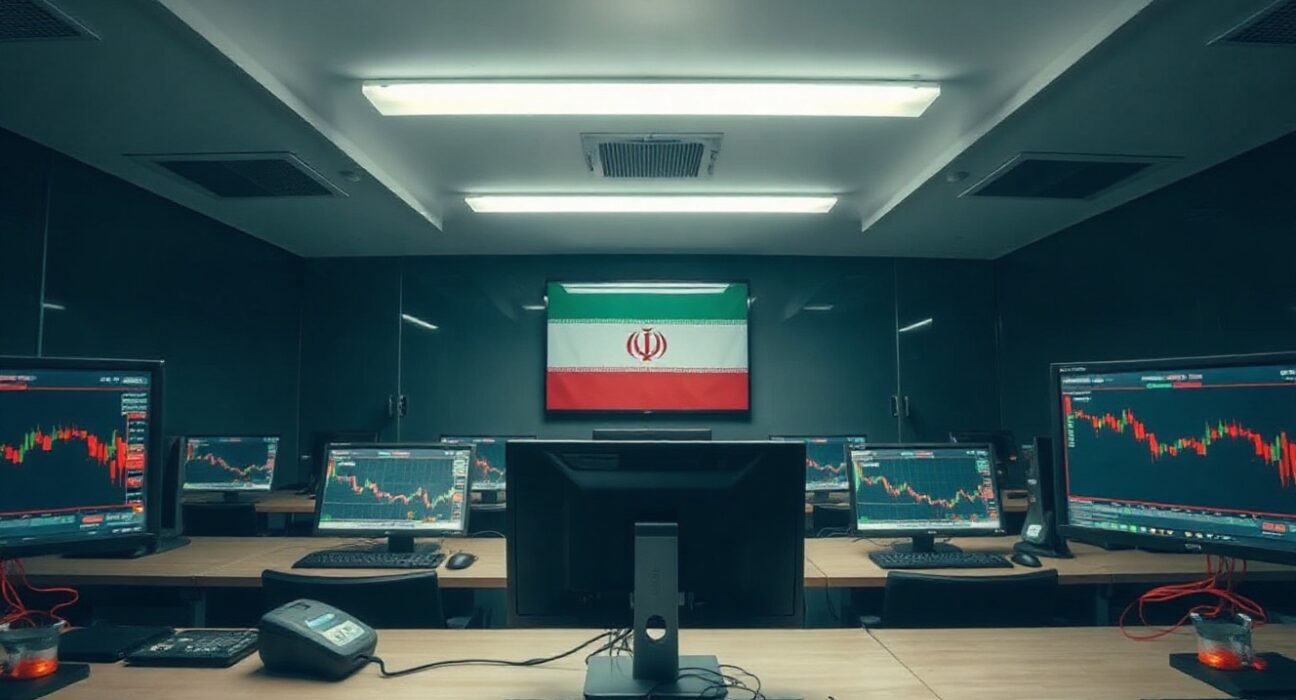
The U.S. Treasury Department’s Office of Foreign Assets Control (OFAC) has imposed sanctions on multiple Iranian cryptocurrency exchanges, including the country’s largest platform, Nobitex. The action, reported initially by CryptoPotato, also targets exchanges Wallex, Bitpin, and Ramzinex. U.S. authorities allege these platforms enabled users to evade international sanctions, facilitated Iran-related financial activities, and processed transactions linked to Iran’s Islamic Revolutionary Guard Corps (IRGC), a designated foreign terrorist organization.
Scope of the Sanctions and Targeted Entities
The sanctions freeze any U.S.-based assets of the designated exchanges and generally prohibit American individuals and companies from doing business with them. Nobitex, as Iran’s largest cryptocurrency exchange by trading volume, represents a significant target. The inclusion of Wallex, Bitpin, and Ramzinex signals a broader U.S. effort to dismantle financial networks that support the IRGC and bypass the comprehensive sanctions regime already in place against Iran.
Allegations of Sanctions Evasion and IRGC Links
OFAC’s designation is based on evidence that these exchanges knowingly facilitated transactions that circumvented U.S. and international sanctions. More critically, the Treasury Department stated that the platforms processed transactions for or on behalf of the IRGC, which has been designated by the U.S. as a terrorist organization since 2019. This connection elevates the sanctions from a purely economic measure to a national security action, carrying severe legal consequences for any entity or individual found to be facilitating such transactions.
Implications for the Cryptocurrency Industry and Iran’s Economy
This enforcement action sends a clear message to the global cryptocurrency industry: compliance with sanctions regimes is not optional. Exchanges operating in or servicing sanctioned jurisdictions face significant legal and reputational risk. For Iran, where cryptocurrency trading has become a vital channel for circumventing a struggling economy and international financial isolation, these sanctions could further constrict access to global markets. Iranian citizens and businesses using these platforms for legitimate purposes may find their funds frozen or inaccessible, though the primary target is the illicit financial activity.
Broader Context of U.S. Sanctions on Iran
The U.S. has maintained a robust sanctions program against Iran for decades, targeting its nuclear program, ballistic missile development, and support for militant groups. In recent years, the focus has expanded to include digital financial tools used to evade these restrictions. This latest action is part of a consistent pattern of OFAC targeting cryptocurrency exchanges and mixers that facilitate illicit finance, including actions against entities in North Korea, Russia, and now Iran.
Conclusion
The U.S. Treasury’s sanctions on Nobitex and other Iranian crypto exchanges represent a significant escalation in the use of financial enforcement tools to combat sanctions evasion in the digital asset space. The explicit linkage to the IRGC underscores the national security dimensions of this action. For the cryptocurrency industry, it reinforces the critical importance of robust compliance frameworks and the severe consequences of failing to prevent sanctioned entities from accessing their platforms. The long-term impact on Iran’s digital economy and the broader crypto market remains to be seen, but the message from Washington is unequivocal.
FAQs
Q1: What does the U.S. Treasury’s sanction on these Iranian crypto exchanges mean?
A1: It freezes any U.S.-based assets of the exchanges (Nobitex, Wallex, Bitpin, Ramzinex) and prohibits U.S. individuals and companies from doing business with them. It also exposes any entity globally that continues to transact with them to potential secondary sanctions.
Q2: Why is the IRGC connection significant in these sanctions?
A2: The IRGC is a designated foreign terrorist organization by the U.S. government. Sanctioning entities that facilitate transactions for the IRGC elevates the action from a financial penalty to a national security measure, carrying more severe legal and reputational consequences.
Q3: How might these sanctions affect ordinary Iranian citizens using crypto?
A3: While the sanctions target illicit activity, ordinary users of these exchanges may find their funds frozen or their ability to trade severely limited. It further isolates Iran’s economy and restricts access to global cryptocurrency markets for legitimate purposes as well.
Disclaimer: The information provided is not trading advice, Bitcoinworld.co.in holds no liability for any investments made based on the information provided on this page. We strongly recommend independent research and/or consultation with a qualified professional before making any investment decisions.
