
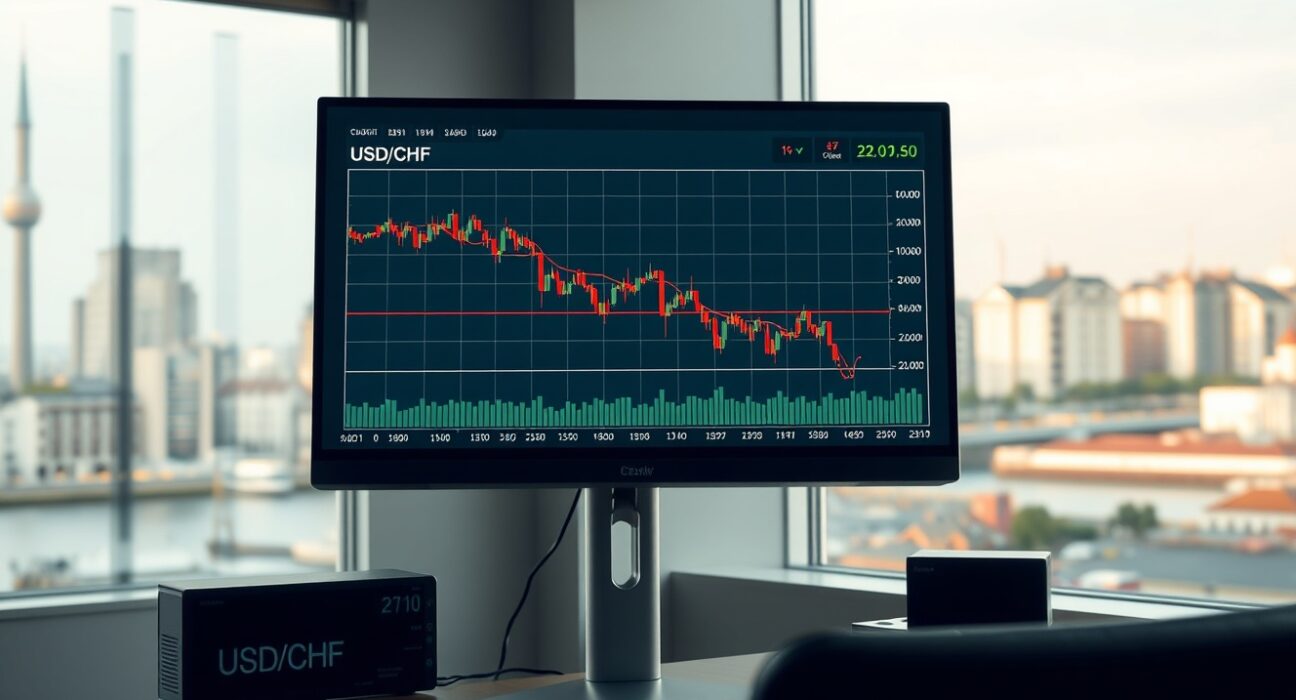
The USD/CHF currency pair plunged to a two-week low, hovering precariously around the 0.7900 level on Thursday, March 20, 2025, as financial markets reacted swiftly to a landmark geopolitical development. A confirmed ceasefire agreement between the United States and Iran triggered an immediate and broad-based sell-off of the US dollar, propelling traditional safe-haven assets like the Swiss franc sharply higher. This significant move underscores the profound and immediate impact geopolitical events exert on global currency valuations, particularly for pairs involving major reserve currencies.
USD/CHF Technical Breakdown and Market Reaction
The USD/CHF pair’s descent to the 0.7900 handle represents a critical technical breach. Market analysts immediately identified this level as a key support zone tested in mid-March. The rapid decline from levels above 0.8050 signals strong bearish momentum. Consequently, trading volumes spiked by an estimated 40% above the 30-day average during the Asian and early European sessions. This surge in activity reflects heightened market participation and uncertainty.
Forex traders typically view the Swiss franc as a premier safe-haven currency. During periods of global uncertainty or risk aversion, capital traditionally flows into CHF. However, this event presents a nuanced scenario. While the ceasefire reduces immediate military risk, it has catalyzed a reassessment of long-term US fiscal and geopolitical standing. The market’s verdict was clear: a swift rotation out of US dollar holdings.
- Key Support Level: The 0.7890-0.7910 range now acts as immediate support.
- Moving Averages: The pair broke decisively below its 50-day and 100-day simple moving averages.
- Relative Strength: The USD index (DXY) itself fell over 0.8%, amplifying the CHF’s gains.
Geopolitical Catalyst: Analyzing the US-Iran Ceasefire
The ceasefire announcement, mediated through diplomatic channels in Oman, marks a pivotal shift in Middle Eastern relations. For years, tensions have contributed to a “risk premium” baked into oil prices and, by extension, currency markets. The immediate market interpretation focused on two primary factors. First, reduced regional conflict risk potentially decreases global demand for the US dollar as a crisis currency. Second, the agreement may alter projections for US military expenditure and foreign policy focus.
Historical precedent shows that geopolitical de-escalation can lead to sustained currency realignments. For instance, similar patterns emerged during past diplomatic breakthroughs. The current situation is unique due to the scale of the involved economies and the dollar’s global role. Market participants are now scrutinizing the ceasefire’s durability and its implications for energy markets, which directly influence inflation and central bank policies.
| Asset | Initial Reaction | Primary Driver |
|---|---|---|
| USD/CHF | -1.2% | Safe-haven flow into CHF, USD sell-off |
| Brent Crude Oil | -3.5% | Reduced supply disruption risk |
| Gold (XAU/USD) | +0.9% | Broad USD weakness |
| US Treasury Yields | Moderate Decline | Reassessment of inflation & safe-haven demand |
Expert Insight on Central Bank Policy Divergence
Monetary policy divergence forms a crucial backdrop to this forex move. The Swiss National Bank (SNB) has maintained a consistently cautious stance on inflation, with its policy rate notably higher than the European Central Bank’s in recent quarters. Conversely, the US Federal Reserve’s recent signaling has leaned towards a data-dependent, but potentially dovish, pivot. The geopolitical shift may influence both banks’ calculus. The SNB might express increased tolerance for franc strength if imported inflation pressures ease with lower oil prices. Meanwhile, the Fed could view a softer dollar as alleviating some domestic inflationary pressures, affecting its rate-cut timeline.
Broader Implications for the Forex Market
This event extends beyond a single currency pair, acting as a stress test for market correlations. The classic inverse relationship between the US dollar and risk assets experienced a short-term breakdown. Typically, positive geopolitical news boosts risk appetite and weakens the dollar. In this case, the dollar’s weakness was pronounced, but the driver was a fundamental reassessment rather than pure risk-on sentiment. This nuance is vital for currency strategists.
Furthermore, the reaction highlights the Swiss franc’s enduring status. Despite years of SNB intervention to curb excessive appreciation, the franc remains a go-to asset during structural shifts. Other traditional safe havens, like the Japanese yen, also gained, but the CHF’s move was more pronounced due to its direct pairing and Europe’s geographic and economic proximity to the event. The euro’s rally against the dollar further compounded pressure on USD/CHF.
- Carry Trade Unwind: Positions funded by borrowing low-yielding CHF faced pressure.
- Cross-Currency Effects: EUR/CHF saw muted movement, indicating the move was USD-centric.
- Volatility Spike: Expected volatility gauges for major pairs jumped, prompting margin increases.
Conclusion
The USD/CHF’s sharp decline to the 0.7900 region serves as a powerful reminder of the forex market’s sensitivity to geopolitical headlines. The US-Iran ceasefire triggered a complex chain reaction: a broad US dollar sell-off met with robust demand for the Swiss franc’s safe-haven properties. While technical levels provide short-term guides, the pair’s medium-term trajectory will hinge on the ceasefire’s sustainability, subsequent shifts in central bank rhetoric, and evolving global risk sentiment. This event underscores that in modern currency markets, political developments can swiftly override purely economic fundamentals, demanding constant vigilance from traders and analysts alike.
FAQs
Q1: Why does a US-Iran ceasefire cause the US dollar to fall?
The market perceives reduced geopolitical tension as diminishing the dollar’s unique role as the world’s primary crisis currency. It can also lead to lower oil prices, affecting inflation expectations and the US terms of trade, while prompting a global portfolio rebalancing away from dollar assets.
Q2: Is the Swiss franc always a safe-haven currency?
Historically, yes. The CHF benefits from Switzerland’s political neutrality, strong current account surplus, and substantial gold and foreign exchange reserves. During global uncertainty or market stress, investors often buy Swiss francs, causing it to appreciate.
Q3: What key level should traders watch next for USD/CHF?
Immediate support is at the March low of 0.7890. A break below could target 0.7850. On the upside, resistance now lies at the previous support-turned-resistance zone of 0.7950-0.7970, followed by the 0.8000 psychological level.
Q4: How does this affect the Swiss National Bank’s policy?
A stronger franc helps fight imported inflation but hurts Swiss exporters. The SNB monitors franc strength closely. Sustained appreciation may lead the bank to intervene in forex markets or adjust its language regarding the currency’s valuation in future statements.
Q5: Could this USD weakness spread to other dollar pairs?
Yes, the sell-off was broad-based. Pairs like EUR/USD and GBP/USD also rallied significantly. The dollar’s weakness reflects a macro reassessment of US assets relative to the rest of the world, suggesting the move could have durability across multiple major pairs.
Disclaimer: The information provided is not trading advice, Bitcoinworld.co.in holds no liability for any investments made based on the information provided on this page. We strongly recommend independent research and/or consultation with a qualified professional before making any investment decisions.