

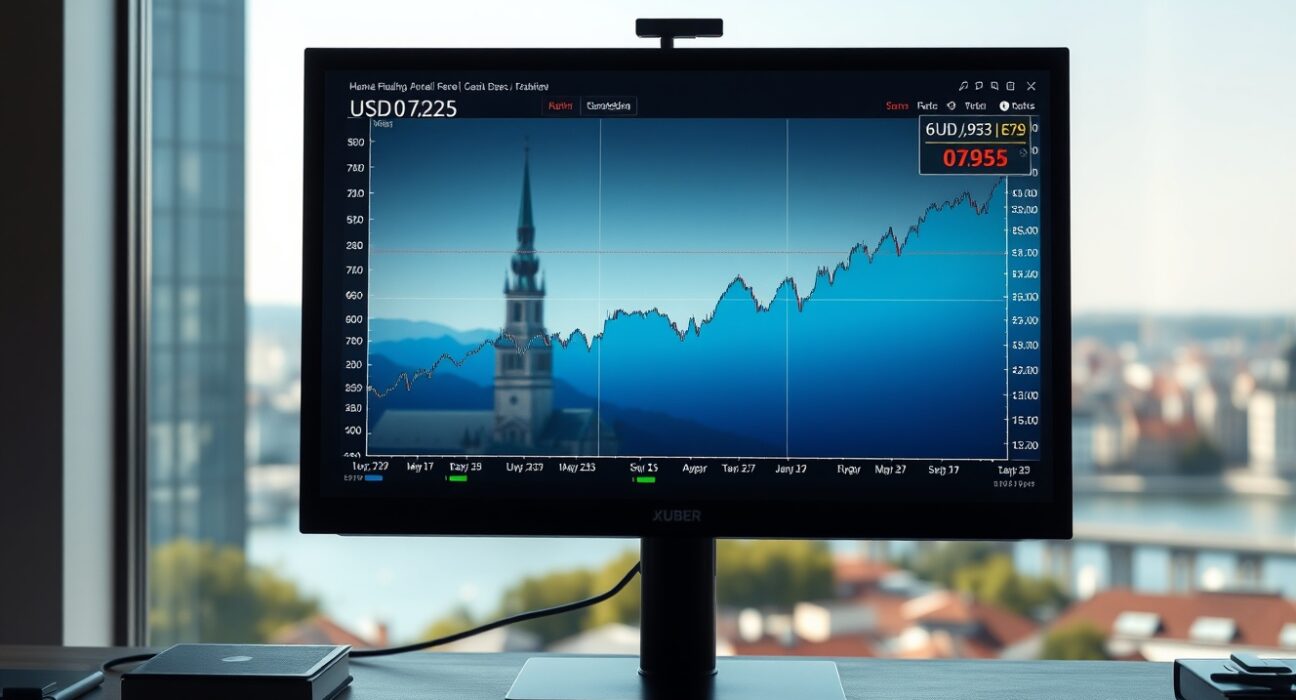
The USD/CHF currency pair edged higher to approach the 0.7925 level in early European trading on Tuesday, March 18, 2025, as the US Dollar maintained its firm posture against major counterparts. Market participants continue to monitor geopolitical developments in the Middle East, which are driving safe-haven flows and creating volatility across global financial markets. This movement represents a significant test for the Swiss Franc’s traditional role as a safe-haven asset during periods of international tension.
USD/CHF Technical Analysis and Current Market Position
The USD/CHF pair’s movement to 0.7925 marks a notable development in forex markets. Technical analysts observe that this level represents a key psychological resistance point. Furthermore, the pair has tested this threshold multiple times throughout the trading week. Market data from the Swiss National Bank indicates consistent intervention patterns to manage excessive Franc appreciation. Consequently, traders are watching for potential breakout scenarios above this technical barrier.
Several factors contribute to the current technical setup:
- Resistance Levels: The 0.7925-0.7950 zone presents immediate resistance
- Support Zones: Key support remains around the 0.7880-0.7900 range
- Moving Averages: The pair trades above its 50-day and 200-day simple moving averages
- Relative Strength: The RSI indicator shows moderate bullish momentum without overbought conditions
US Dollar Strength Amid Geopolitical Uncertainty
The US Dollar Index (DXY) maintained its firm footing above 104.50, supported by multiple fundamental factors. Federal Reserve policy expectations continue to favor the Greenback, particularly as inflation data remains above target levels. Additionally, comparative economic performance between the United States and other major economies reinforces Dollar strength. Market analysts reference recent Federal Open Market Committee minutes showing commitment to data-dependent policy decisions.
Geopolitical developments in the Middle East have intensified safe-haven demand for US assets. Recent escalations have prompted investors to seek Dollar-denominated instruments. The table below illustrates recent DXY movements alongside key events:
| Date | DXY Level | Key Event |
|---|---|---|
| March 15 | 104.30 | Initial escalation reports |
| March 16 | 104.65 | Diplomatic statements |
| March 17 | 104.72 | Market risk assessment |
| March 18 | 104.58 | Current trading level |
Federal Reserve Policy Implications
Federal Reserve officials have maintained a cautious approach to monetary policy adjustments. Recent statements emphasize the need for convincing evidence of sustained inflation moderation. Consequently, interest rate differentials between the United States and Switzerland continue to favor the Dollar. Market pricing currently reflects expectations for delayed rate cuts compared to earlier projections. This monetary policy divergence fundamentally supports USD/CHF appreciation.
Swiss Franc Dynamics and Safe-Haven Status
The Swiss Franc traditionally strengthens during periods of global uncertainty, yet recent patterns show nuanced behavior. The Swiss National Bank maintains an active presence in currency markets to prevent excessive Franc appreciation. Switzerland’s current account surplus and substantial foreign exchange reserves provide underlying support for the currency. However, imported inflation concerns limit the SNB’s tolerance for significant Franc strength.
Several factors influence Franc valuation:
- SNB Intervention: Regular market operations to manage exchange rates
- Inflation Dynamics: Swiss CPI remains within target range
- Economic Performance: Moderate growth with low unemployment
- Global Risk Sentiment: Traditional safe-haven flows during crises
Middle East Geopolitical Impact on Currency Markets
Geopolitical tensions in the Middle East have created complex dynamics for currency traders. Energy market volatility directly affects currency valuations through trade balance channels. Additionally, security concerns influence capital flows and risk assessment frameworks. Regional developments prompt investors to reevaluate portfolio allocations across asset classes. Historical patterns suggest prolonged uncertainty typically benefits traditional safe havens.
The current situation presents particular challenges for forex markets. Oil price movements create inflationary pressures that central banks must address. Furthermore, shipping disruptions affect global trade flows and economic projections. Market participants monitor diplomatic developments for signals about conflict resolution timelines. These factors collectively influence currency valuation models and trading strategies.
Historical Context and Market Memory
Previous geopolitical crises provide relevant context for current market behavior. The Swiss Franc demonstrated resilience during the 2022 Ukraine conflict, appreciating significantly before SNB intervention. Similarly, Middle East tensions in 2019 prompted safe-haven flows into both the Dollar and Franc. Analysis of these historical episodes helps traders understand potential scenario developments. Market memory influences how participants respond to similar patterns of uncertainty.
Global Economic Context and Cross-Market Correlations
The broader economic environment significantly impacts USD/CHF dynamics. Global growth projections influence risk appetite and capital allocation decisions. Additionally, commodity price movements affect terms of trade for both the United States and Switzerland. Equity market performance correlates with currency movements through risk-on/risk-off patterns. Bond yield differentials between US Treasuries and Swiss government bonds provide fundamental support for current exchange rates.
Several intermarket relationships warrant attention:
- Equity Markets: S&P 500 performance correlates with Dollar strength
- Commodity Prices: Gold and oil movements influence inflation expectations
- Bond Yields: US Treasury yields affect interest rate differentials
- Volatility Index: VIX levels indicate overall market uncertainty
Conclusion
The USD/CHF pair’s movement to 0.7925 reflects complex interactions between monetary policy, geopolitical developments, and market sentiment. The US Dollar maintains firmness amid Middle East uncertainty, while the Swiss Franc demonstrates nuanced safe-haven characteristics. Technical analysis suggests key resistance around current levels, with fundamental factors supporting further Dollar strength. Market participants should monitor Federal Reserve communications, SNB interventions, and geopolitical developments for directional cues. The USD/CHF exchange rate will likely remain sensitive to risk sentiment shifts and policy expectations throughout the coming trading sessions.
FAQs
Q1: What does USD/CHF represent in forex markets?
The USD/CHF currency pair represents the exchange rate between the US Dollar and Swiss Franc, showing how many Francs are needed to purchase one US Dollar.
Q2: Why is the Swiss Franc considered a safe-haven currency?
The Swiss Franc maintains safe-haven status due to Switzerland’s political stability, strong current account surplus, substantial gold reserves, and the Swiss National Bank’s conservative monetary policy approach.
Q3: How do Middle East tensions typically affect currency markets?
Geopolitical tensions generally increase demand for safe-haven currencies like the US Dollar and Swiss Franc while putting pressure on risk-sensitive currencies, though specific impacts depend on the conflict’s nature and duration.
Q4: What role does the Swiss National Bank play in USD/CHF movements?
The SNB actively intervenes in forex markets to prevent excessive Franc appreciation that could harm Swiss exports, using foreign exchange reserves and verbal guidance to influence exchange rates.
Q5: How do interest rate differentials affect USD/CHF?
Higher US interest rates relative to Swiss rates typically support USD/CHF appreciation as investors seek higher yields, making Dollar-denominated assets more attractive to international capital.
Disclaimer: The information provided is not trading advice, Bitcoinworld.co.in holds no liability for any investments made based on the information provided on this page. We strongly recommend independent research and/or consultation with a qualified professional before making any investment decisions.
