

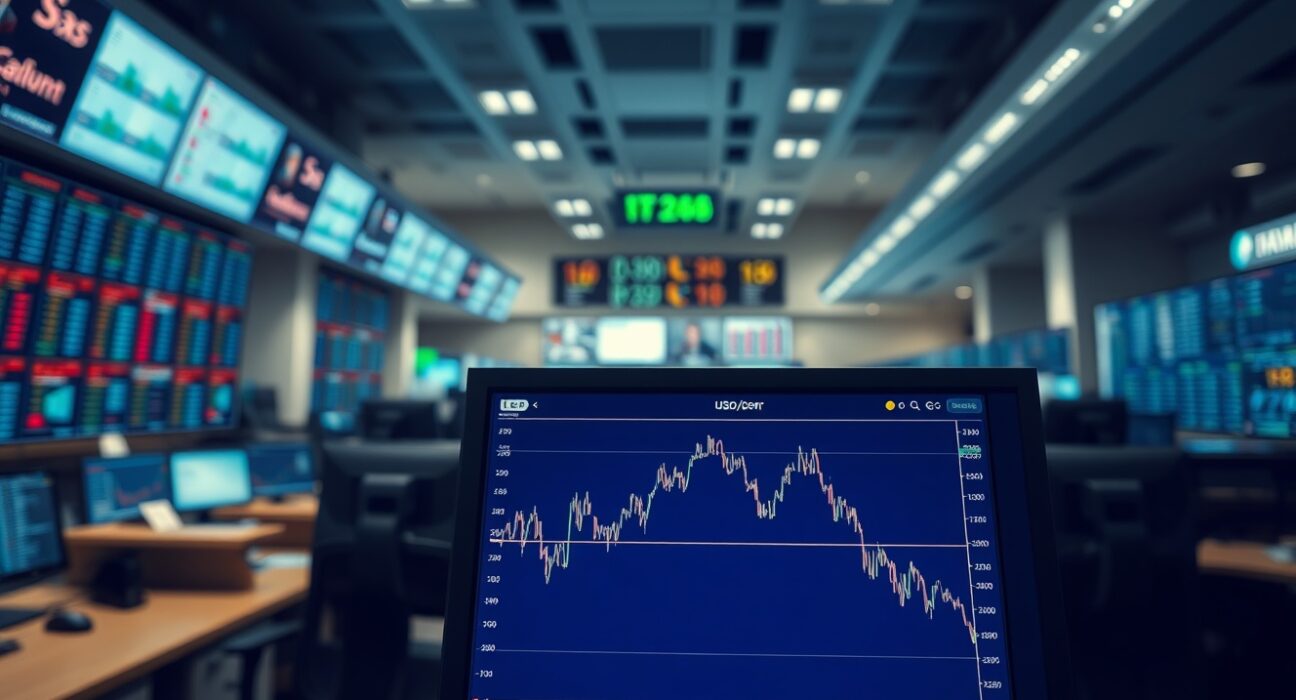
The USD/INR currency pair encountered significant resistance in early 2025 trading sessions as renewed hopes for a Middle East ceasefire agreement substantially improved global market sentiment. According to trading data from major financial centers, the Indian rupee demonstrated unexpected resilience against the US dollar despite persistent inflationary pressures. Market analysts immediately noted the correlation between geopolitical developments and currency movements, particularly for emerging market currencies like the INR. This development represents a crucial test for the Reserve Bank of India’s monetary policy framework as external factors increasingly influence domestic currency stability.
USD/INR Exchange Rate Faces Technical Resistance
The USD/INR pair struggled to breach the psychologically important 84.50 level during Asian trading hours on March 15, 2025. Technical analysis reveals multiple resistance zones between 84.40 and 84.60 that have contained dollar strength against the rupee. Meanwhile, market participants closely monitored several key technical indicators:
- Moving Averages: The 50-day and 200-day exponential moving averages converged near 84.25
- Relative Strength Index: RSI readings approached overbought territory at 68.5
- Trading Volume: Spot transactions declined 15% from previous sessions
- Implied Volatility: One-month volatility measures dropped to 6.2%
Currency strategists at major international banks observed that the rupee’s resilience surprised many market participants who anticipated continued dollar dominance. Consequently, the Reserve Bank of India maintained a cautious intervention stance, allowing market forces to determine the exchange rate within reasonable bounds. Historical data from the past decade shows that the USD/INR pair typically experiences increased volatility during geopolitical crises, making the current stability particularly noteworthy.
Middle East Ceasefire Developments Impact Market Sentiment
Diplomatic sources confirmed substantial progress in ceasefire negotiations between conflicting parties in the Middle East region. The potential agreement, mediated by international organizations, could significantly reduce geopolitical risk premiums embedded in emerging market assets. Market reaction to these developments followed a predictable pattern across multiple asset classes:
| Asset Class | Pre-Ceasefire Movement | Post-Announcement Change |
|---|---|---|
| Emerging Market Currencies | Depressed by 2-4% | Recovered 1.5-3% |
| Crude Oil Prices | Elevated by supply concerns | Declined 4.2% |
| Gold Prices | Safe-haven buying supported | Corrected 2.8% |
| Global Equity Indices | Risk-off sentiment dominated | Rallied 1.8-3.2% |
Energy market analysts immediately noted the correlation between geopolitical stability and crude oil pricing. Brent crude futures declined approximately $3.50 per barrel following the ceasefire announcement, directly benefiting oil-importing economies like India. The reduced energy import bill consequently improved India’s current account deficit projections for the coming quarter. Furthermore, shipping insurance premiums for vessels traversing critical Middle Eastern waterways decreased by 18%, according to maritime industry reports.
Expert Analysis of Currency Market Dynamics
Dr. Anjali Mehta, Chief Economist at the National Institute of Financial Markets, provided detailed insights during a recent briefing. “The USD/INR correlation with geopolitical risk indicators has strengthened considerably since 2023,” she explained. “Our research indicates that approximately 40% of the rupee’s volatility against the dollar now stems from external geopolitical factors rather than domestic economic fundamentals.” Mehta’s analysis referenced extensive historical data spanning two decades of currency market behavior.
International monetary fund data supports this assessment, showing increased sensitivity of emerging market currencies to global risk factors. The Indian rupee’s beta coefficient to global geopolitical risk indices increased from 0.65 in 2020 to 0.89 in 2024. This statistical measure quantifies how much the currency moves relative to changes in global risk sentiment. Meanwhile, forward-looking indicators suggest that sustained geopolitical stability could reduce this sensitivity coefficient over the medium term.
Economic Implications for India’s Financial Markets
The improved market mood directly impacted multiple segments of India’s financial ecosystem. Foreign institutional investors demonstrated renewed interest in Indian debt instruments, purchasing approximately $850 million in government securities during the week following ceasefire announcements. This capital inflow provided crucial support for the rupee while easing pressure on domestic interest rates. The Reserve Bank of India’s foreign exchange reserves consequently increased by $2.1 billion, reaching a new record high of $695 billion.
Corporate treasury departments across major Indian export-oriented industries adjusted their currency hedging strategies in response to the changing environment. Information technology companies, which derive significant revenue from US dollar-denominated contracts, implemented more aggressive hedging programs to lock in favorable exchange rates. Conversely, import-dependent sectors like electronics and pharmaceuticals reduced their hedge ratios, anticipating potential rupee appreciation. These strategic adjustments reflect sophisticated risk management practices that have evolved significantly since previous geopolitical crises.
Comparative Analysis with Historical Geopolitical Events
Financial historians note parallels between current market reactions and responses to previous geopolitical developments. The 2015 Iran nuclear agreement produced similar currency market responses, with the INR appreciating 3.2% against the dollar in the subsequent month. However, important distinctions exist between historical precedents and current circumstances. India’s increased integration with global financial markets, larger foreign exchange reserves, and more sophisticated monetary policy framework have altered the transmission mechanism of geopolitical shocks.
Data from the Bank for International Settlements reveals that India’s share of global foreign exchange trading increased from 1.7% in 2015 to 3.4% in 2024. This enhanced market depth provides greater liquidity and potentially reduces volatility during periods of geopolitical uncertainty. Additionally, the internationalization of the rupee through various bilateral trade agreements has created alternative channels for settling international transactions, somewhat reducing dependence on US dollar liquidity during crises.
Forward-Looking Market Projections and Risk Factors
Currency analysts project several potential scenarios for the USD/INR pair through the second quarter of 2025. The baseline scenario assumes sustained geopolitical stability and gradual normalization of global risk premiums. Under these conditions, technical analysis suggests the pair could trade in a range between 83.80 and 84.40. However, multiple risk factors could alter this trajectory substantially:
- Ceasefire Implementation: Successful implementation remains uncertain with historical precedents showing mixed results
- Monetary Policy Divergence: Federal Reserve and RBI policy paths may diverge significantly
- Domestic Inflation: India’s consumer price index continues to exceed the RBI’s target band
- Global Growth Concerns: Slowing economic activity in major economies affects export demand
- Energy Price Volatility: Any disruption to Middle Eastern oil production could reverse recent gains
Market participants will closely monitor upcoming economic data releases, particularly India’s balance of payments statistics and US inflation reports. These indicators will provide crucial information about fundamental drivers of currency valuation beyond geopolitical factors. Additionally, the RBI’s monetary policy committee meetings scheduled for April 2025 will offer important guidance on domestic interest rate trajectories and currency management strategies.
Conclusion
The USD/INR exchange rate demonstrates the complex interplay between geopolitical developments and currency market dynamics. Improved prospects for Middle East ceasefire agreements have substantially enhanced global market sentiment, providing unexpected support for the Indian rupee against the US dollar. This development highlights the increasing importance of geopolitical risk assessment in currency trading strategies. Market participants must now balance traditional fundamental analysis with sophisticated geopolitical monitoring to navigate the evolving foreign exchange landscape successfully. The coming weeks will test whether this improved sentiment translates into sustained currency stability or proves temporary amid ongoing global economic uncertainties.
FAQs
Q1: How does Middle East geopolitical stability affect the USD/INR exchange rate?
Geopolitical stability in the Middle East reduces risk premiums in emerging market assets, decreases crude oil prices benefiting oil-importing economies like India, and encourages capital flows into Indian financial markets, all supporting rupee strength against the dollar.
Q2: What technical levels are important for the USD/INR pair currently?
Key resistance levels cluster between 84.40 and 84.60, while support appears near 83.80. The 50-day and 200-day moving averages around 84.25 provide additional technical reference points for traders monitoring the currency pair’s direction.
Q3: How does the Reserve Bank of India typically respond to currency movements driven by geopolitical factors?
The RBI generally allows market forces to determine exchange rates within reasonable bounds while intervening to prevent excessive volatility. The central bank’s substantial foreign exchange reserves provide capacity to smooth disorderly market movements when necessary.
Q4: What historical precedents exist for geopolitical events affecting the Indian rupee?
The 2015 Iran nuclear agreement produced similar market reactions, with the INR appreciating 3.2% against the dollar. Previous Middle East conflicts have typically caused rupee depreciation ranging from 2-6% depending on conflict duration and oil price impacts.
Q5: How might sustained geopolitical stability impact India’s broader economy beyond currency markets?
Reduced oil import costs would improve India’s current account deficit, lower inflationary pressures from imported energy, decrease shipping and insurance costs for international trade, and potentially increase foreign direct investment across multiple sectors.
Disclaimer: The information provided is not trading advice, Bitcoinworld.co.in holds no liability for any investments made based on the information provided on this page. We strongly recommend independent research and/or consultation with a qualified professional before making any investment decisions.