
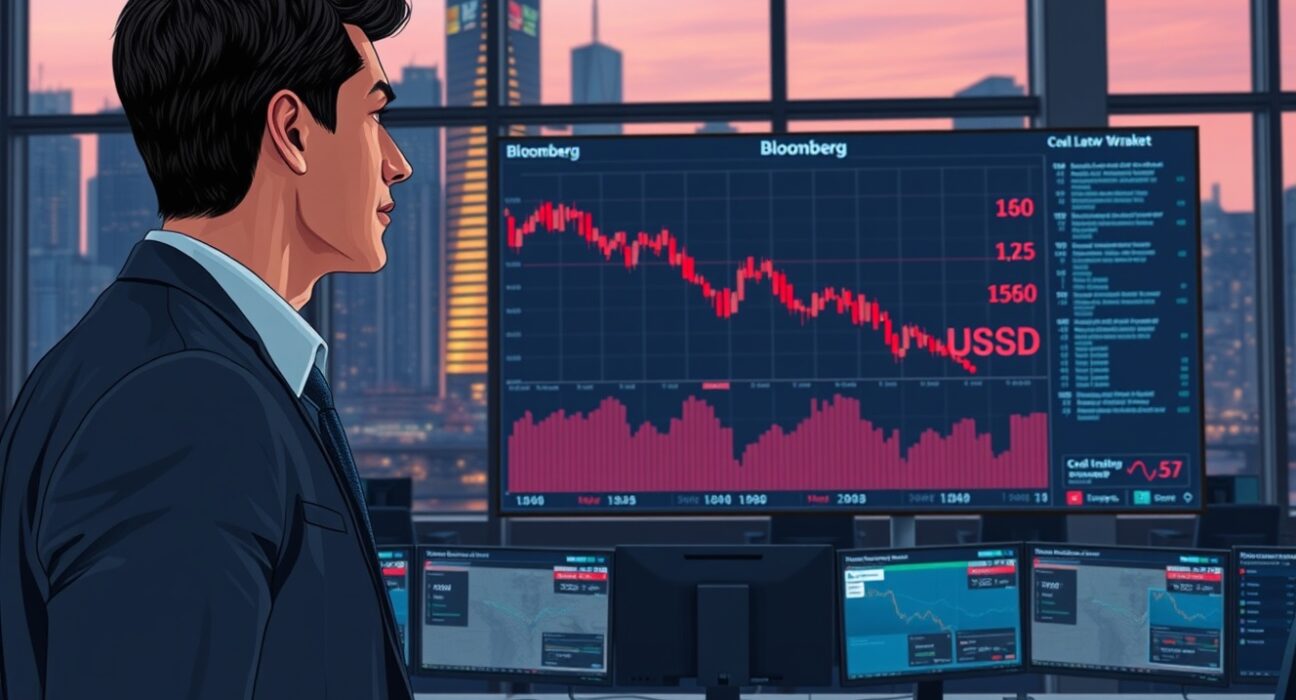
Global currency markets experienced significant turbulence this week as renewed geopolitical developments triggered substantial USD weakness, according to comprehensive analysis from MUFG Bank. The dollar’s depreciation follows recent ceasefire announcements in key conflict zones, creating ripple effects across international financial systems. Market participants now closely monitor these developments as they reshape currency valuations and trading strategies for 2025.
Understanding USD Weakness in Current Markets
Currency analysts at MUFG have documented consistent USD depreciation patterns following geopolitical de-escalation events. The bank’s research department maintains extensive databases tracking currency movements against geopolitical developments. Historical data reveals that ceasefire announcements typically reduce safe-haven demand for the US dollar. Consequently, investors frequently reallocate capital toward riskier assets and emerging market currencies.
Recent trading sessions demonstrate this pattern clearly. The dollar index (DXY) declined by approximately 1.8% following the latest ceasefire developments. Major currency pairs including EUR/USD and GBP/USD showed corresponding gains. Asian currencies, particularly the Japanese yen and Chinese yuan, also strengthened against the greenback. Market volatility indicators spiked temporarily before stabilizing at elevated levels.
MUFG’s Analytical Framework
MUFG employs sophisticated analytical models to assess currency movements. Their methodology incorporates multiple data streams including:
- Real-time geopolitical risk indicators
- Capital flow tracking systems
- Central bank policy analysis
- Market sentiment algorithms
The bank’s currency strategists emphasize that ceasefire developments affect markets through several channels. Reduced geopolitical tension typically decreases demand for dollar-denominated safe assets. Simultaneously, improved global risk appetite encourages capital flows toward higher-yielding currencies. Additionally, changing expectations about Federal Reserve policy adjustments contribute to dollar movements.
Historical Context of Ceasefire-Driven Currency Movements
Financial historians identify consistent patterns in currency market responses to geopolitical developments. The table below illustrates recent examples of ceasefire impacts on the US dollar:
| Year | Conflict/Region | USD Impact | Duration |
|---|---|---|---|
| 2022 | Eastern Europe De-escalation | -2.3% | 3 weeks |
| 2023 | Middle East Truce | -1.7% | 2 weeks |
| 2024 | Asian Maritime Agreement | -1.2% | 10 days |
| 2025 | Current Ceasefire | -1.8% (ongoing) | To be determined |
Market analysts note that the magnitude and duration of currency movements depend on multiple factors. Ceasefire credibility significantly influences market reactions. Implementation mechanisms and international verification procedures also affect investor confidence. Furthermore, broader economic conditions modify how currency markets absorb geopolitical developments.
Economic Implications of Dollar Depreciation
USD weakness generates substantial economic consequences across global markets. Export-oriented economies typically benefit from dollar depreciation through improved competitiveness. However, countries with dollar-denominated debt face increased repayment burdens. Commodity markets frequently experience price adjustments as dollar valuation changes affect purchasing power.
International trade patterns often shift following sustained dollar weakness. US exporters encounter challenges maintaining market share abroad. Meanwhile, import prices in the United States tend to increase, potentially affecting domestic inflation. Central banks worldwide must adjust monetary policies to account for changing currency dynamics.
Federal Reserve Policy Considerations
The Federal Reserve monitors dollar valuation as part of its dual mandate considerations. While the Fed doesn’t target specific exchange rates, currency movements influence inflation and employment outcomes. Dollar depreciation typically increases import prices, potentially contributing to inflationary pressures. However, improved export competitiveness might stimulate domestic production and employment.
Recent Federal Reserve communications acknowledge these complex interactions. Meeting minutes indicate careful monitoring of currency market developments. Policy makers consider how geopolitical events might affect their economic projections. Market participants accordingly adjust interest rate expectations based on evolving currency conditions.
Market Structure and Trading Dynamics
Modern currency markets feature sophisticated trading mechanisms that amplify geopolitical impacts. Algorithmic trading systems automatically adjust positions based on news developments. High-frequency traders exploit minute price discrepancies across different trading venues. Institutional investors rebalance portfolios according to changing risk assessments.
Market liquidity conditions significantly influence how currencies absorb geopolitical shocks. During periods of reduced liquidity, price movements tend to become more volatile. Trading volumes typically increase following major geopolitical announcements. Market depth indicators help traders assess execution risks under changing conditions.
Several key factors determine market responses to ceasefire developments:
- Surprise element and market expectations
- Implementation timeline and verification mechanisms
- Broader economic context and monetary policy stance
- Technical market positioning and sentiment indicators
Regional Currency Impacts and Divergences
Different currency regions exhibit varied responses to USD weakness. European currencies typically strengthen as capital flows toward Eurozone assets. Asian currencies show more nuanced reactions based on regional trade relationships. Emerging market currencies often experience the most pronounced movements due to their sensitivity to risk sentiment.
The Japanese yen demonstrates particular sensitivity to geopolitical developments. As a traditional safe-haven currency, the yen frequently appreciates during periods of uncertainty. However, ceasefire announcements typically reverse this pattern. The Bank of Japan carefully monitors these movements given their implications for export competitiveness.
Chinese currency management becomes particularly important during periods of dollar weakness. The People’s Bank of China employs various tools to manage exchange rate stability. Policy makers balance export competitiveness against capital flow considerations. Regional trading partners adjust their own currency policies accordingly.
Conclusion
Geopolitical ceasefire developments continue driving significant USD weakness across global currency markets. MUFG’s comprehensive analysis reveals consistent patterns in how markets process de-escalation events. The current dollar depreciation reflects reduced safe-haven demand and shifting capital flows. Market participants must monitor these developments carefully as they reshape trading strategies and economic outlooks for 2025. Currency movements following geopolitical developments demonstrate the intricate connections between politics and finance in modern global markets.
FAQs
Q1: How long does USD weakness typically last following ceasefire announcements?
Historical patterns suggest currency movements persist for approximately two to three weeks, though duration varies based on ceasefire implementation and broader market conditions.
Q2: Which currencies benefit most from USD weakness during geopolitical de-escalation?
Traditional safe-haven currencies like the Japanese yen and Swiss franc typically see reduced demand, while commodity currencies and emerging market currencies often experience relative strength.
Q3: How does the Federal Reserve respond to ceasefire-driven dollar depreciation?
The Fed monitors currency movements as part of broader economic assessment but doesn’t directly target exchange rates. Policy adjustments depend on how currency changes affect inflation and employment objectives.
Q4: What indicators should traders watch during ceasefire-driven currency movements?
Key indicators include capital flow data, volatility measures, trading volumes, and positioning reports from major financial institutions and regulatory bodies.
Q5: How do ceasefire developments affect cryptocurrency markets relative to traditional currencies?
Cryptocurrencies sometimes exhibit inverse correlations to traditional safe-haven assets during geopolitical de-escalation, though these relationships remain less established than traditional currency patterns.
Disclaimer: The information provided is not trading advice, Bitcoinworld.co.in holds no liability for any investments made based on the information provided on this page. We strongly recommend independent research and/or consultation with a qualified professional before making any investment decisions.