

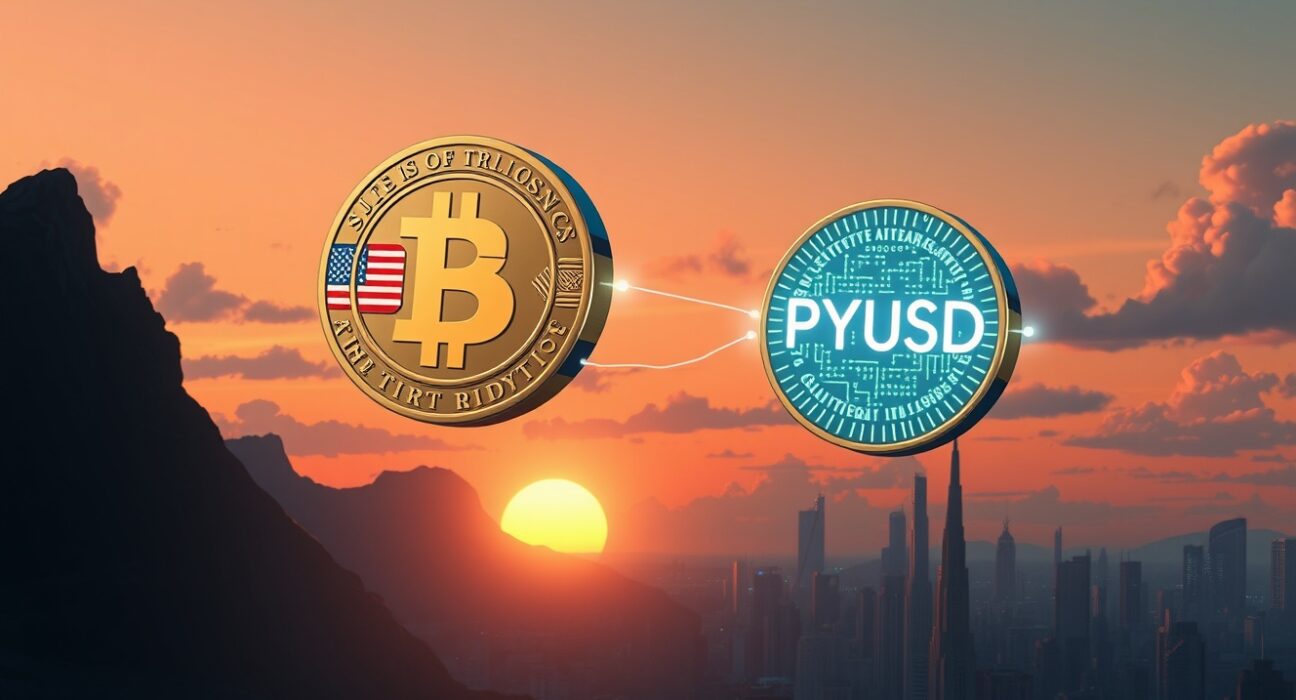
In a development reshaping the digital currency landscape, Eric Trump announced on November 15, 2024, that the USD1 stablecoin has achieved a significant milestone by surpassing PayPal’s PYUSD in market size. This announcement signals a major shift in the competitive stablecoin sector, particularly within the emerging digital dollar ecosystem. The revelation came via a post on the social media platform X, where Trump framed the achievement as part of a broader vision for global financial infrastructure.
USD1 Stablecoin Achieves Market Leadership Over PYUSD
The USD1 stablecoin has demonstrated remarkable growth since its inception, according to recent market data. Market analysts confirm that USD1’s circulating supply now exceeds that of PayPal’s PYUSD, marking a pivotal moment in the relatively young history of institutionally-backed digital dollars. This development represents more than just numerical superiority; it reflects changing market preferences and strategic positioning within the rapidly evolving cryptocurrency sector.
Industry observers note several factors contributing to this shift. First, USD1 benefits from its association with established financial networks that predate its digital incarnation. Second, the stablecoin has aggressively pursued partnerships with payment processors and financial institutions. Third, regulatory clarity in certain jurisdictions has provided a more favorable environment for USD1’s expansion compared to some competing projects.
The Expanding Digital Dollar Competition
The stablecoin market has evolved significantly since the first major dollar-pegged tokens emerged nearly a decade ago. Today’s landscape features numerous competitors, each with distinct backing models, governance structures, and use cases. PayPal entered this space with PYUSD in August 2023, bringing substantial mainstream credibility and user base integration. Meanwhile, USD1 launched with a focus on institutional adoption and cross-border settlement efficiency.
A comparison of key metrics reveals the competitive dynamics:
| Metric | USD1 | PYUSD |
|---|---|---|
| Launch Date | Q4 2022 | August 2023 |
| Primary Backing | U.S. Treasury securities & cash equivalents | U.S. dollar deposits & cash equivalents |
| Initial Target Market | Institutional settlement & treasury management | PayPal’s consumer & merchant ecosystem |
| Regulatory Approach | State money transmitter licenses + federal engagement | New York DFS BitLicense + state approvals |
Market analysts emphasize that size represents just one dimension of competition. Other critical factors include:
- Transaction volume across different blockchain networks
- Integration depth with traditional financial systems
- Geographic distribution of users and use cases
- Developer activity building on each stablecoin’s ecosystem
Expert Perspectives on Market Dynamics
Financial technology experts provide context for this development. Dr. Elena Rodriguez, a blockchain researcher at Stanford University, notes: “The surpassing of PYUSD by USD1 reflects broader trends in digital asset adoption. Institutional players increasingly view certain stablecoins as critical infrastructure rather than speculative instruments. This shift in perception drives allocation decisions and partnership strategies.”
Meanwhile, regulatory developments continue to shape the competitive landscape. The proposed Stablecoin Innovation Act, currently under congressional consideration, would establish federal oversight frameworks for dollar-pegged digital assets. Industry participants closely monitor these developments, as regulatory clarity often precedes significant market movements and institutional investment.
Global Implications for Financial Systems
The growth of USD1 and similar digital dollar instruments carries implications beyond market statistics. Central banks worldwide now monitor stablecoin developments as potential precursors to central bank digital currencies (CBDCs). The Bank for International Settlements recently published research indicating that well-regulated stablecoins could complement rather than compete with future CBDCs, particularly in cross-border payment scenarios.
International adoption patterns reveal interesting geographic variations. In regions with less stable domestic currencies, dollar-pegged stablecoins often serve as:
- Store of value during inflationary periods
- Medium of exchange for cross-border trade
- Unit of account for dollar-denominated contracts
- Remittance channels with lower costs than traditional systems
These use cases drive demand independent of speculative trading activity. Consequently, they provide more stable growth foundations than purely investment-focused cryptocurrency applications.
Technological Infrastructure and Security Considerations
Both USD1 and PYUSD operate across multiple blockchain networks, though their technical implementations differ significantly. USD1 initially launched on Ethereum before expanding to layer-2 solutions and alternative chains. PYUSD began exclusively on Ethereum but has since announced compatibility with additional networks. This multi-chain strategy enhances accessibility but introduces complexity regarding security audits and interoperability standards.
Security remains paramount for all stablecoin issuers. Regular attestations by independent accounting firms verify reserve holdings for both USD1 and PYUSD. These reports provide transparency regarding asset backing, though they differ in frequency and granularity. Additionally, smart contract audits by firms like Trail of Bits and OpenZeppelin help identify potential vulnerabilities in the digital infrastructure supporting these assets.
Future Trajectories and Market Evolution
The stablecoin sector continues to evolve rapidly, with new entrants and technological innovations emerging regularly. Several trends likely shape the next phase of competition between USD1, PYUSD, and other digital dollar instruments:
- Interest-bearing features that distribute yield to holders
- Enhanced privacy protections while maintaining regulatory compliance
- Cross-chain interoperability without centralized bridges
- Programmable money features enabling automated financial operations
Market share fluctuations between USD1 and PYUSD may continue as both projects refine their strategies. PayPal’s enormous existing user base provides potential advantages for PYUSD’s distribution. Conversely, USD1’s focus on institutional networks could yield deeper integration with corporate treasury systems. The coming months will reveal which approach resonates more strongly with different market segments.
Conclusion
The USD1 stablecoin surpassing PYUSD in market size represents a significant milestone in digital currency development. This achievement highlights the competitive dynamics within the emerging digital dollar ecosystem. Market participants will monitor whether USD1 maintains this position and how PayPal responds with PYUSD enhancements. Ultimately, the growth of well-regulated stablecoins like USD1 and PYUSD signals increasing maturation of cryptocurrency markets and their integration with traditional finance. These developments contribute to the ongoing evolution of global monetary systems toward greater efficiency, accessibility, and innovation.
FAQs
Q1: What exactly is the USD1 stablecoin?
The USD1 stablecoin is a digital currency pegged 1:1 to the U.S. dollar, backed by reserves of cash and cash equivalents. It operates on multiple blockchain networks and focuses primarily on institutional and cross-border payment use cases.
Q2: How does PYUSD differ from USD1?
PYUSD is PayPal’s dollar-pegged stablecoin, launched in 2023 and integrated within PayPal’s existing payment ecosystem. While both are dollar-backed, they differ in their primary target markets, distribution strategies, and technical implementations across blockchain networks.
Q3: Why does market size matter for stablecoins?
Market size, typically measured by circulating supply, indicates adoption level and liquidity. Larger stablecoins generally offer better price stability, deeper liquidity for transactions, and greater network effects that attract additional users and developers.
Q4: Are these stablecoins regulated?
Both USD1 and PYUSD operate under existing money transmission regulations in the United States. Their issuers obtain state licenses and comply with anti-money laundering requirements. Comprehensive federal stablecoin legislation remains under development in Congress.
Q5: What risks do stablecoin users face?
Primary risks include potential reserve inadequacy, smart contract vulnerabilities, regulatory changes, and operational failures at issuing entities. Users should verify independent attestations of reserve backing and understand the specific terms governing each stablecoin.
Disclaimer: The information provided is not trading advice, Bitcoinworld.co.in holds no liability for any investments made based on the information provided on this page. We strongly recommend independent research and/or consultation with a qualified professional before making any investment decisions.
